What can be expected from the US under next presidency, given Trump and Harris's Indian connections?
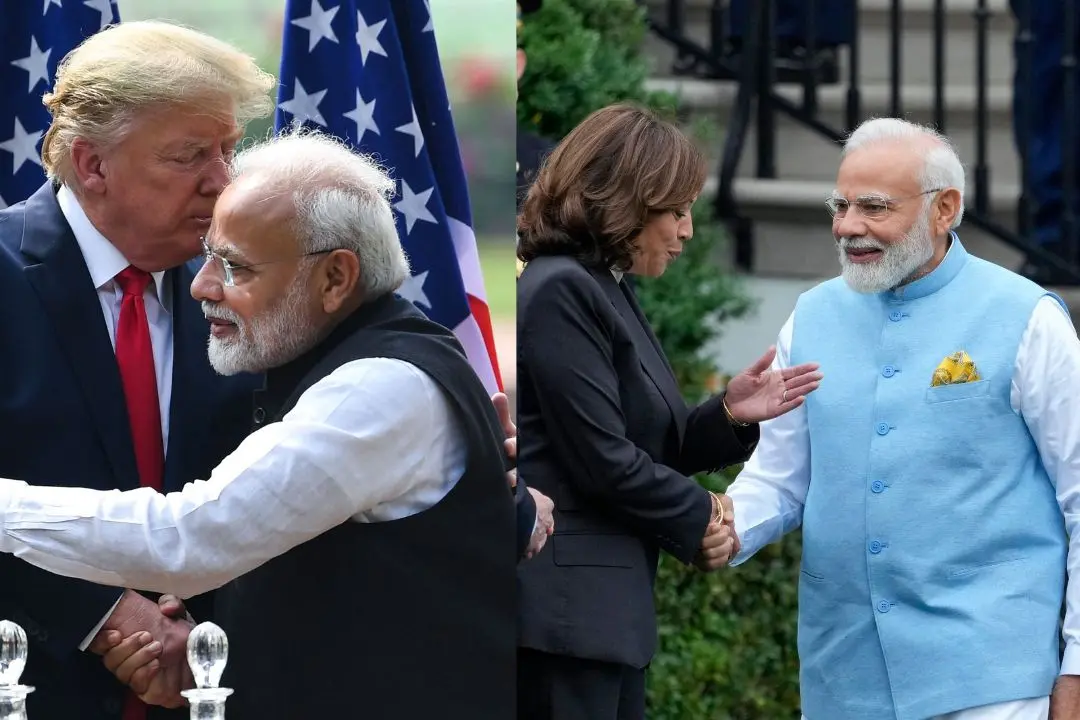
The US presidential election is upon us, with high stakes as voters cast their ballots in this pivotal race. With Donald Trump (Republican) and Kamala Harris (Democratic) as the leading candidates, this election not only determines the next president but also influences the balance of power in Congress.
Trump’s vice-presidential nominee, J.D. Vance, has familial roots in India through his wife, Usha Vance, who hails from undivided Andhra Pradesh. This connection suggests a potential for a nuanced understanding of Indian concerns within a Trump administration.
In contrast, Kamala Harris’s strong Indian ties, stemming from her mother’s heritage in Tamil Nadu, may lead to a more culturally empathetic approach towards India, fostering stronger bilateral relations. The outcome will have significant implications for key sectors, including trade and foreign relations, particularly with India.
If Trump (Republican) Wins
A Trump victory is expected to intensify the confrontational stance towards China, reinforcing the narrative of China as a strategic threat. His administration could further solidify alliances with countries like India through strategic coalitions, such as the Quad, aimed at countering Chinese influence in the region.
Trump's "America First" strategy is likely to renew focus on reducing tariffs on American products, putting pressure on India to lower its tariffs. This approach could have economic repercussions for India if negotiations falter, as it would face punitive measures for maintaining high import taxes.
Under a Trump administration, a stringent approach to immigration is expected. This could result in an increase in deportations of illegal immigrants, including Indians, which may challenge the Indian government's image and create domestic pressures.
If Harris (Democratic) Wins
A win for Kamala Harris would likely mean a continuation of the Biden administration's policies, ensuring stable relations with India. Harris’s approach to China may focus on “de-risking” rather than decoupling, allowing for ongoing collaboration in sectors like technology and defence.
While the Biden administration has largely continued the tariffs established during Trump's term, a Harris victory may lead to a less aggressive trade policy. This would support stability in trade relations, benefiting India's economy in strategic sectors such as semiconductors and electric vehicles.
Harris is expected to place greater emphasis on human rights and democracy, which could create tensions with India regarding its internal policies. Her previous discussions with Indian leadership about democratic values might lead to more pronounced dialogues about governance and civil rights.
EAM Jaishankar's Perspective
External Affairs Minister (EAM) S. Jaishankar expressed confidence on Tuesday that India-US relations would continue to grow steadily, regardless of the outcome of the US presidential elections. Speaking at a joint press conference with Australian Foreign Minister Penny Wong at Parliament House in Canberra, EAM Jaishankar credited former US President Donald Trump with reviving the QUAD alliance in 2017, marking a significant development in Indo-Pacific cooperation.
"We have seen steady progress in our relationship with the US over the last five presidencies, including a previous Trump presidency," Jaishankar remarked in response to a question on how India-US ties may evolve after the elections. "So, when we look at the American election, we are confident that, regardless of the outcome, our relationship with the US will continue to grow," he added.
Highlighting the evolution of the QUAD—a strategic alliance among the US, India, Japan, and Australia—EAM Jaishankar noted, "I remind you that the Quad was actually revived under the Trump presidency in 2017." He also mentioned, "I was then elevated from the level of a Permanent Secretary to a ministerial level, also during the Trump presidency. Interestingly, in the midst of COVID, when most physical meetings had stopped, one of the rare in-person meetings of foreign ministers was of the QUAD in Tokyo in 2020. That, I think, speaks about the strong prospects of the QUAD."