IIT Bombay protests: Crime Branch takes over Sahil Wakode death investigation
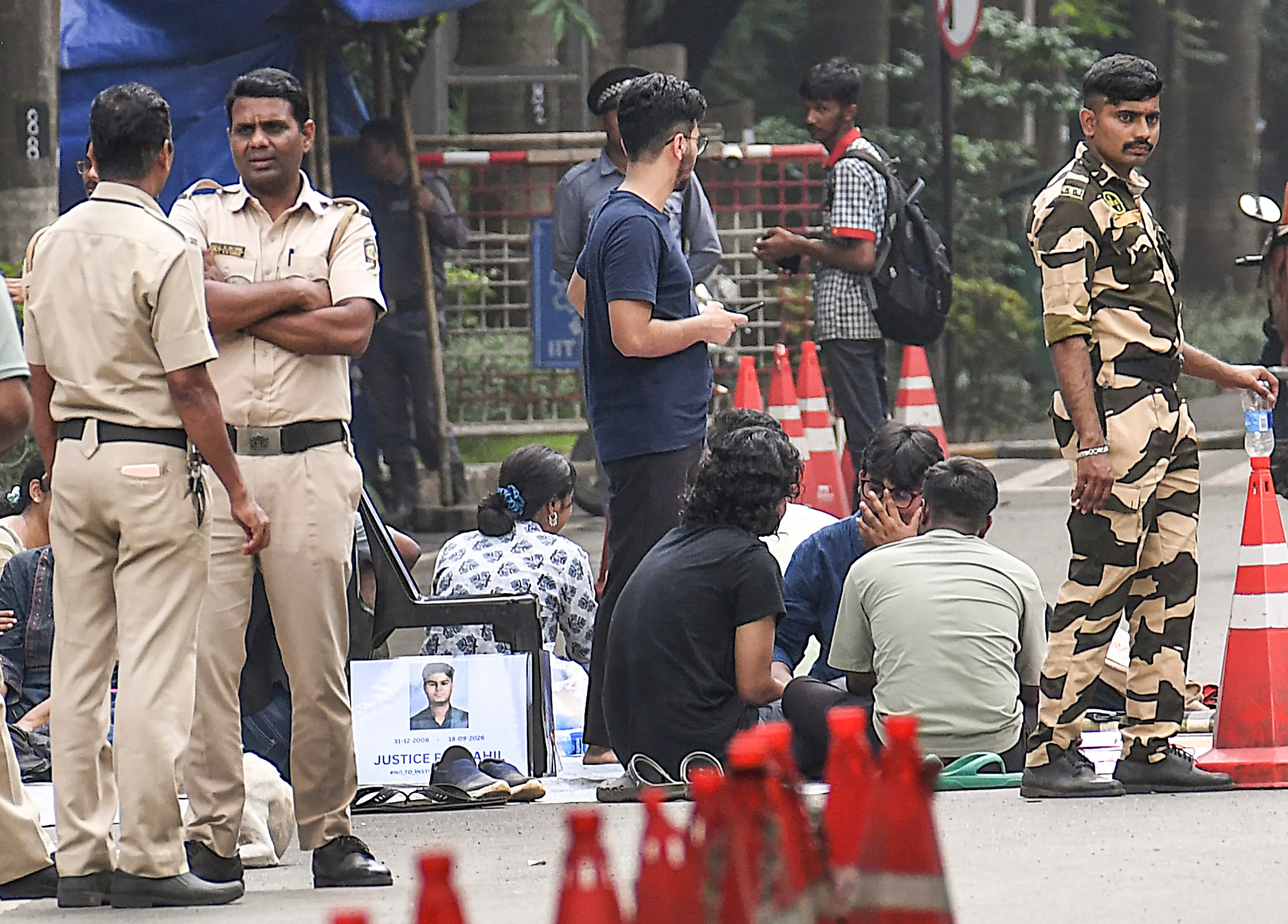
Mumbai: Mumbai Police have transferred the case to the Crime Branch following a complaint from Wakode’s father. The family has accused Professor Suryanarayana Doolla of making casteist remarks towards the student. Police have registered a case that includes allegations of abetment of suicide and provisions of the Scheduled Castes and Scheduled Tribes (Prevention of Atrocities) Act.
The allegations are now subject to investigation. IIT Bombay has denied allegations of caste discrimination and said Wakode had not submitted a complaint to its SC/ST cell or administration.
IIT Bombay director signs 18-point charter
The development came after three days of protests at the Powai campus, with students demanding an independent investigation and changes to the institute’s student-welfare and disciplinary systems.
Director Shireesh Kedare signed an 18-point charter submitted by the protesting students following discussions with senior institute officials. The demands include an independent inquiry into Wakode’s death, with students seeking an interim report by September 30 and a final report by October 15.
The charter also calls for an open house involving the director, Dean of Student Affairs and other senior officials. Students have sought an explanation and response from the institute over the circumstances surrounding Wakode’s death.
Professor suspended amid allegations
Professor Suryanarayana Doolla, who was the invigilator during the examination attended by Wakode shortly before his death, was suspended on September 20 following the protests.
The IIT Bombay Faculty Forum has backed Doolla and said he was carrying out his invigilation responsibilities according to the institute’s prescribed procedures. His name also appears in the police case registered following the complaint from Wakode’s parents.
Dispute over examination incident
Wakode, a second-year student in the Energy Science and Engineering programme, was allegedly found using a mobile phone during a mid-semester examination on September 18. IIT Bombay said he had uploaded the question paper to an AI platform to seek answers.
The institute has maintained that no disciplinary proceedings had been initiated against him and that he was counselled by the instructor and head of department. According to the institute, Wakode was assured that the incident would not adversely affect his academic career.
Protesting students have alleged that Wakode was threatened with suspension. That allegation has not been independently established and differs from IIT Bombay’s account.
Wakode was later found dead in his hostel room.
Student welfare reforms sought
The 18-point charter goes beyond the immediate investigation and seeks changes to IIT Bombay’s academic and student-welfare systems. Students have called for a faculty code of conduct, mental-health sensitisation for professors and staff, improved in-person counselling and changes to disciplinary procedures.
The charter also proposes a task force involving students, faculty members, mental-health professionals and external experts to examine student distress and recommend preventive measures.
Students have sought improved mental-health and medical facilities, including a 24-hour psychiatrist-on-call service at the institute hospital. They have also called for greater student representation in institutional decision-making.
The institute is expected to present details of the agreement to students at an open house. Students will then decide whether to continue their protests.
The charter seeks a written implementation plan by September 26 and states that peaceful protesters should not face disciplinary action. It also calls for the director to resign if the proposed reforms are not implemented within a month.