‘If you face any problem, call me’: Modi’s assurance to Himachal baby flood survivor is a gesture of humanity
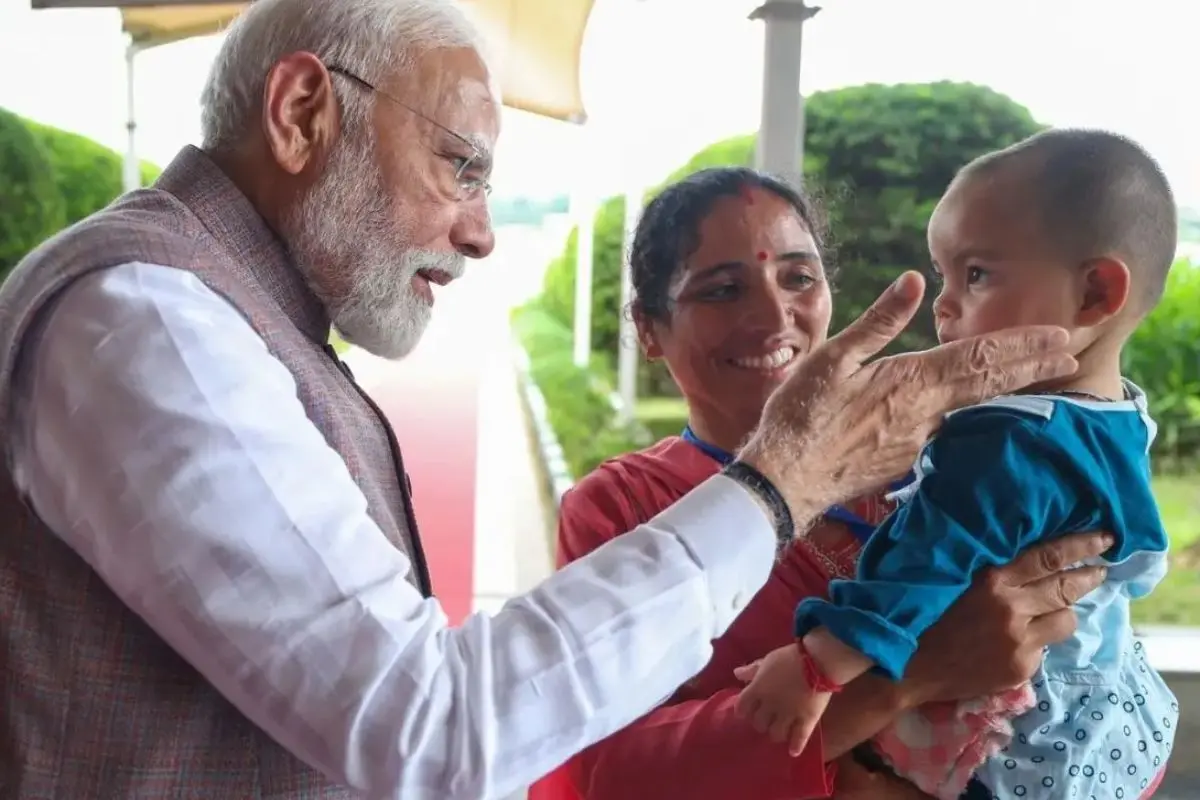
On a stormy night in late June, a one-year-old child in Himachal Pradesh lost her parents and grandmother in a devastating cloudburst. More than two months later, Prime Minister Narendra Modi’s brief meeting with her family in Kangra has become both a symbol of empathy and a reminder of the long journey still ahead.
A night of loss
Near midnight on 30 June, heavy rains triggered a cloudburst near Talwara village in Mandi district. Water swept through homes with little warning. Ramesh, aged 31, rushed out to try and divert the flow. His wife Radha, 24, and mother Purnu, 59, followed close behind. None survived. Ramesh’s body was recovered the next day; Radha and Purnu too were lost to the floodwaters. Their daughter, Nitika, just eleven months old, was left an orphan.
A new family
From 15 July, Nitika has lived with her aunt, Kirna Devi, 35, and uncle, Anmantran, 40, in Mandi. Kirna calls the child “God’s blessing” and says that her family now feels complete. Her teenage son has taken on the role of protective elder brother, and together they marked Nitika’s first birthday on 14 August.
A moment in Kangra
On 9 September, during a visit to meet flood-affected families from Mandi, Kangra and Chamba, Prime Minister Modi arrived at Gaggal airport in Kangra. Spotting the toddler, he cradled her for several minutes before handing her back to Kirna. “If you face any problem, call me,” he told her. The moment, later shared on X, carried strong symbolism for a family still rebuilding their lives. For them, it was more than a photo opportunity; it felt like reassurance from the highest level.
Recognition by the state
The Himachal government has moved quickly to provide formal support. Nitika has been declared a “Child of the State” and enrolled under the Chief Minister Sukh-Aashray Yojana. Since July, ₹4,000 per month has been credited directly to her account. In addition, she will benefit from the Indira Gandhi Sukh Shiksha Yojana, which guarantees long-term care and educational support until the age of 27.
Community safeguards
Moved by the tragedy, officials in Mandi opened two pledged bank accounts in Nitika’s name to accept public contributions. To protect her future, these funds cannot be accessed until she turns 18. Oversight has been entrusted to the District Child Protection Officer, ensuring both transparency and accountability. This system aims to prevent misuse and guarantee that contributions genuinely serve the child’s welfare.
Broader significance
For Himachal Pradesh, Nitika’s story highlights both the fragility of life in disaster-prone hill regions and the resilience of communities that step forward in times of crisis. The Talwara cloudburst was one of many severe weather events the state has faced in recent years, each leaving behind families struggling to cope. While the Prime Minister’s gesture was deeply appreciated by those present, it also draws attention to the importance of long-term safety nets.
A blessing amid grief
Today, Nitika is described by her new guardians as cheerful and affectionate. For Kirna and Anmantran, the child has brought new purpose even as they mourn the loss of their loved ones. “She is God’s blessing, our family feels complete again,” they say. Yet their story also reflects the quiet network of officials, neighbours and strangers who have rallied to protect one child’s future — from pledged bank accounts to state welfare schemes with built-in safeguards.
As Himachal rebuilds after this season’s devastation, the image of the Prime Minister lifting a one-year-old survivor offers a poignant reminder: behind each statistic is a personal tragedy, but also the possibility of renewal.