How Piyush Pandey branded Gujarat CM Modi as a PM face, inspiring even Donald Trump
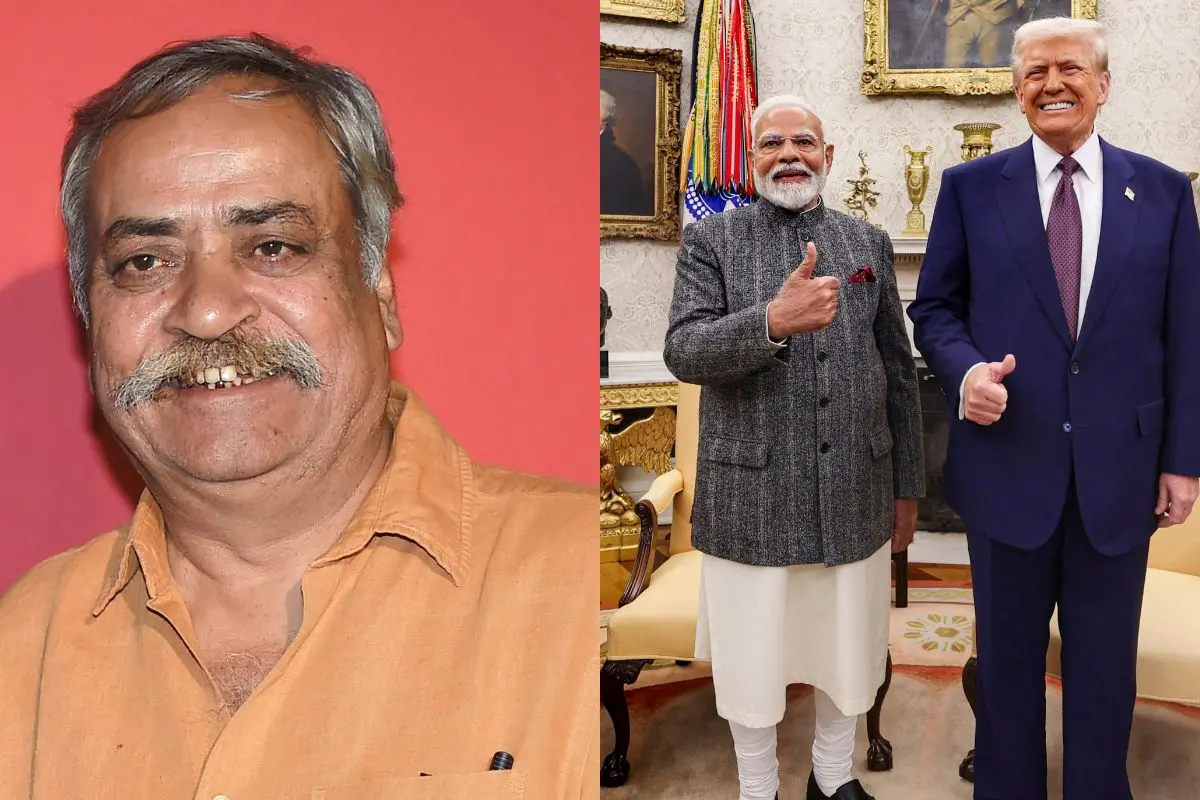
The passing of Piyush Pandey brings into sharp focus his immense contribution to Indian advertising, particularly his role in crafting one of the most successful political campaigns in history. Pandey, executive chairman and creative director at Ogilvy & Mather–South Asia, along with his agency Soho Square, helped the Bharatiya Janata Party (BJP) secure a remarkable mandate in the 16th general election. Their strategy was designed not just to sell a politician, but to effectively manage a "human brand".
The foundation of success: a 'fantastic product'
Pandey maintained that no campaign can succeed if the product is poor. He consistently credited the BJP's success to its principal candidate, Narendra Modi, describing him as a "fantastic product" who understood his value and communicated clearly with the public. Advertising only amplifies sales; the product itself must be impeccable.
The campaign's fundamental insight was listening intently to the people of India. Researchers and strategists recognised that the nation was weary of corruption and inflation, and desperately needed a decisive government. The campaign respected the audience's needs and aspirations, making the decision to rally around Modi, the face that represented these collective values.
The campaign brief given to Pandey’s team was highly structured, clear, and based on massive research conducted by the BJP. The job was simplified because the officials knew their target audience and wanted the message prepared around the bad state of affairs seen during the previous regime.
Crafting the unforgettable slogan
The key creative instruction was precise: lead the campaign with the leader, not the party. This led to the creation of the smash hit tagline, "Ab ki baar, Modi Sarkar" (This time, Modi government).
Crucially, this line was never meant to stand alone. It gained relevance by being placed within a context of urgent national issues. For example, slogans were coupled with specific public grievances, such as "Enough of corruption, this is the time for a Modi government," and "Enough of inflation, this is the time for a Modi government". This simple approach avoided complex "party speak," instead using common words spoken on the street, ensuring it was understood by the common man.
However, the creative team was realistic about the impact of media: the real success was won on the ground by thousands of dedicated party workers (karyakartas); the advertising merely provided air cover.
From Gujarat Tourism to Prime Minister
Pandey's collaboration with Narendra Modi predated the 2014 general election. He initially met Modi when the latter was Chief Minister of Gujarat, working on the popular 'Khushboo Gujarat Ki' tourism campaign.
Pandey recalled that Modi was extremely knowledgeable and clear about what he wanted. Although Pandey was typically asked to pitch his story in just six minutes, their discussions on Gujarat often lasted hours because Modi knew the state "backwards". Due to this prior relationship, and finding Modi willing to listen, Pandey agreed to create the campaign in 2014, breaking his agency's rule of not openly working for a political party.
When Indian branding went Global
The massive reach of the 2014 campaign meant its influence was felt far beyond India. In 2016, the memorable phrase crossed continents when Donald Trump, then a presidential candidate, borrowed the line for his own campaign, translating the Hindi phrase into English: "Ab ki baar Trump sarkar".
Trump deployed this Hindi slogan in a television commercial specifically aimed at Indian Americans shortly before the election. When asked about the line being borrowed, Pandey remarked that it made him feel good that the slogan had travelled globally.
Notably, Modi condoled his death, saying he would fondly cherish interactions with him over the years.