How one Kerala plant could stall India’s fighter jets and submarines
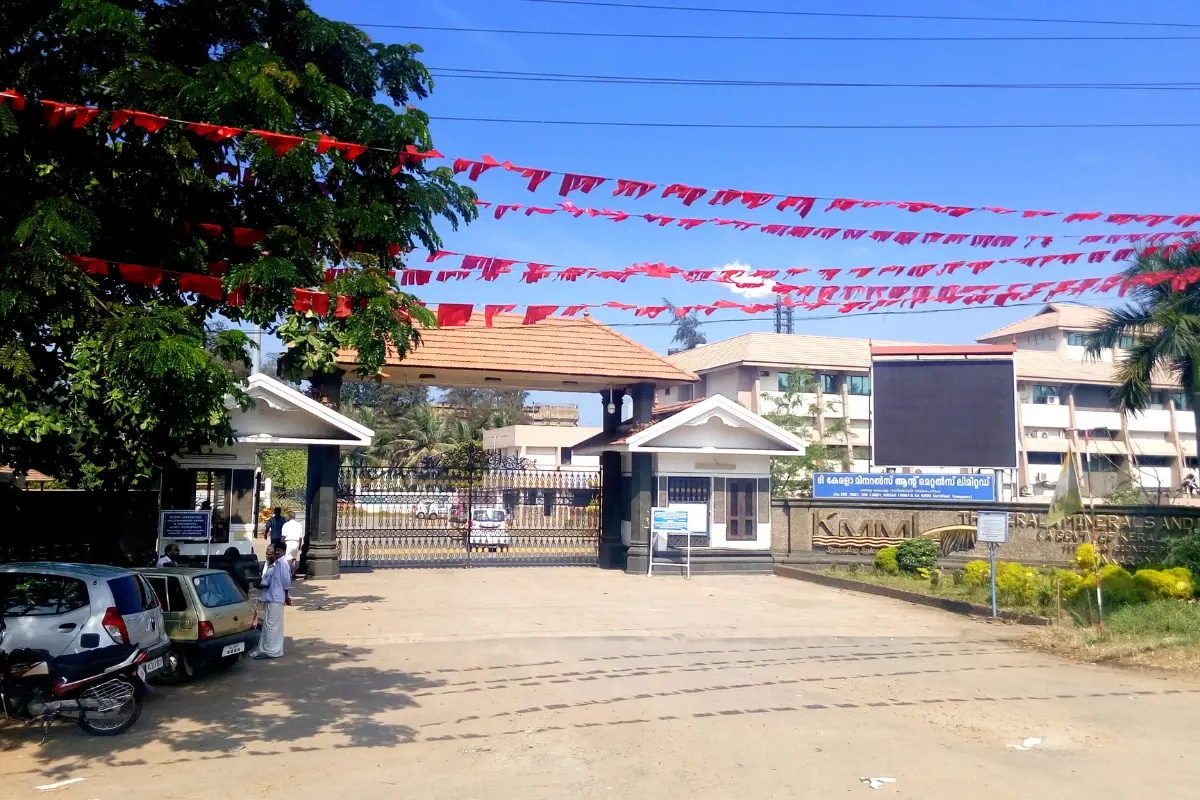
Inside the sprawling complex of Kerala Minerals and Metals Limited (KMML), tucked away on the Malabar coast, sits a quiet industrial miracle.
Since 2011, this state-owned plant has been churning out titanium sponge -- the spongy, silver-grey metal that is the lifeblood of modern fighter jets, submarines, and missiles.
It is India’s only domestic source of this critical material, a point of pride for a country that has long depended on imports for its most sensitive defence needs.
However, there is a problem. For 15 years, KMML’s titanium sponge plant has been stuck at the same output: 500 tonnes a year. Just 500.
And while the plant hums along at its fixed pace, India’s defence ambitions have exploded. The Indian Air Force is tripling its order for Tejas Mk1A fighters.
The Advanced Medium Combat Aircraft (AMCA), India’s answer to the F-35, is racing toward a 2035 production start.
The Navy is pushing forward with new submarines, each one hungry for titanium alloys to withstand the crushing pressure of the deep.
And yet, the country’s entire titanium supply chain still funnels through one plant in Kerala, and one downstream alloy maker in Hyderabad.
It is a bottleneck so narrow, so fragile, that a single shutdown, a quality failure, or an export disruption could send ripples across multiple defence programmes at once.
The human cost of a supply chain gap
For the engineers at KMML, the 500-tonne ceiling is not just a number — it is a daily frustration.
They know the plant could produce more. The technology, developed by the Defence Metallurgical Research Laboratory (DMRL) in Hyderabad, works.
The ore is there -- India sits on the world’s third-largest ilmenite reserves and second-largest rutile reserves, with beach sand deposits stretching from Kerala to Odisha but the capacity has not budged in 15 years.
Downstream, at Mishra Dhatu Nigam (MIDHANI) in Hyderabad, the pressure is even more acute. Every tonne of KMML’s sponge passes through this single facility before it can be turned into aerospace-grade alloys.
The engineers here know that qualifying a new titanium alloy for defence use takes years of testing — years that India’s fighter and submarine programmes do not have.
'When we get a new order from HAL or the Navy, we have to check if we have the sponge, if we have the alloy capacity, if we have the testing slots,' says one MIDHANI engineer, who spoke on condition of anonymity. 'It is a juggling act. And if one piece falls, the whole chain wobbles.'
The Tejas, AMCA and Submarine squeeze
The most immediate exposure is the Tejas Mk1A programme.
In July 2026, HAL’s chairman confirmed that the company has already reached a production rate of 24 aircraft a year and is on track for 30 aircraft a year by 2027–28, to meet an order book of 180 aircraft.
Each Tejas airframe needs titanium alloys for its engine mounts, landing gear, and structural components.
Sustaining that pace requires a continuous, reliable supply of alloys — something a capped, single-vendor chain cannot guarantee.
The Advanced Medium Combat Aircraft (AMCA) project raises the stakes further.
Series production is scheduled to begin in 2035, but the capacity to supply it has to exist or materialise years earlier, since qualifying new titanium alloys for defence use takes several years on its own. If that expansion does not begin now, it will not be ready in time, no matter how well the aircraft itself is developed.
Submarine construction adds to the same pressure. Naval propulsion and pressure-critical components draw on the same limited domestic alloy chain that Tejas and AMCA depend on.
The result is that three defence programmes, on three different timelines, are quietly drawing from the same single plant and the same single alloy producer.
For the workers at KMML, the 500-tonne limit is a source of both pride and frustration. They are the only ones in India who can do this. But they are also the only ones who can’t do more.
It is like being the only person who knows how to fix a critical machine, but you are only allowed to work eight hours a day, no matter how many machines break down.
At MIDHANI, the pressure is even more personal. They are not just making metal here. They are making the bones of India’s fighters and submarines. If they fail, it is not just a delay — it is a risk to national security.
The KMML-SAIL joint venture: A glimmer of hope
There is a potential fix on the horizon: a joint venture between KMML and the Steel Authority of India Limited (SAIL).
The partnership aims to leverage SAIL’s expertise in large-scale metal production and KMML’s existing technology and infrastructure to expand titanium sponge capacity beyond the current 500-tonne limit.
But for now, it remains a proposal on paper, not a working plant. Analysts say the timeline for the JV should be linked publicly to the delivery schedules of the Tejas Mk1A and the AMCA, and treated as a critical defence infrastructure project rather than a routine industrial initiative.
KMML has indicated plans to scale its titanium sponge production from the current level of 300–500 tonnes per annum to more than 1,000 tonnes per annum, but this expansion has yet to materialise.
The company has also highlighted its role as the only Indian producer of rutile-grade titanium dioxide through the chloride route, and its titanium sponge plant as a crowning achievement that placed India on the elite list of only seven countries globally with this capability.
What needs to happen next
There are three concrete steps India must take to prevent this gap from becoming a crisis, according to defence analysts. The first is to fast-track the KMML-SAIL joint venture.
Its timeline should be linked publicly to the delivery schedules of the Tejas Mk1A and the AMCA, and treated accordingly — not as a routine industrial project that can be delayed without consequence.
The second step is to diversify supply beyond MIDHANI. At present there is no back-up in the chain: MIDHANI is the sole domestic alloy producer, and qualifying even a smaller second source would close that gap.
The third step is procedural rather than industrial: build mineral and alloy sourcing disclosure into future Defence Acquisition Procedure (DAP) contracts, so that new orders come with a documented supply chain rather than an assumed one.
The window is closing
What India needs now is the same fix it eventually applied to the Tejas engine problem: a named owner, a public timeline, and a supply chain that is monitored, not assumed.
The window to fix this is set by AMCA’s 2035 production start, since qualification and capacity expansion together take years to complete.
A decision taken within the current defence budget cycle would still arrive in time.
India’s titanium challenge is not one of scarce resources — it is one of capacity planning that has failed to keep pace with defence procurement. The country holds adequate ore and has had working sponge technology since 2011, yet policy attention has not matched programme ambition.
The window to fix this is set by AMCA’s 2035 production start, since qualification and capacity expansion together take years to complete.
A decision taken within the current defence budget cycle would still arrive in time.
For the workers at KMML and MIDHANI, the stakes are clear. They are not just making metal. They are making the future of India’s defence. And right now, that future is stuck at 500 tonnes a year.