Hindi imposition row: Kerala HC stays Lakshadweep administration's order to remove Mahal, Arabic from school curriculum
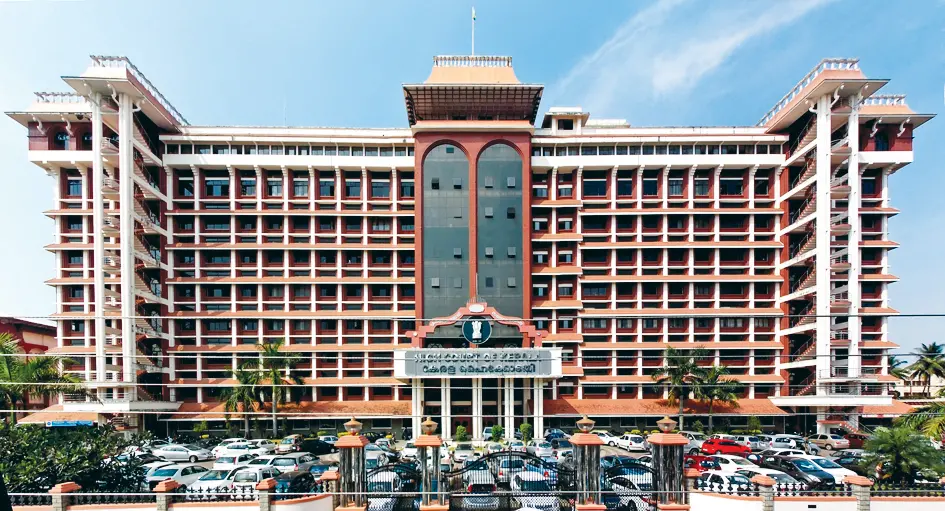
The Kerala High Court has stayed the Lakshadweep administration's order to remove Mahal and Arabic from the school curriculum in the Union Territory, following a public interest litigation (PIL) that challenged the move on cultural and constitutional grounds.
The division bench comprising Chief Justice Nitin Jamdar and Justice Basant Balaji issued the interim stay, citing the need for a context-specific approach to implementing national education reforms.
Why did the Court intervene?
“The point emphasised by the Petitioner, which prima facie, we find merit in, is that for the implementation of the Policy in a particular area, there has to be an application of mind and a study of local conditions to determine what is best for the educational interests of the community,” the Court said. It noted that the National Education Policy (NEP) itself calls for such an approach.
Though the judiciary typically avoids interfering with education policy, the Bench stated that such self-restraint is based on the assumption that decisions are made after in-depth expert consultation. That condition was not clearly demonstrated in this case, the Court implied.
What prompted the legal challenge?
On May 14, the UT’s Education Department ordered that Malayalam and English be retained as the first and second languages in schools on Minicoy Island, while Hindi would replace Mahal and Arabic as the third language, under the 2023 National Curriculum Framework based on the 2020 NEP.
This led to protests across the islands.
Ajas Akber, a social worker and President of the Lakshadweep Unit of the National Students Union of India, filed the PIL. He argued that Mahal is the only language spoken in Minicoy and forms the linguistic and cultural bedrock of the community, which is a linguistic minority in the UT.
The Court said the administration may revisit the issue after appropriate local studies and meaningful stakeholder consultation.