Gujarat HC rules Hindu marriage requires ceremonies, registration not enough
A Hindu marriage cannot be treated as legally valid merely because it has been registered if the essential religious ceremonies were never performed, the Gujarat High Court has ruled in a judgment.
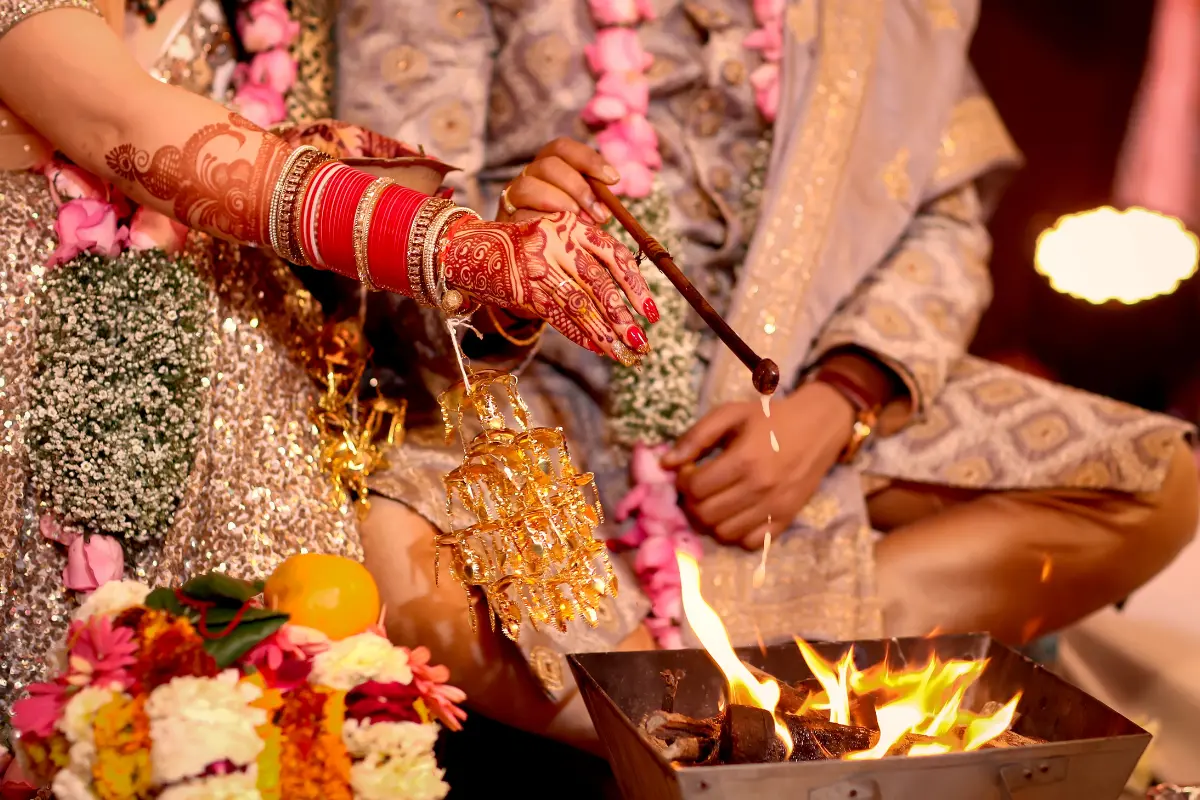
In a ruling that could have implications for similar disputes across India, the court emphasised that registration is not a substitute for the solemnisation of a marriage under Hindu customs. The judges said that ceremonies such as saptapadi, the ritual in which the bride and groom take seven steps around the sacred fire, form the core of a valid Hindu marriage.
The observation came while the court was hearing an appeal filed by a UK-based man who sought to have an alleged marriage declared void. He argued that he had never married the woman in question, had never participated in any marriage ceremony with her and had never lived with her as husband and wife.
According to the petitioner, he became aware of the alleged marriage only after the woman approached his family with a marriage certificate claiming to be his legally wedded wife. He further alleged that his signatures on certain documents had been obtained without his free and informed consent.
A division bench of Justices Ilesh Vora and R.T. Vachhani found that the Family Court had erred in dismissing the man's petition. The High Court noted that the woman herself had admitted before the lower court that no marriage rituals or ceremonies were conducted and that the two had never shared a marital relationship.
Setting aside the Family Court's order, the High Court pointed to Section 7 of the Hindu Marriage Act, which states that a Hindu marriage must be solemnised in accordance with customary rites and ceremonies. Where saptapadi is part of those customs, the marriage becomes complete and binding only upon the performance of that ritual.
The bench observed that the absence of such ceremonies strikes at the very foundation of a Hindu marriage. Without the essential rites, the legal requirements for a valid marriage under Hindu law remain unmet, regardless of whether a marriage certificate has been issued.
The court also highlighted the traditional and social significance of marriage within Hindu law, describing it as a sacrament and a foundational institution rather than a mere formal arrangement. It said marriage carries spiritual, social and legal dimensions that cannot be reduced to documentation alone.
In its observations, the High Court remarked that marriage is not simply an event marked by celebrations, food and festivities. Instead, it represents a serious and enduring union entered into with mutual consent, dignity and commitment.
The judges further noted that Hindu marriage ceremonies, though they may differ across regions and communities, hold deep cultural and religious importance. These rituals are traditionally regarded as transformative rites that sanctify the union and mark the beginning of family life.
With PTI inputs