Gerrymandering explained: Why is it becoming a concern in India's delimitation debate?
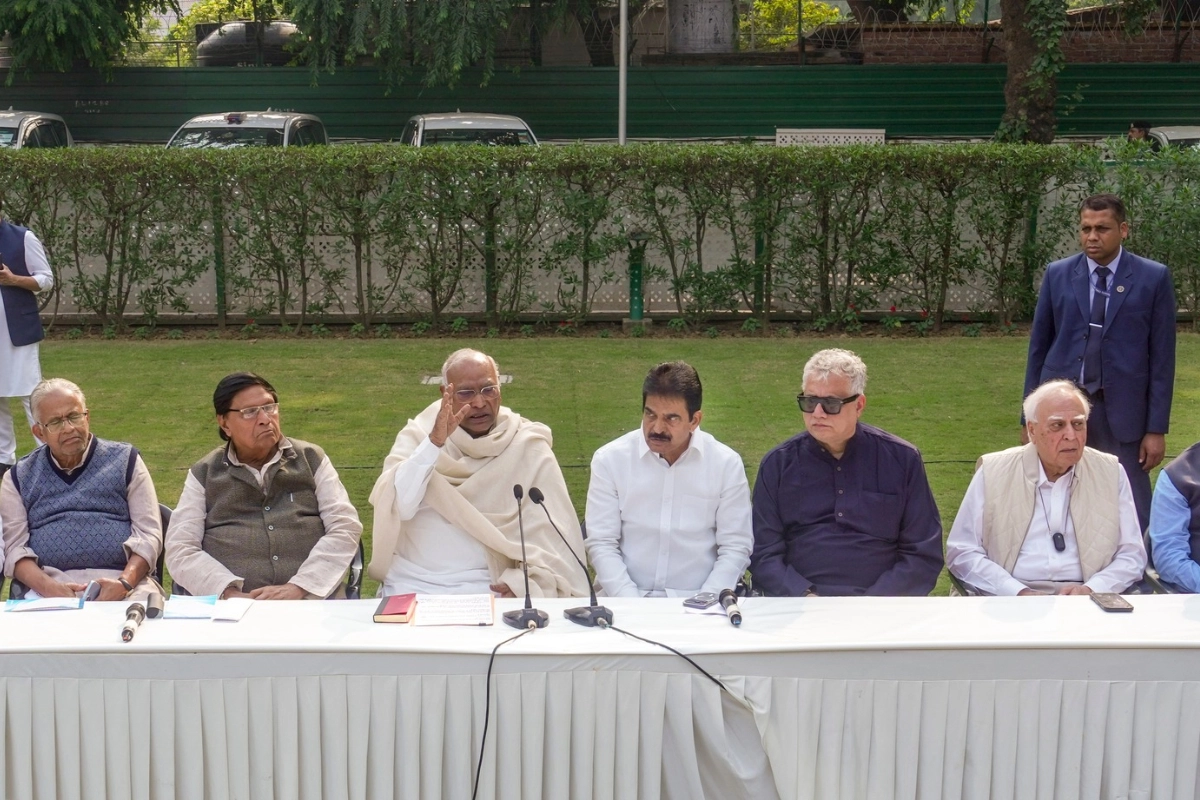
The word 'gerrymandering' is gaining attention amid the ongoing debate over delimitation in India.
Opposition parties, including the Congress, have expressed concerns that the proposed exercise of redrawing electoral constituencies could be used to give the ruling BJP an electoral advantage.
But what exactly does gerrymandering mean? And how can changing an area's boundaries influence the outcome of an election?
In simple terms, gerrymandering means drawing election constituency boundaries in a way that helps one political party win more seats than it otherwise might.
To understand this, imagine a state with 100 voters divided into five constituencies, with 20 voters in each. Suppose 50 voters support Party A and the remaining 50 support Party B.
If the boundaries are drawn fairly, both parties may have a reasonable chance of winning seats. However, if the boundaries are deliberately changed, the result could be very different.
The 50 voters supporting Party A could be spread across all five constituencies, making them a minority in each. Meanwhile, Party B could become the majority in all five.
In this hypothetical example, Party B could win all five seats despite having the same total number of supporters as Party A.
That is the basic idea behind gerrymandering. It does not involve changing people's votes. Instead, it changes how voters are grouped into constituencies.
How does gerrymandering work? Two simple ways to understand it
There are two commonly used methods for manipulating electoral boundaries.
1. Packing: Imagine a political party has strong support among voters in a particular area. The boundaries are drawn so that most of these supporters are placed in just one constituency. The party may win that seat by a huge margin, but its supporters have little influence in neighbouring constituencies.
For example, if Party A has 60 supporters and Party B has 40 in an area of 100 voters, all 60 supporters of Party A could be placed in one constituency. Party A wins that seat, but its influence is concentrated there rather than spread across multiple seats.
2. Cracking: This is almost the opposite of packing. Here, voters who support a particular party are divided across several constituencies so that they become a minority in each. For example, imagine 60 supporters of Party A are divided equally among three constituencies, with 20 supporters in each. If Party B has 30 supporters in each constituency, Party A could lose all three seats despite having more supporters overall.
Both methods show how the same group of voters can have different levels of political representation depending on where constituency boundaries are drawn.
Why is the Opposition worried about India's delimitation exercise?
The concern has resurfaced as the Centre prepares to introduce fresh legislation related to delimitation in Parliament on November 30.
The government's revised proposal seeks to increase the number of Lok Sabha seats by 50% across states while maintaining their relative share of representation until 2051.
The exercise is also linked to implementing 33% reservation for women in Parliament and state Assemblies.
However, Opposition parties say the bigger question is not just how many seats will be added, but how the boundaries of individual constituencies will be decided.
Congress leader Rahul Gandhi has alleged that the proposed exercise could give the BJP an opportunity to redraw constituencies in its favour.
He has demanded a bipartisan Delimitation Commission with Opposition representation.
Opposition leaders have also referred to the delimitation exercises in Assam and Jammu and Kashmir while questioning whether political considerations could influence the process. The BJP has rejected allegations of political manipulation.
The Opposition's concern is that if constituencies are drawn in a way that favours one party, that party could win more seats even without receiving more votes overall.
The government, meanwhile, maintains that delimitation is necessary to expand representation and accommodate population changes. It is important to understand that delimitation and gerrymandering are not the same.
Delimitation is the process of fixing constituency boundaries, while gerrymandering refers to manipulating those boundaries for political advantage.
Ultimately, the debate raises an important question: Can India redraw its electoral map while ensuring that every voter gets fair representation, irrespective of which political party they support?