New Pamban Bridge: Engineered to withstand cyclones stronger than the one in 1964
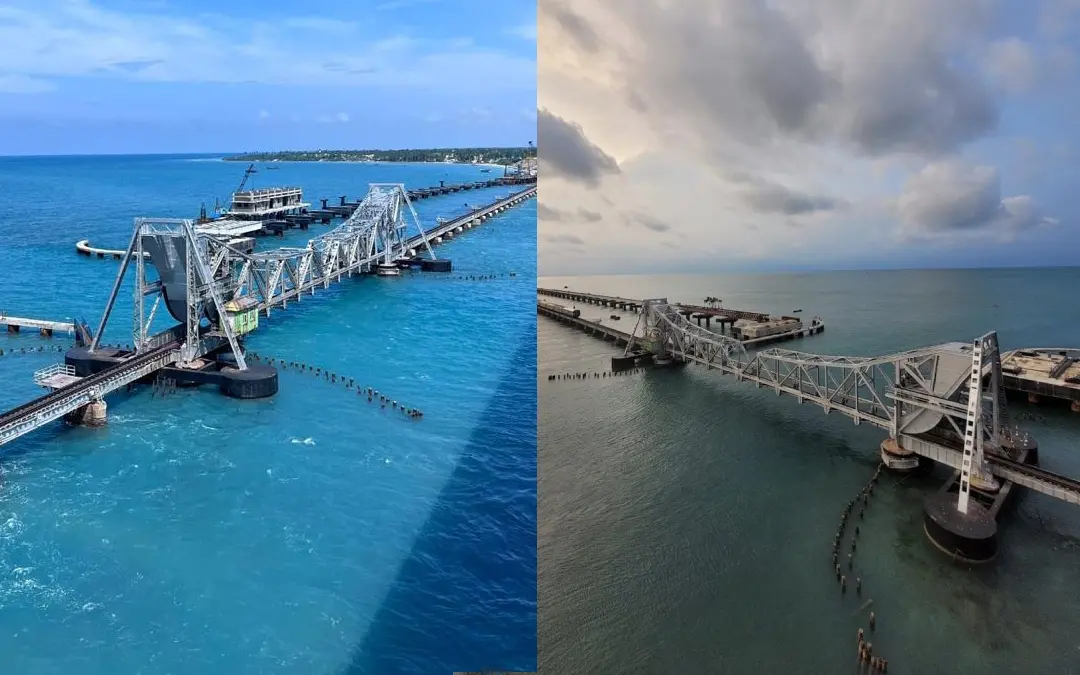
Rameswaram: The New Pamban Bridge, inaugurated by Prime Minister Narendra Modi in Rameswaram, Tamil Nadu, is designed to withstand cyclones with wind speeds higher than those of the devastating 1964 cyclone that heavily damaged the previous bridge, a senior official stated on Sunday.
MP Singh, Director (Operations) at Rail Vikas Nigam Limited (RVNL), explained that the new bridge can withstand wind speeds of up to 230 km/h, as well as significant seismic forces. In contrast, the 1964 cyclone had wind speeds of about 160 km/h, which caused substantial damage to the old bridge. However, Singh noted that the Scherzer Span, which used to open for ship movement, survived the cyclone without damage.
RVNL is responsible for the planning, designing, execution, and commissioning of this vertical lift span bridge, which is a first of its kind. Singh highlighted that designing the bridge to withstand intense cyclones posed unique challenges. “We took extra measures to ensure that high-intensity cyclones will not cause any harm to the bridge,” he said.
Additionally, the bridge has built-in safety protocols. The lift span will remain in a seated position at all times, lifting only during ship movement. The girders are placed 4.8 meters above sea level, reducing the risk of water reaching the structure even during high tide. In comparison, the girders of the old bridge were just 2.1 meters above sea level, which led to frequent water splashes, sometimes damaging the tracks during high tide.
The 1964 cyclonic storm caused widespread devastation in Rameswaram and the surrounding rail network. On December 22, 1964, the Pamban-Dhanushkodi passenger train, carrying 110 passengers, including students and railway staff, was caught in the storm. The train was struck by a massive 20-foot wave from the sea, leading to tragic consequences. While initial reports suggested 115 casualties, it is believed that the actual toll may have been closer to 200, as many passengers traveled without tickets.
The railway ministry revealed that parts of the train’s wooden carriages were washed ashore on the Sri Lankan coast, and the region also experienced significant fatalities. The Pamban viaduct was completely washed away, leaving only the piers and a few girders intact.