Environmental violations decriminalised: Civil penalties up to ₹50 lakh now replace jail terms
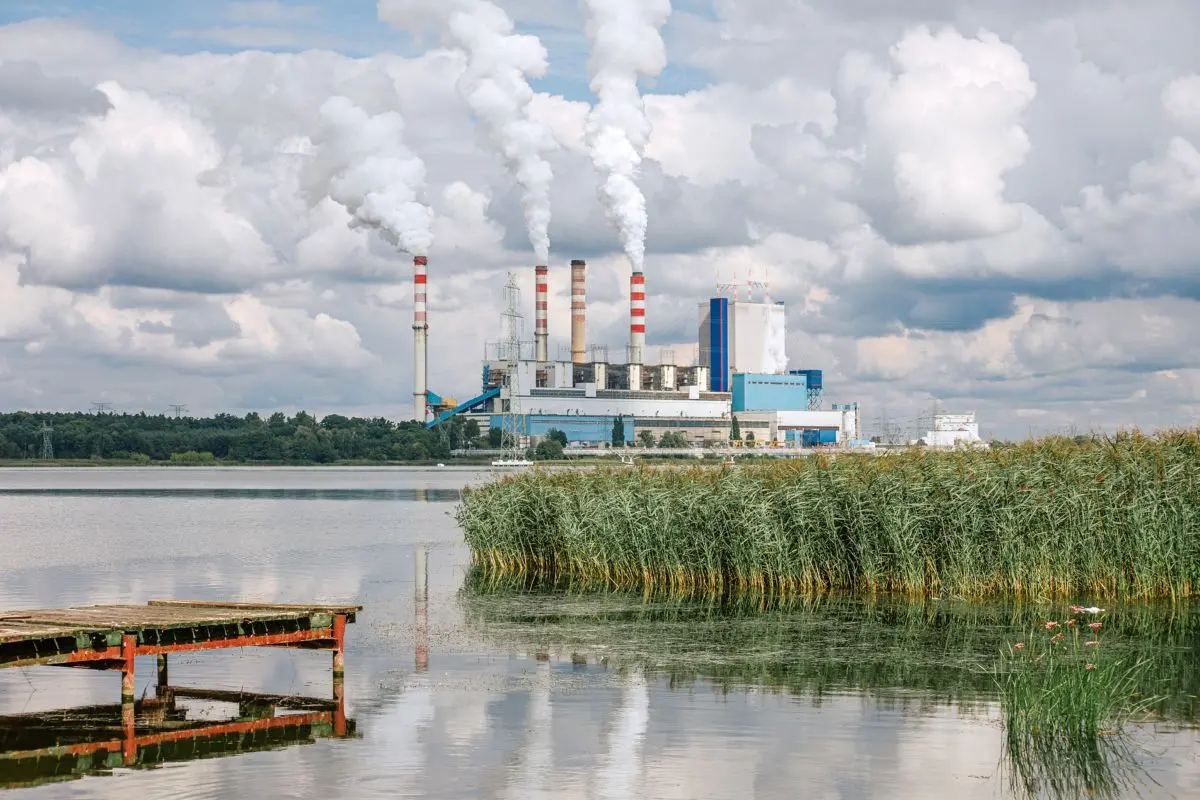
India has formally completed a major recalibration of its environmental enforcement regime, replacing criminal prosecution for many minor and procedural violations under the Air (Prevention and Control of Pollution) Act, 1981 and the Environment (Protection) Act, 1986 with administrative adjudication and graded civil penalties.
The changes flow from the Jan Vishwas (Amendment of Provisions) Act, 2023, and were published in a Gazette notification by the Ministry of Law and Justice.
The reform creates a two-track system: routine breaches -- such as documentation failures, reporting lapses, obstruction of inspections or certain emission-related non-compliances -- will be penalised administratively, while serious defaults, including operating without mandatory consent and refusal to pay penalties, remain criminal offences.
Air Act: penalties replace prosecution
The amendments substantially rewrite the penalty provisions of the Air Act. Section 37, which deals with non-compliance with emission standards or directions issued under Section 31A, now provides for a civil penalty of ₹10,000 to ₹50 lakh, with an additional penalty of ₹10,000 per day for a continuing violation.
Sections 38 and 39, covering procedural defaults, obstruction, failure to furnish information, damage to Board property and general contraventions, now attract civil penalties of ₹10,000 to ₹15 lakh, plus up to ₹10,000 per day where the failure continues.
For government departments, Section 38A makes the head of the department or the negligent officer responsible for a contravention liable to a penalty equivalent to one month’s basic salary. The officer can avoid liability by proving that the violation occurred without their knowledge or instruction, or that they exercised due diligence to prevent it.
Consent regime gets central oversight
The amendments also alter the consent architecture under Sections 21 and 21A. The Central Government, in consultation with the Central Pollution Control Board (CPCB), may exempt specified categories of industrial plants from the requirement to obtain prior consent from State Pollution Control Boards (SPCBs) for establishing or operating in air-pollution control areas.
It may also issue binding guidelines to SPCBs on the grant or refusal of consents, timelines for disposing of applications and the validity period of consents. The intent is to reduce discretion, standardise compliance expectations and speed up approvals for lower-risk categories of industry.
Criminal liability retained
The reform does not decriminalise every breach. Operating an industrial plant without the prior consent required under Section 21 remains a criminal offence, punishable with imprisonment of one-and-a-half to six years, extendable to seven years for persistent defaults.
Failure to pay an administrative civil penalty within 90 days also triggers criminal consequences: imprisonment of up to three years, a fine of up to twice the penalty amount, or both.
Environment Protection Act: graded penalties
Under the Environment (Protection) Act, the Jan Vishwas amendments replace the earlier imprisonment-based regime for many violations with a graded civil-penalty structure.
Under the earlier framework, contraventions of the Environment (Protection) Act could attract imprisonment of up to five years and fine, with continuing violations drawing additional daily fines; a violation continuing beyond a year after conviction could attract imprisonment up to seven years.
The amended regime instead provides for civil penalties determined by an adjudicating officer. For contraventions or non-compliance not covered by another specific penalty, the law now prescribes a penalty of not less than ₹10,000 and up to ₹15 lakh for each contravention, with ₹50,000 per day for continuing non-compliance.
Obstruction, inspection and sampling-related defaults under Sections 9, 10 and 11 carry penalties of ₹10,000 to ₹5 lakh, plus ₹10,000 per day for continued obstruction. General non-compliance with the Act, rules, orders or directions attracts ₹10,000 to ₹15 lakh, with an additional ₹10,000 per day.
For companies, Section 15A prescribes penalties of ₹1 lakh to ₹15 lakh, with ₹1 lakh per day for continuing violations. Government departments face the same salary-linked penalty as under the Air Act: the head of department or negligent officer may be penalised an amount equal to one month’s basic salary.
Adjudicating officers and appeals
Civil penalties will be imposed by designated adjudicating officers appointed by the Central Government. Under both statutes, the officer must be not below the rank of Joint Secretary to the Government of India or a Secretary to a State Government; the officer can summon evidence, conduct an inquiry and pass a reasoned penalty order after giving the alleged violator an opportunity to be heard.
Aggrieved parties can appeal to the National Green Tribunal (NGT). Under the Air Act framework, an appeal against an adjudicating officer’s order lies before the NGT, which can review and modify or set aside the penalty order.
Environmental Protection Fund
A central feature of the reform is the statutory Environmental Protection Fund under Section 16 of the Environment (Protection) Act. All civil penalties and additional penalties imposed under the relevant Air Act provisions—Sections 37, 38, 38A and 39—and under Environment (Protection) Act provisions—Sections 14A, 14B, 15, 15A and 15B—are to be credited to the Fund.
The Gazette text for the Air Act states:
“Where an adjudicating officer imposes penalty or additional penalty, as the case may be, under sections 37, 38, 38A or 39, the amount of such penalty shall be credited to the Environmental Protection Fund established under section 16 of the Environment (Protection) Act, 1986 (29 of 1986).”
The Fund is intended to support environmental awareness, education and scientific research, as well as enforcement expenses incurred under both statutes.
Why the government moved
The existing criminal process was widely seen as slow, uncertain and poorly suited to high-volume regulatory enforcement. Environmental cases often involve emission-record errors, delayed returns, monitoring lapses or procedural non-compliance, where a criminal trial may be disproportionate and difficult to sustain.
By creating an administrative penalty route, the government is seeking to make enforcement faster, more predictable and more commercially workable, while retaining judicial oversight through the NGT. The amended Environment (Protection) Act text was last updated on October 15, 2026, indicating that the legislative changes preceded today’s formal gazette publication.
What changes on the ground
For industry, the immediate shift is procedural rather than a blanket amnesty. Companies will face fewer automatic criminal prosecutions for technical lapses, but will encounter a more structured penalty system with daily escalation for continuing violations.
For regulators, the change is designed to free courts from low-value cases and allow pollution control boards to focus on serious pollution, repeat offenders and consent enforcement.
For citizens and environmental groups, the critical test will be whether the new administrative system delivers timely penalties, transparent fund utilisation and effective remediation.
The Jan Vishwas (Amendment of Provisions) Act was enacted on August 11, 2023. The Centre notified April 1, 2024 as the commencement date for the Air Act-related amendments, while the Environment (Protection) Act amendments were also brought into force from that date.
Today’s notification completes the legal transition from a predominantly criminal enforcement model to one built around administrative adjudication, civil penalties and a dedicated environmental fund.