Direct flights, border trade and more: How India-China seek to ease strained ties amid US tariff threats
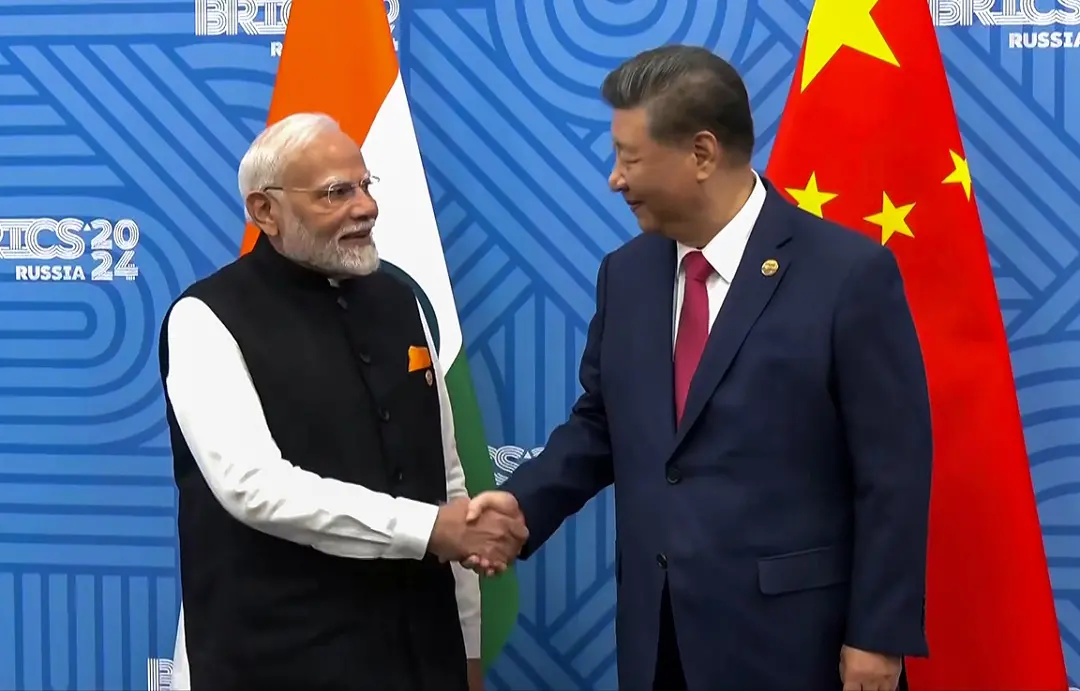
India and China on Tuesday unveiled a package of measures to rebuild their strained relationship at a time when the United States has been threatening back-to-back tariff hikes. The announcements came after wide-ranging talks between Chinese Foreign Minister Wang Yi, External Affairs Minister S Jaishankar, National Security Advisor Ajit Doval, and a meeting with Prime Minister Narendra Modi.
The agreements followed Wang’s two-day visit to Delhi and are aimed at achieving a “stable, cooperative and forward-looking” relationship. The talks addressed border management, investment flows, flights, pilgrimages, and trade.
Direct flights and air services agreement
Both sides agreed to resume direct flight connectivity between Chinese mainland cities and India at the earliest. They will also finalise an updated Air Services Agreement. Flights were suspended after the Doklam crisis and the Covid pandemic.
Border trade to reopen
The two countries agreed to reopen border trade through the three designated points — Lipulekh Pass, Shipki La Pass and Nathu La Pass. They will facilitate trade and investment flows through “concrete measures” and ease visas for tourists, businesses, media, and other visitors in both directions.
Pilgrimage expansion from 2026
India and China agreed to continue and expand the scale of the Indian pilgrimage to Mount Kailash/Gang Renpoche and Lake Manasarovar/Mapam Yun Tso in Tibet, starting 2026. The resumption of the yatra through Nathula, also raised earlier in Parliament, is expected to boost spiritual travel and local economies.
Border talks and management
NSA Doval and Wang agreed to explore a mutually acceptable boundary settlement framework under the 2005 Guiding Principles. They also decided to set up an expert group under the Working Mechanism for Consultation and Coordination (WMCC) to discuss boundary delimitation.
Both sides agreed to strengthen border management by creating new “general level mechanisms” in Eastern and Middle sectors, in addition to those in the Western sector, and to hold early meetings. They will use diplomatic and military-level mechanisms to carry forward discussions on de-escalation.
Commitment to peace and counter-terrorism
The joint statement emphasised maintaining peace and tranquillity along the frontier. India strongly raised terrorism, including cross-border threats, noting that countering terrorism was an original objective of the Shanghai Cooperation Organisation (SCO). Wang concurred that combating terrorism should be a top priority.
Leaders’ meetings and SCO Summit
On August 19, PM Modi met Wang Yi at the Prime Minister’s Office in Delhi. Modi conveyed greetings to President Xi Jinping and Premier Li Qiang and confirmed his anticipation of attending the SCO Summit in Tianjin on August 31 and September 1.
Modi stressed that India and China, as ancient civilisations, should strengthen exchanges, prudently manage border issues, and prevent differences from becoming disputes. He called for constructive ties that contribute to regional and global peace.
Doval highlighted an “upward trend” in ties, citing peace at the border in recent months. The disengagement agreement in Ladakh last October, resolving Demchok and Depsang friction points, has helped create “a new environment” for cooperation.
Wang said the relationship is facing “an important opportunity of improvement and growth” and underlined China’s expectation for Modi’s SCO visit.
With ANI, PTI inputs