Delimitation Bill: Regional parties hold key as NDA and INDIA bloc sharpen strategies | Explainer
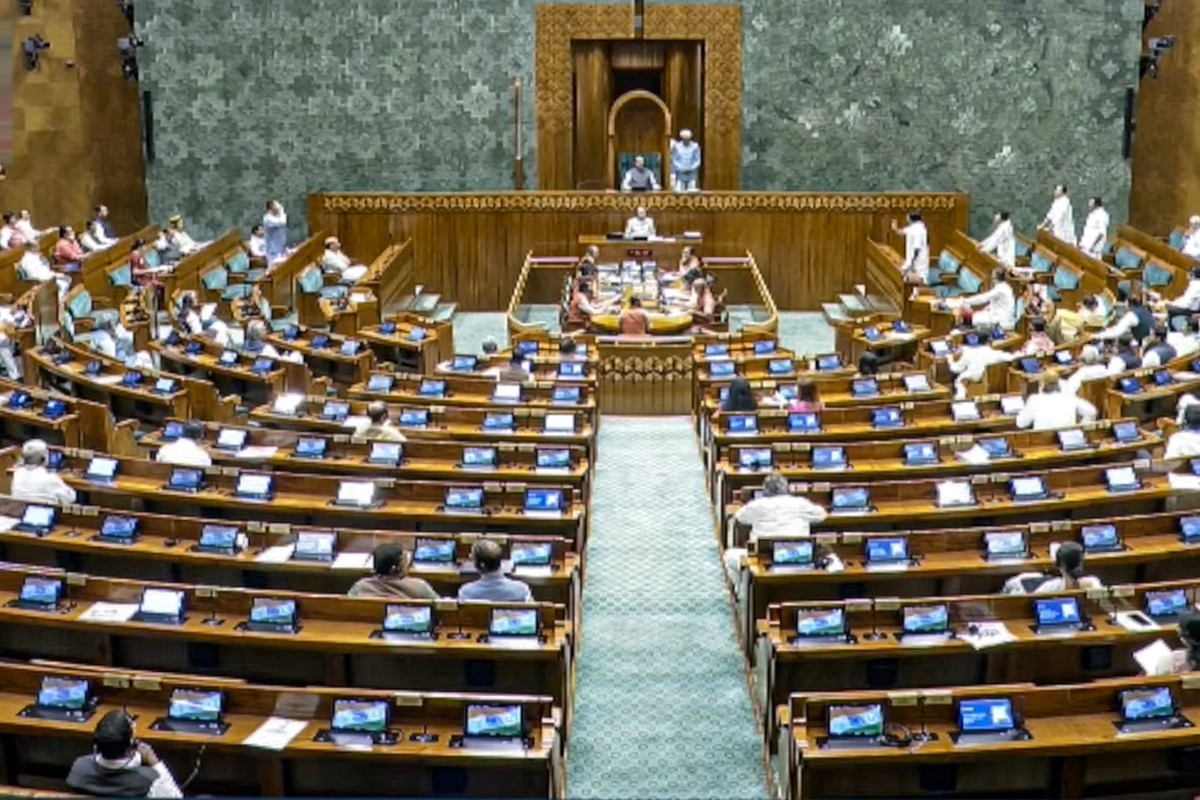
The Union Cabinet has cleared the Constitution (One Hundred and Thirty-Second Amendment) Bill, setting the stage for a high-stakes parliamentary battle during a special sitting beginning on 30 November. Seven months after an earlier attempt fell short in the Lok Sabha, the ruling National Democratic Alliance (NDA) is mounting a fresh legislative drive to link a nationwide seat expansion with a long-delayed 33 per cent reservation for women in legislatures.
Government proposes uniform seat expansion across states
Under the revised framework, the maximum strength of the Lok Sabha will expand from 543 to 850 seats, alongside a flat 50 per cent increase in state assembly ceilings from 500 to 650. To address anxieties among southern states that successful population control measures might diminish their political weight, the government has anchored state allocations to existing proportions established under the 1971 census, freezing those relative shares until 2051. Tamil Nadu, for instance, is assured that its 7.18 per cent share of Lok Sabha representation will remain intact.
Boundaries will be redrawn using published 2011 census figures rather than waiting for upcoming population counts, aiming to roll out female seat quotas prior to the 2029 general elections. Under the companion Delimitation (Second) Bill, a three-member commission chaired by a Supreme Court judge will demarcate boundaries and rotate reserved constituencies within Scheduled Caste and Scheduled Tribe categories. Raising the state assembly ceiling also permits populous states like Uttar Pradesh to expand to roughly 605 seats without bifurcating the state.
Regional party shifts reshape parliamentary numbers game
Enacting a constitutional amendment requires a two-thirds majority of members present and voting. When the previous iteration failed on April 17 after securing 298 votes against 230, the government fell 54 votes short of the required threshold. Parliamentary arithmetic has shifted substantially since the April vote. The ruling coalition NDA has bolstered its baseline strength in the 540-member Lok Sabha to 320 members, aided by twenty breakaway Trinamool Congress lawmakers aligning with the government and six Shiv Sena cross-overs.
To reach the 360-vote threshold under full attendance, government is reportedly banking on support from key regional outfits, including the Dravida Munnetra Kazhagam, the YSR Congress Party, the Bharat Rashtra Samithi, and the Sharad Pawar faction of the Nationalist Congress Party. In the 244-seat Rajya Sabha, where the threshold sits at 163, the ruling coalition requires backing from independent regional groups like the Biju Janata Dal. Opposing the measure carries high political risk, as parties fear being accused of obstructing women's empowerment ahead of upcoming state elections.
Opposition bloc prepares final counter-strategy
Faced with potential depletion of at least 57 opposition lawmakers, the INDIA alliance has convened emergency strategy sessions in New Delhi ahead of Monday's Business Advisory Committee meeting. Member parties have issued strict three-line whips ordering MPs to attend and vote against the bill, while initiating measures to shield lawmakers from political overtures.
Congress leadership has pushed back sharply, accusing the Centre of using women's reservation as a cover for territorial delimitation and questioning the impartiality of Chief Election Commissioner Gyanesh Kumar regarding electoral roll management. Alliance partners contend that women's reservation should be enacted immediately on current parliamentary numbers rather than tied to delimitation. Opposition figures are also making public appeals to regional leaders to preserve opposition unity ahead of five to six hours of scheduled voting on December 1.