Gender report shows gains in health and schooling, yet economic gaps persist for Delhi women
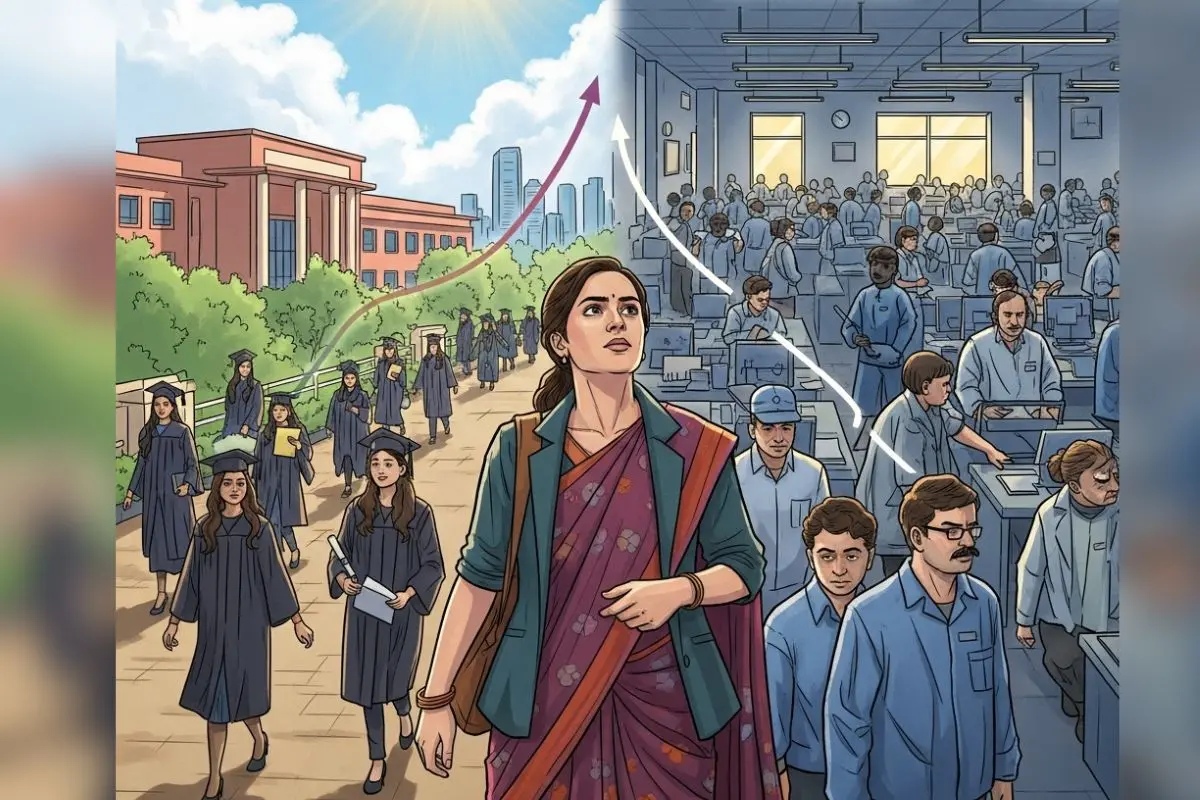
New Delhi: Delhi’s latest statistical review of gender indicators has revealed a clear contradiction: women in the capital are living longer, enrolling in higher education in greater numbers and increasingly taking up teaching roles, yet their participation in the workforce remains strikingly low. These findings come from Women & Men in Delhi – 2025, published by the Directorate of Economics and Statistics and based largely on national datasets.
Data from the Periodic Labour Force Survey (2017–18 to 2023–24) shows that women’s presence in Delhi’s labour market continues to trail significantly behind that of men. In 2023–24, the Worker-Population Ratio for women was just 14.3%, compared with 52.8% for men. The Labour Force Participation Rate reflected a similar disparity, with women at 14.5% and men at 54%.
Steady increase in female teachers
The situation is markedly different in the education sector. Citing UDISE+ data from the Ministry of Education, the report highlights a steady increase in the proportion of female teachers. At the primary level, the number of women teachers per 100 male teachers rose from 363 in 2012–13 to 415 in 2024–25. The pattern continued at the upper-primary stage (214 to 261) and at higher secondary (152 to 168).
Women’s enrolment in higher education also crossed the halfway mark in 2023–24, reaching 50.57%, up from 49.08% the previous year, according to the Directorate of Higher Education. Employment data, however, reveals structural challenges. PLFS figures show that 70.2% of working women in 2023–24 were in regular wage or salaried jobs, while only 26.4% were self-employed—compared with 40.3% of men. More than 60% of employed women worked in “other services”, followed by manufacturing (16.68%) and trade, hotels and restaurants (12.2%).
Health and political participation show progress
Health indicators show improvement as well. National Family Health Survey data records female life expectancy at 76.2 years between 2016 and 2020, six years higher than that of men. Maternal mortality fell from 0.55 in 2019 to 0.44 in 2024. Post-natal care coverage increased sharply from 62.3% to 85.4%, and the prevalence of anaemia among women aged 15–49 declined from 54.3% to 49.9%.
Literacy data from the Census and NSS suggests rising educational attainment. In rural Delhi, literacy among those aged seven and above increased from 93.8% to 96.3% between 2014 and 2017–18, while urban literacy rose from 89.8% to 92%. Delhi’s overall literacy rate recorded in the 2011 Census was 86.21%.
The report also examines women’s political participation. In the 2025 Delhi Assembly elections, 7.24 million women were registered to vote out of more than 15.6 million electors. However, representation in the Assembly fell, with the number of women MLAs declining from eight in 2020 to five in 2025. In the 2024 Lok Sabha elections, women’s representation from Delhi improved slightly, with two women MPs elected compared with one in 2019.
Taken together, the data presents a mixed picture—substantial gains in education and health, yet persistently low economic participation and uneven political representation—highlighting the challenges that continue to confront women in the national capital.