Is winter arriving early in Delhi? Heavy rain brings sharp temperature drop
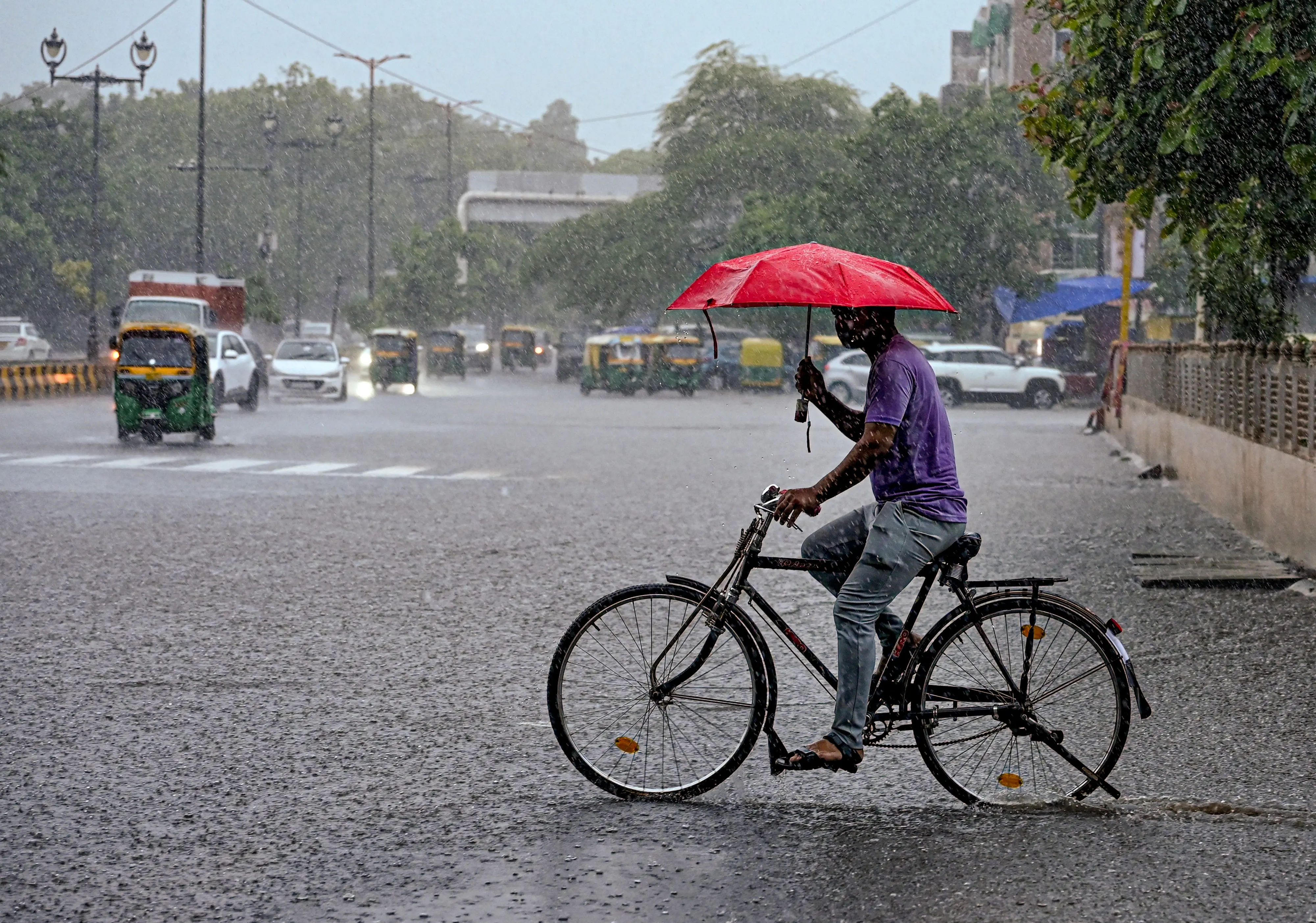
New Delhi: Delhi and neighbouring areas, including Noida, Ghaziabad and Gurugram, witnessed heavy overnight rainfall as the residual impact of Cyclone Arnab affected weather conditions across parts of north India. The showers brought a noticeable drop in temperatures, giving the National Capital Region a winter-like feel on Friday morning.
According to the India Meteorological Department (IMD), Delhi recorded 61.4 mm of rainfall in the 24 hours ending at 8.30 am on October 30. This was the capital’s highest October rainfall since 2022. The minimum temperature fell to around 17.2 degrees Celsius, while the air quality index (AQI) also improved following the rain.
The IMD issued a red alert for Delhi for the next few hours, warning of further rainfall, thunderstorms and lightning. The alert covered all districts of the capital, including New Delhi, Central, East, West, North, South, Northeast, Northwest, Southeast and Southwest Delhi, as well as Shahdara. Some locations were also likely to receive intense showers.
Cloudy skies and spells of light to moderate rain were forecast across Delhi-NCR, including Noida, Ghaziabad, Gurugram and Faridabad. The weather department also warned of thunderstorms and lightning in several areas.
75 Uttar Pradesh districts placed on alert
The IMD issued a weather alert for 75 districts in Uttar Pradesh on Friday. Heavy rainfall was forecast in 21 districts, including Gorakhpur, Ayodhya and Moradabad, while thunderstorms were expected in other parts of the state.
Lucknow experienced cloudy conditions and strong winds on Friday morning, following light rain on Thursday afternoon. Heavy showers were reported in Meerut and Varanasi, while light rainfall was recorded in 18 districts, including Ayodhya, Ghaziabad and Gorakhpur.
The weather department also warned of heavy to very heavy rainfall in Jharkhand, Sub-Himalayan West Bengal, Sikkim and eastern Uttar Pradesh.
A possible flash flood risk was flagged in vulnerable and low-lying areas of several states. The districts identified included Korba, Surguja and Balrampur in Chhattisgarh; Sundargarh, Keonjhar and Sambalpur in Odisha; Palamu and Simdega in Jharkhand; East Champaran, West Champaran, Rohtas and Bhojpur in Bihar; and Sonbhadra, Ghazipur and Ballia in eastern Uttar Pradesh.
Cyclone Arnab’s aftermath
Cyclone Arnab had earlier caused widespread disruption in Odisha, Andhra Pradesh and neighbouring regions. According to an initial assessment, Andhra Pradesh reported losses of approximately Rs 4,600 crore.
Rail services on the Howrah-Chennai route were also affected, with several trains cancelled, diverted, regulated or rescheduled. In Odisha, the state government deployed more than 300 teams for rescue operations in Ganjam and eight other districts.
Andhra Pradesh Chief Minister N. Chandrababu Naidu conducted an aerial inspection of cyclone-affected areas in the Krishna and Godavari regions. Although the cyclone has weakened, its remnants continue to influence weather conditions across several states, bringing rain and thunderstorms.
Why is Delhi experiencing a sudden drop in temperature?
The heavy rainfall has brought a temporary change in Delhi’s weather, with lower temperatures and improved air quality. Rain can wash some pollutants out of the atmosphere, which may explain the reported improvement in AQI.
The rainfall is part of the wider weather impact following Cyclone Arnab. Even after a cyclone weakens, its associated moisture and weather systems can continue to trigger rain and thunderstorms over areas away from its original path.
The alerts across Delhi, Uttar Pradesh, Jharkhand, Sikkim, Odisha and Bihar highlight the possibility of further rainfall-related disruption. Heavy showers can increase the risk of waterlogging, traffic disruption and flash flooding, particularly in low-lying areas.