Women cops storm flight to detain CJP leaders: Why Delhi Police chose this move
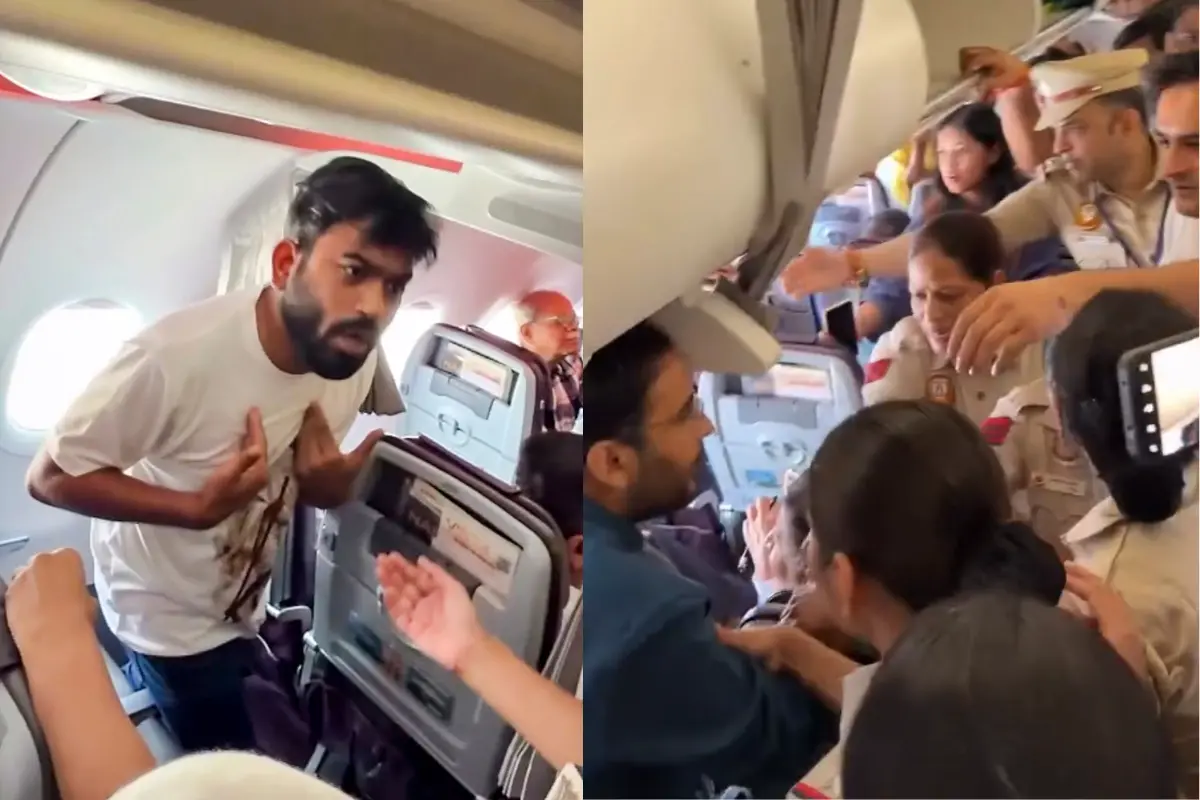
News Delhi: Delhi Police deployed women officers to detain Cockroach Janta Party (CJP) leaders Abhijeet Dipke, Saurav Das and Ashutosh Ranka aboard their flight at Delhi airport on Saturday, ahead of the group's planned protest at Jantar Mantar.
While the police have not confirmed the reason for the deployment, the move may have been intended to prevent a confrontation and avoid a repeat of allegations of police brutality during the group's July agitation.
Why Delhi Police may have deployed women officers
The detention of CJP leaders aboard an aircraft at Indira Gandhi International Airport on October 10 drew attention to the Delhi Police's decision to deploy women officers for the operation.
According to India Today, the police may have anticipated that using male officers could trigger a confrontation in the confined space of an aircraft. Narrow aisles and limited room for movement can make it difficult to manage a tense situation without disrupting other passengers.
However, the police have not publicly confirmed whether this was the reason behind the deployment. The suggestion that women officers were chosen to prevent an escalation remains an interpretation rather than an established explanation.
The move also came against the backdrop of the July 20 clashes between police and student protesters during demonstrations over alleged examination paper leaks. The CJP had accused male police officers of assaulting young women protesters, claiming that some girls suffered head injuries and had their clothes torn. These allegations were made by the outfit and are not independently established by the information available here.
With the CJP's support base largely comprising young people, the use of women officers may also have been intended to avoid further controversy over the handling of its leaders. However, there is no official confirmation that the police adopted the strategy for this reason.
How CJP leaders were detained from the flight
CJP leaders Abhijeet Dipke, Saurav Das and Ashutosh Ranka were detained after their Air India flight from Mumbai landed at Delhi airport on Saturday.
As police personnel boarded the aircraft, Dipke began recording the incident from his window seat. Das was seated in the middle seat, with Ranka next to him.
Videos shared from inside the aircraft showed around a dozen women police personnel surrounding the three leaders. The CJP leaders raised slogans, including "Inquilab Zindabad" and "Bharat Mata ki Jai", as officers asked them to cooperate.
Dipke questioned why the police had boarded the aircraft to detain them instead of allowing them to disembark first. He described the action as dictatorial and said he had come to Delhi prepared to be arrested.
The officers subsequently took Dipke, Das and Ranka to separate locations. The detention took place ahead of the CJP's planned demonstration at Jantar Mantar, where the organisation intended to demand the resignation of Chief Election Commissioner Gyanesh Kumar.
Delhi Police's security crackdown ahead of the CJP protest
The detention of the three leaders was part of a wider security operation across the national capital to prevent the planned demonstration from taking place.
Delhi Police had denied permission for the protest, citing the late submission of the request. Despite the denial, the CJP decided to proceed with its agitation.
Authorities established checkpoints on roads leading into Delhi, barricaded areas around Jantar Mantar and deployed security personnel at key locations. Restrictions were also imposed on access to parts of the city.
According to the reports provided, more than 400 people had been detained by the time of reporting. YouTuber Dhruv Rathee and CJP legal cell head Ratna Singh were also detained before they could join the protest.
The security arrangements affected public transport. Entry and exit gates at 45 Delhi Metro stations were closed, while more than 250 trains scheduled to arrive at New Delhi and Hazrat Nizamuddin railway stations were reportedly cancelled. The scale of the restrictions drew scrutiny in light of a Supreme Court direction against completely prohibiting traffic movement or stopping trains.
The Associated Press separately reported that police intercepted demonstrators at checkpoints and detained protesters before they could reach the designated protest site. Some demonstrators managed to breach police cordons before being detained.
Why the CJP protest matters
The October 10 demonstration was intended to broaden the CJP's campaign beyond its earlier protests over alleged examination paper leaks. The immediate demand was the resignation of Chief Election Commissioner Gyanesh Kumar over the Election Commission's Special Intensive Revision (SIR) of electoral rolls.
Opposition parties and protesters have alleged that the revision risks removing eligible voters from electoral rolls and have questioned its implementation. The Election Commission and the government have rejected allegations of political manipulation, maintaining that the exercise is intended to remove duplicate and ineligible entries.
The dispute has become a wider political issue, with opposition parties questioning the transparency and impact of the voter-list revision. The CJP's involvement has brought its youth-led protest campaign into this debate.
The group's earlier agitation over alleged examination paper leaks culminated in the resignation of the Union education minister in July, according to the Associated Press report. The latest protest therefore represents an attempt to sustain public mobilisation while taking up a separate issue involving electoral administration.
What the airport detention reveals
The decision to detain CJP leaders before they reached Jantar Mantar reflects the police's strategy of preventing the planned gathering from assembling. Intercepting organisers at an airport and detaining other prominent figures before the demonstration could limit their ability to coordinate protesters at the venue.
The deployment of women officers raises a separate question about the management of politically sensitive detentions. Women personnel may be used in particular operational circumstances, but their presence alone does not establish the police's motive or demonstrate that the operation was designed to prevent allegations of excessive force.
The broader issue is the balance between maintaining public order and allowing peaceful political assembly. Police can impose lawful restrictions to address security concerns, but the scope and implementation of those restrictions remain relevant to assessing their impact on civil liberties.
The Supreme Court's reported direction concerning traffic and train services also adds to the scrutiny of the arrangements. Assessing compliance would require examining the precise terms of the court's order and the measures implemented by the authorities.
For the CJP, the detentions may become another point of contention in its campaign. For the authorities, the central questions concern the legal basis for the preventive action, the proportionality of the restrictions and whether public order could have been maintained through less disruptive measures.