Over 30 journalists detained during Delhi protests; press freedom groups condemn police action
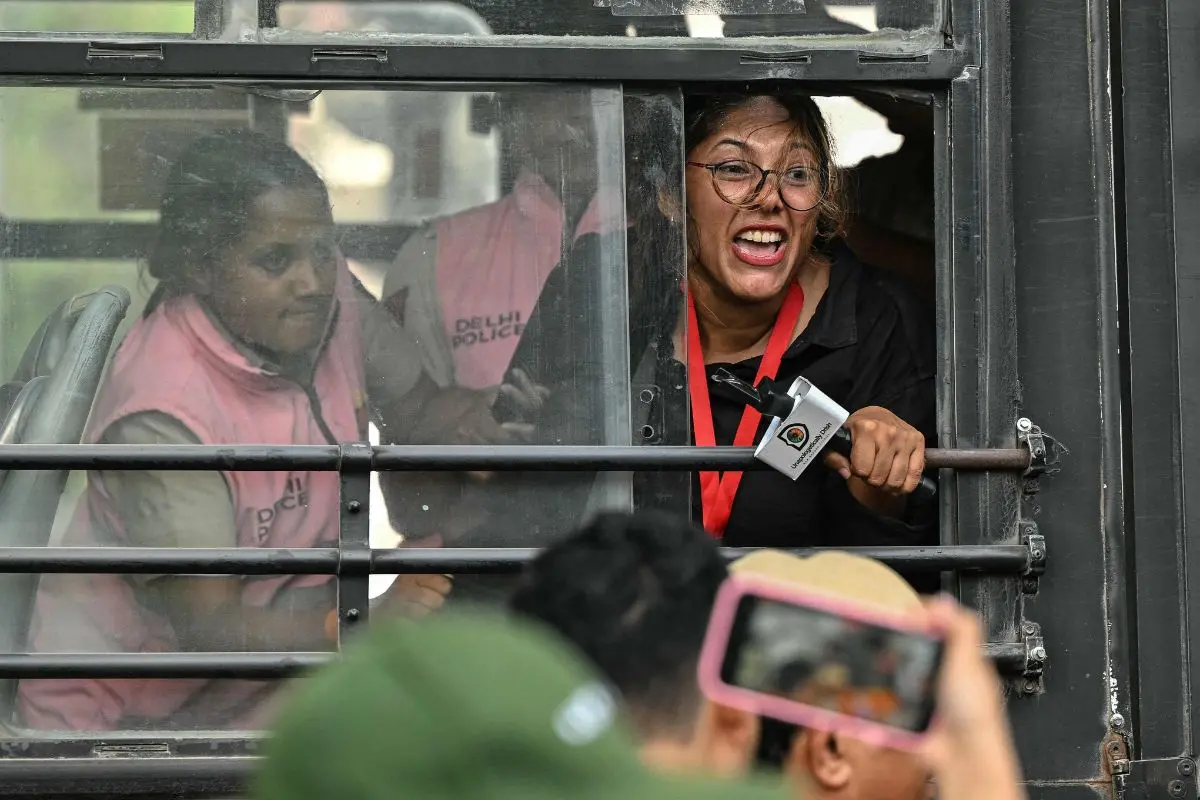
New Delhi: Journalists and press freedom organisations have accused Delhi Police of obstructing reporters covering youth-led protests in New Delhi over the weekend, alleging that more than 30 journalists were temporarily detained and some were assaulted while performing their duties.
The alleged police crackdown came amid demonstrations against a controversial revision of electoral rolls, which has removed more than 130 million names from voter lists since last year. Press freedom groups have condemned the action, raising concerns over the state of media freedom in India.
The Committee to Protect Journalists (CPJ) described the incidents as “deeply troubling and a blot on India’s democratic traditions”. It urged Indian authorities to ensure the safety of journalists and hold the officers responsible accountable.
Delhi Police, however, claimed that some protesters had posed as journalists and interfered with police operations. Footage from the demonstrations showed officers dragging away and detaining reporters, including some wearing press credentials.
Lawyers approached the Supreme Court of India on Sunday, seeking protection for journalists carrying out their professional duties. The court ruled in their favour.
Journalists recount alleged assault, detention
Ryan Thomas, a 26-year-old journalist with The Caravan magazine, alleged that police officers beat him and briefly detained him while he was covering Saturday’s demonstrations.
Thomas said he was following protesters to document their detentions when officers surrounded him and dragged him on to a bus, despite his press card being visible.
He alleged that officers struck him on the head, neck and shoulder, attempted to seize his camera and ordered him to delete his video footage.
Jahnavi Sen, managing editor of The Wire news website, said she was briefly detained along with two colleagues. They were released after other journalists gathered at the scene and began photographing the incident, she said.
Sen described the scale of the detentions as unusual, even as pressure on the media under Prime Minister Narendra Modi’s government has become increasingly common.
She alleged that the police appeared intent on preventing images of their response to the demonstrations from reaching the public.
“It was not that they couldn’t see” the press cards, she said. “It was because they didn’t want those visuals (of protests) going out.”
The Press Club of India, the country’s largest journalists’ organisation, condemned the police action as “a blatant attack on the freedom of press”.
Protests intensify over voter list revision
The demonstrations have intensified over the ongoing revision of electoral rolls, which critics allege could disenfranchise millions of voters. Opposition parties and protesters have questioned the exercise and demanded the resignation of Chief Election Commissioner Gyanesh Kumar.
The Election Commission and the Narendra Modi-led government have defended the revision, saying it is intended to remove duplicate and ineligible entries from voter lists.
The controversy has also raised broader concerns about electoral transparency and the rights of eligible voters.
India’s press freedom ranking under scrutiny
India ranks 157th among 180 countries in the press freedom index published by Reporters Without Borders (RSF), down from 133rd a decade ago.
Critics attribute the decline to what they describe as increasing restrictions on critical reporting and dissent under Modi’s government, which has been in power for 12 years. The government has repeatedly denied allegations that it has curtailed press freedom.