Delhi most polluted among 24 state and UT capitals, PM2.5 level twice the national standard: Report
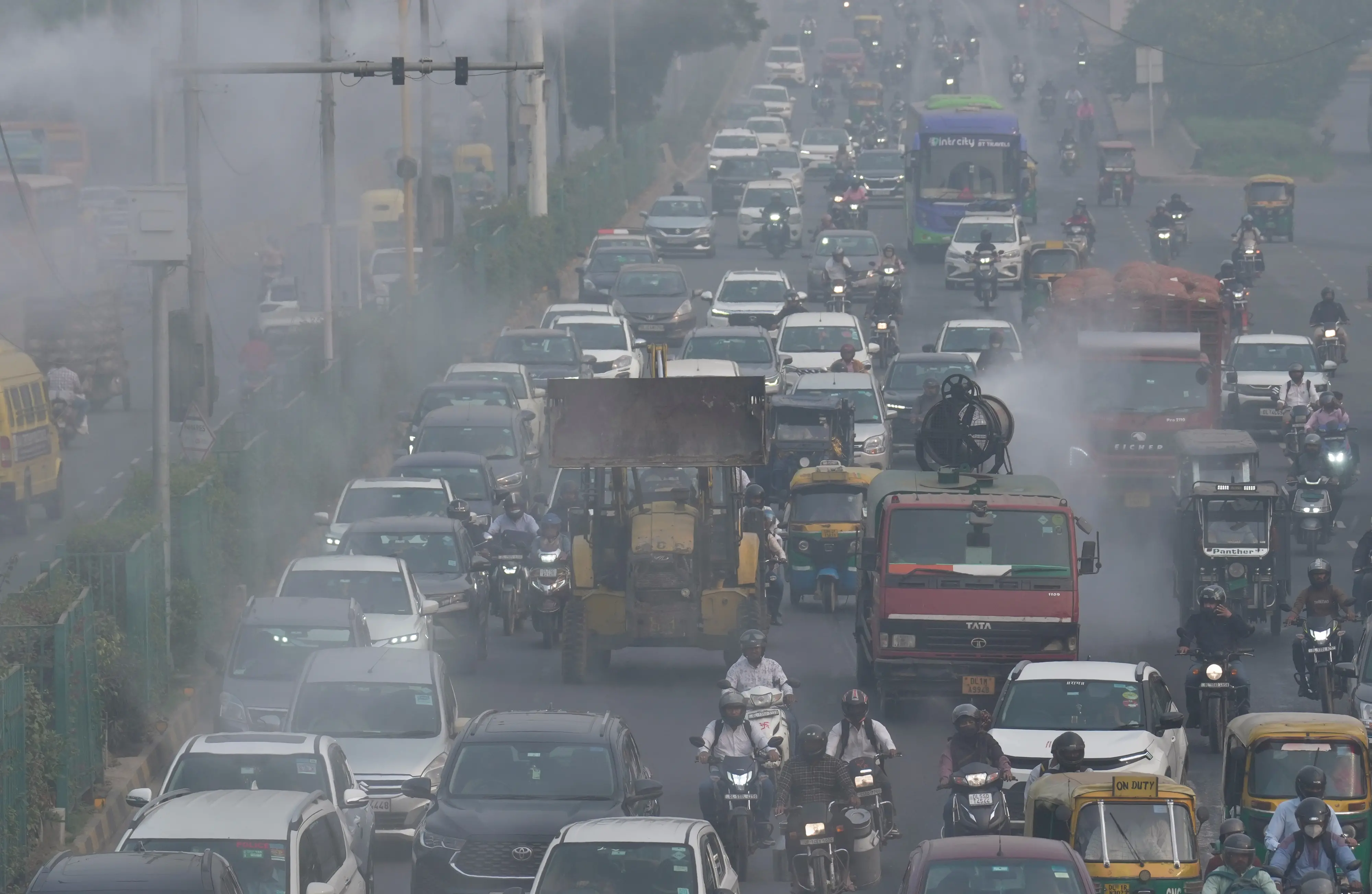
New Delhi: Delhi recorded an annual average PM2.5 concentration of 94 micrograms per cubic metre between Diwali 2025 and Diwali 2026 ( barring the festival days), which was more than twice the national standard, making it the most polluted among 24 state and Union Territory capitals analysed by a Delhi-based think tank.
According to data by Envirocatalysts, PM2.5 levels in Delhi breached the 24-hour national standard of 60 micrograms per cubic metre for 201 days.
The data showed that Delhi's annual average PM2.5 concentration was 2.3 times the national annual standard of 40 micrograms per cubic metre and 18.7 times the World Health Organization's annual guideline of 5 micrograms per cubic metre.
Delhi also recorded a peak hourly PM2.5 concentration of 584 micrograms per cubic metre on Diwali night, between midnight and 1 am on November 9. The festival day's 24-hour average stood at 257 micrograms per cubic metre, rising to 266 micrograms per cubic metre the following day.
The data across 24 state and UT capitals with available monitoring data, as analysed by PTI, found that 10 cities recorded annual average PM2.5 concentrations above the national standard.
Jaipur followed Delhi with 54 micrograms per cubic metre, followed by Lucknow (52), Kolkata (48), Patna (47), Bhubaneswar (46), Dehradun (45), Guwahati (42), Bhopal (42) and Naharlagun (41).
It also found that pollution levels on ordinary days were higher than the Diwali-day average in several capitals. In Delhi, 14 days during the year recorded PM2.5 concentrations higher than the Diwali-day average.
The findings highlighted that the two days of Diwali accounted for only a small share of annual pollution exposure. In the median capital, Diwali day and the following day together contributed around 1.2 per cent of the year's PM2.5 exposure, with the share not exceeding 2.5 per cent in any city.
The remaining 97-99 per cent of exposure came from sources such as vehicles, road and construction dust, industries, power plants, open waste burning, household fuels, crop-residue fires and regional pollution. Delhi's November and December 2025 monthly average PM2.5 concentrations were above 210 micrograms per cubic metre, close to the pollution level recorded on Diwali day, the analysis said.
Across the 24 capitals, nine recorded peak hourly PM2.5 concentrations above 500 micrograms per cubic metre on Diwali night. Puducherry recorded the highest peak at 842 micrograms per cubic metre, followed by Dehradun (788), Bhopal (700), Chandigarh (638) and Agartala (615).
The analysis also flagged gaps in air quality monitoring, with six capitals, including Ranchi, Shimla, Panaji, Jammu, Daman and Kavaratti, having no continuous monitoring station in the national data.
Sunil Dahiya, founder and lead analyst at Envirocatalysts, recommended that the capitals should focus on year-round clean-air action plans rather than limiting interventions to festival periods, and called for sustained measures to tackle transport emissions, dust, waste burning, industrial pollution and household fuel use.
The analysis was based on hourly data from the Central Pollution Control Board's (CPCB) Continuous Ambient Air Quality Monitoring Stations (CAAQMS), compiled through the Envirocatalysts Dashboard.
(This story has not been edited by Mathrubhumi and is published from a syndicated feed.)