‘You are not Gen Z’: Why Delhi High Court questioned Saurav Das and Ashutosh Ranka
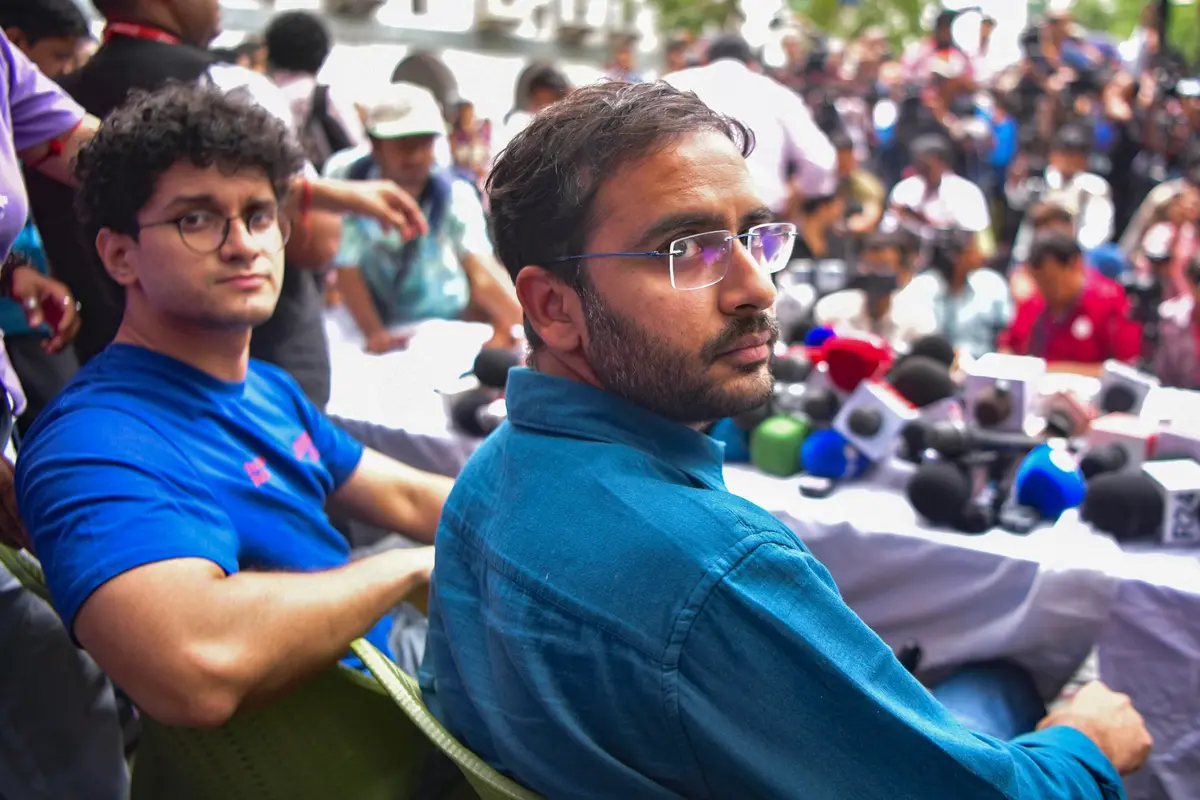
'You are not Gen Z.' That was the pointed observation made by the Delhi High Court during a hearing involving Cockroach Janata Party (CJP) leaders Saurav Das and Ashutosh Ranka, as the court questioned their age, the purpose of their association and their conduct during protests at Jantar Mantar.
The remarks came on Wednesday as the court heard a plea challenging an order by a Special Executive Magistrate extending the two leaders' judicial custody over an alleged attempt to unfurl the national flag at Jantar Mantar despite prohibitory restrictions.
Advocate Abhik Chimni, representing Das and Ranka, told the court that Das was 27 and Ranka was 31. In response, the court noted that neither was a member of Gen Z, bringing their age and the nature of their protest into focus.
Justice Subramonium Prasad also questioned the decision to stage a protest at Jantar Mantar after the site had been de-notified as a designated protest venue.
The court expressed concern over the alleged breach of barricades and the potential consequences of violating restrictions imposed to maintain public order.
'When you go and break a barricade, the chances of 10 or 20 more people being in violation of Section 163 (BNSS) are very high,’ the judge observed, cautioning that people outside the protesting group could also join and engage in activities that could lead to a breach of law and order.
The court underlined the importance of obtaining police permission for demonstrations, noting that such safeguards help prevent outsiders from joining a protest and potentially disrupting its stated purpose.
Delhi HC draws parallel with protests in France
During the hearing, the High Court referred to the unrest in France, comparing student protests to demonstrations that later escalated into arson and looting.
‘What started as a student protest has become arson and looting,' the court observed, using the example to highlight concerns that demonstrations can escalate when people beyond the original group become involved.
The judge also referred to the protests against the alleged NEET question paper leak in June and July, in which Das and Ranka had participated.
The court questioned how a protest's nature and purpose could evolve, observing that a demonstration initially involving students could later take up a different cause.
As part of its questioning, the court asked the petitioners to explain their identities, their association and the objective behind their activities.
'The next question will be: who are you? What are you? What is your association? What is the purpose of your association?' the judge said, adding that such questions assume significance when there is an apprehension of a threat to peace and tranquillity.
Court asks CJP leaders to explore alternative legal remedy
The High Court expressed reluctance to entertain the writ petition challenging the Special Executive Magistrate's order extending the duo's judicial custody until October 21.
It said the petitioners should first approach the revisional court, noting that the alleged breach of their bond made that remedy relevant.
The court also noted that the challenge to the de-notification of Jantar Mantar as a protest site was pending before the Supreme Court and that the notification had not been stayed.
While the High Court said it would later examine the legality of breaking the bond to protest at Jantar Mantar, it questioned the petitioners' decision to approach it without first pursuing the alternative remedy.
Das and Ranka later agreed to withdraw their plea against the extension of judicial custody after the court questioned the legal course they had followed.
The hearing thus centred not only on the custody order but also on the restrictions governing protests at Jantar Mantar, the alleged violation of those restrictions and the potential implications for public order.