Delhi court extends judicial custody of CM Kejriwal until September 25
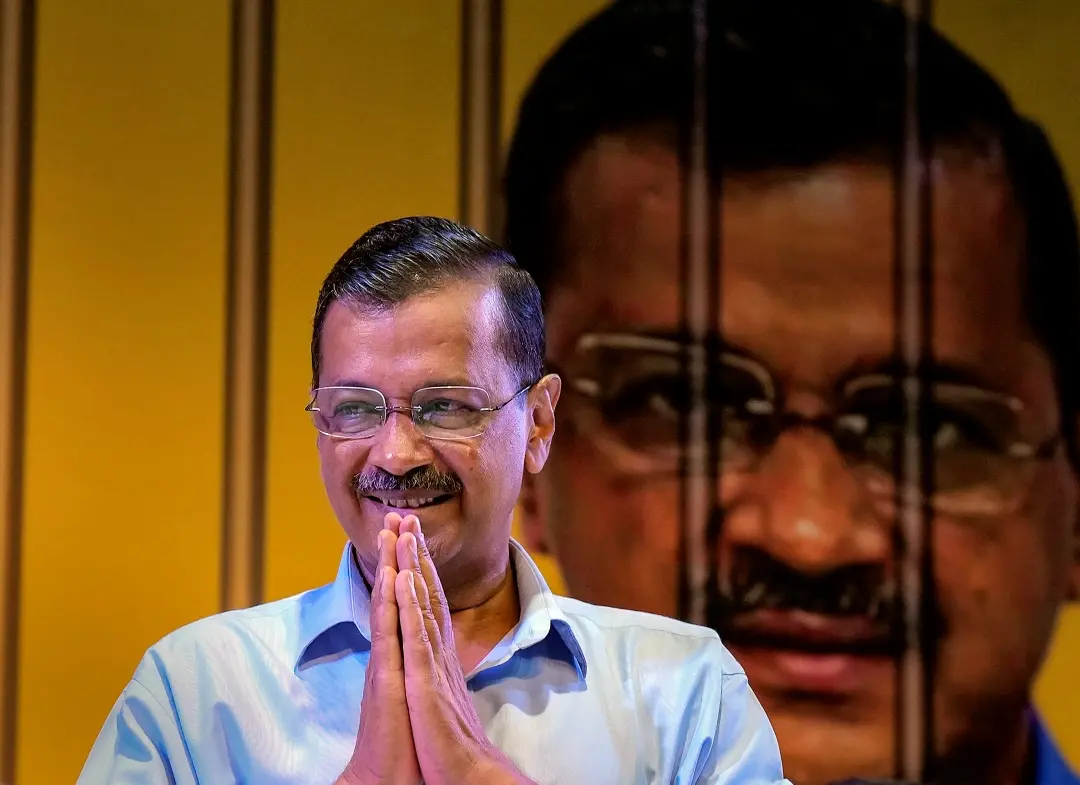
New Delhi: On Wednesday, a court here extended Delhi Chief Minister Arvind Kejriwal's judicial custody until September 25 in connection with the alleged liquor policy scam.
Kejriwal appeared before the Rouse Avenue Court via video conference from Tihar Jail as his previous custody period ended. During a brief hearing, the Central Bureau of Investigation (CBI) informed the court that it would provide a digital copy of the charge sheet to Kejriwal and a physical copy within the next few days.
Last week, Special Judge Kaveri Baweja of the Rouse Avenue Court issued a production warrant for Kejriwal, following the CBI's submission of the charge sheet.
The CBI has previously filed a supplementary charge sheet against Kejriwal and other individuals involved in the alleged excise policy scam. The Supreme Court has yet to rule on Kejriwal's request for bail and his challenge to the CBI's arrest.
On September 5, Justices Surya Kant and Ujjal Bhuyan reserved their decision after hearing arguments from senior advocate Abhishek Manu Singhvi, who represents Kejriwal, and Additional Solicitor General S.V. Raju, who spoke for the CBI.
Singhvi argued that the CBI's arrest of Kejriwal was an "insurance arrest" made hurriedly to prevent his release in a related money laundering case. He contended that Kejriwal, as Delhi Chief Minister, met all criteria for bail. “He is not a flight risk, he will turn up to answer the questions of the investigative agency, and cannot tamper with documents, running into lakhs of pages, and digital evidence after two years," he submitted.
However, ASG Raju expressed concern that releasing Kejriwal might lead to witnesses turning "hostile" and argued that Kejriwal should have requested bail from the trial court, not the Delhi High Court.
Raju also mentioned that arrests are part of the investigative process, and the CBI had court authorisation for Kejriwal's arrest. "But, in the present case, there was an order of the court granting the power (to arrest)," he said. He asserted that an arrest made under such orders does not constitute a violation of fundamental rights.
In his petition to the Supreme Court, Kejriwal challenged his arrest and remand orders, seeking bail. The CBI opposed this, accusing Kejriwal of trying to make the issue politically sensational, despite multiple court orders affirming the charges against him.
The Supreme Court had previously granted Kejriwal interim bail in a related money laundering case, but he remained in jail due to the CBI's arrest.
Agency