No opposition from ED: I-PAC’s Vinesh Chandel granted bail after Bengal election phase
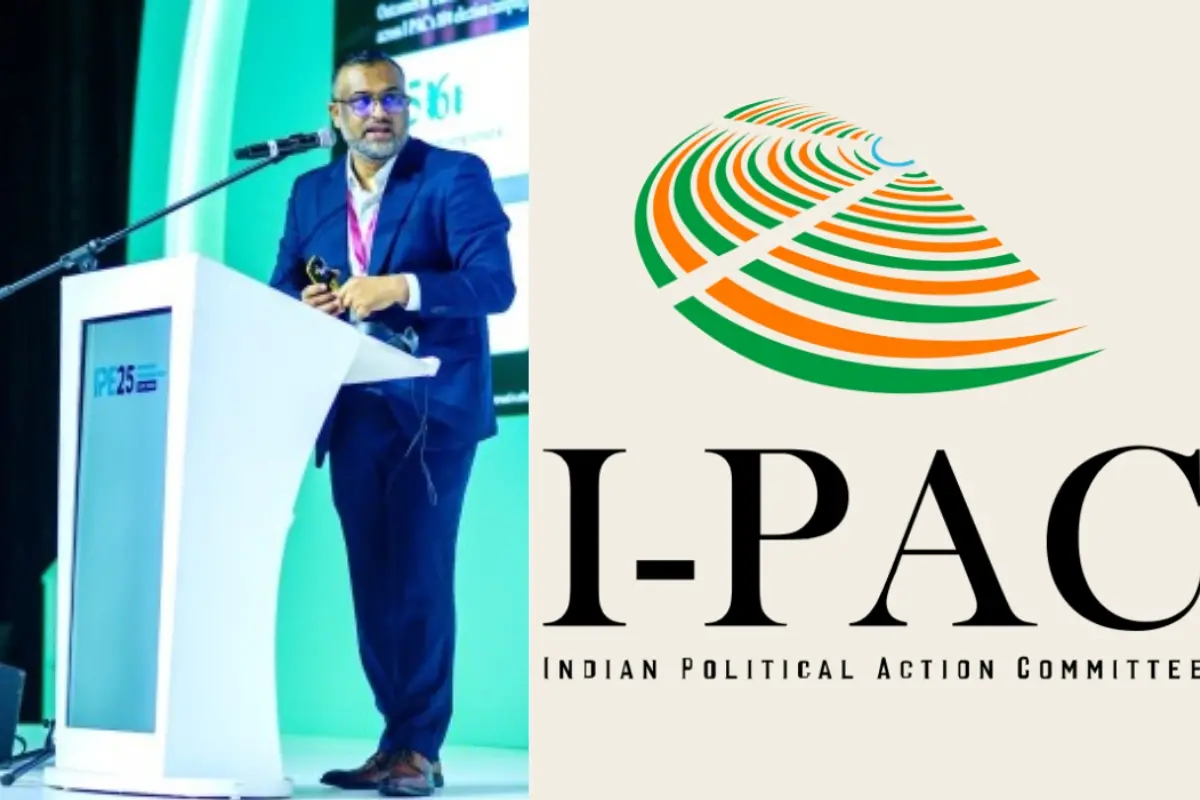
New Delhi: A Delhi court on Thursday granted regular bail to Indian Political Action Committee (I-PAC) director and co-founder Vinesh Kumar Chandel in a money laundering case linked to an alleged coal pilferage scam in West Bengal, noting that the Enforcement Directorate (ED) did not oppose his plea.
The order was passed by Additional Sessions Judge Amit Bansal at the Patiala House Courts. The court granted bail on a bond of ₹2 lakh along with a surety of the same amount and imposed conditions including that Chandel cannot leave the country without prior permission, must cooperate with the investigation, and must not tamper with evidence. The detailed order is awaited.
Court grants bail after ED notes cooperation
During the hearing, the court recorded the ED’s submission that Chandel had cooperated with the investigation and that his cooperation was considered purposeful. The absence of opposition from the agency played a significant role in the court’s decision to grant regular bail.
What is I-PAC and Chandel’s role
The Indian Political Action Committee (I-PAC) is a political consultancy organisation known for providing campaign strategy, data analytics, and election management services to political parties and leaders across India. Vinesh Kumar Chandel is one of its co-founders and serves as a director within the organisation.
Why Chandel was arrested and sent to judicial custody
Chandel was arrested by the ED on April 13, 2026, in connection with a money laundering investigation arising from an alleged coal pilferage case in West Bengal. Following his arrest, he was produced before the court and later remanded to judicial custody on April 23 as part of the ongoing probe into financial irregularities.
ED’s allegations in the coal scam-linked case
According to the ED, the case involves the laundering of proceeds of crime through structured financial transactions. The agency has alleged that funds were generated and diverted through mechanisms such as splitting receipts into accounted and unaccounted cash components. The investigation pertains to financial dealings worth several crores, making it a serious economic offence under the Prevention of Money Laundering Act (PMLA).
Earlier this week, the court had rejected Chandel’s interim bail application, emphasising that relief under the PMLA cannot be granted as a matter of routine. It stated that interim bail requires compelling, urgent, and exceptional circumstances, particularly in cases involving serious financial crimes.
Medical grounds cited but found insufficient
Chandel had sought interim bail citing the medical condition of his 74-year-old mother, who is reportedly suffering from dementia. However, the court observed that the condition was chronic and did not constitute an immediate medical emergency. It also noted that no recent medical records were submitted to establish urgent deterioration.
The court further pointed out that other family members, including his wife and brother, were present and capable of providing care. It held that claims of inability to manage the situation were not supported by sufficient evidence, and therefore did not meet the threshold required for interim relief.
Court’s cautious approach in economic offences
While dealing with the matter, the court reiterated that economic offences under the PMLA require careful judicial scrutiny due to their wider impact on the financial system. However, in the present case, the combination of the ED not opposing the plea and the accused’s cooperation led to the grant of regular bail.
Chandel, who had been in custody following his arrest earlier this month, has now been granted relief subject to strict conditions. The court made it clear that he must continue to cooperate with the investigation and comply fully with all directions as the probe progresses.
(With ANI inputs)