Delhi assembly election race reaches climax as high-voltage campaign by political parties concludes
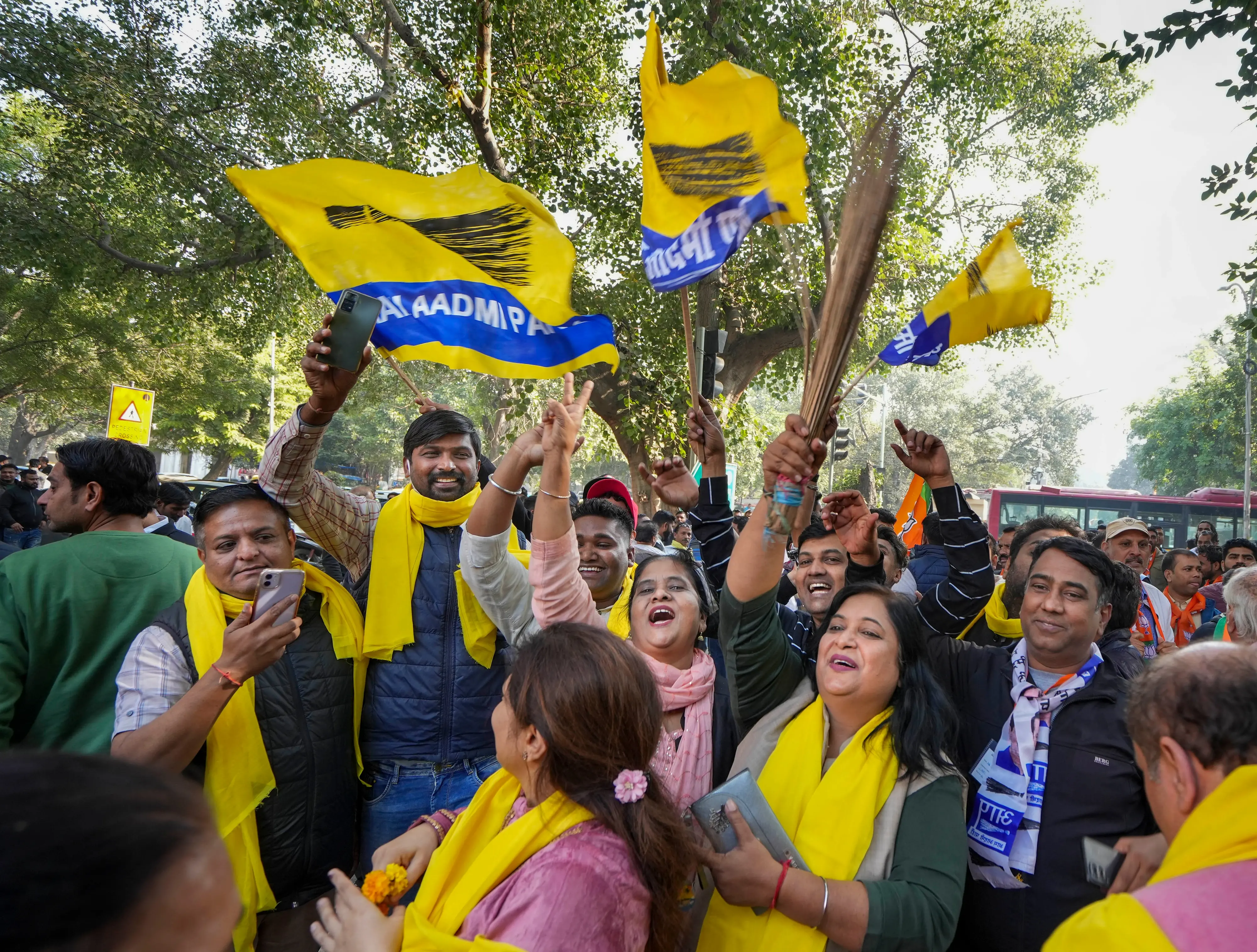
New Delhi: Campaigning for the most fiercely contested Delhi Assembly election in recent history concluded at 5 p.m. on Monday, marking the end of months of high-octane electioneering. The election season was characterised by AI-generated memes, sharp political jibes, and an intense race to woo voters with attractive freebies, including financial doles for women and the youth.
The ruling AAP, along with its rivals, BJP and Congress, engaged in a star-studded campaign, with prominent figures such as Prime Minister Narendra Modi, Cabinet Ministers Amit Shah, Rajnath Singh, and Piyush Goyal, Congress leaders Rahul Gandhi and Priyanka Gandhi Vadra, and former Chief Minister Arvind Kejriwal taking the spotlight. Punjab CM Bhagwant Singh Mann, as well as Chief Ministers of various BJP and Congress-ruled states, also lent their support to the respective campaigns. Cricketer Harbhajan Singh and film star Shatrughan Sinha added star power to AAP's efforts.
Campaign discourse dominated by welfare promises and corruption allegations
The campaign saw heated discussions on a range of issues including cash assistance for women, alleged corruption involving the liquor scam and ‘Sheesh Mahal’, joblessness, water supply, sewage issues, toxic air quality, polluted Yamuna, and free health insurance. The discourse peaked with the three main parties competing for voter attention by offering promises of freebies through their respective 'guarantees'—'Modi ki Guarantee,' 'Kejriwal ki Guarantee,' and 'Congress ki Guarantee.'
Election code violations and rivalries heat up
The campaign also witnessed sharp exchanges over alleged violations of the election code, including the deletion of voter names, suspected Bangladeshis being enrolled as voters, and accusations of misinformation being used to influence the electorate.
The crucial New Delhi seat, held by AAP National Convenor Arvind Kejriwal, and the Kalkaji seat of Chief Minister Atishi remained the focus of intense campaigning throughout.
Tech-driven campaigning and traditional methods employed
AI-generated spoofs and memes, combined with traditional methods like padyatras, corner meetings, handouts, and recorded phone calls, were a staple of the electioneering process. The AAP’s campaign was also bolstered by personal letters from Delhi BJP Chief Virendra Sachdeva to voters. On the final day, BJP organised 22 roadshows and rallies, with PM Modi also releasing a video interaction with students, aiming to break AAP’s winning streak since 2013.
AAP’s last-minute campaigning saw Kejriwal holding public meetings in Chhatarpur and Kalkaji, accusing rivals of trying to manipulate EVMs.
Ruling party focuses on governance model, rivals offer alternatives
AAP centred its campaign around showcasing its governance model, which includes free welfare schemes and 15 guarantees to voters, while confidently expecting a fourth consecutive term. The Congress party, which ruled Delhi from 1998 to 2013, appeared re-energised, with Muslim voters showing support following recent civic elections.
Restrictions on public campaigning ahead of election day
As per the Delhi Election office, a 48-hour prohibition was imposed on public displays of election-related material and public meetings, effective until the polling hour for the February 5 election.
Focus shifts to voter turnout as polling day approaches
All eyes will be on voter turnout on February 5, with the election department striving to encourage greater participation. The turnout in the 2020 Delhi Assembly election stood at 62.82%, lower than 67.47% in 2015. In comparison, the 2013 turnout was 66.02%, higher than the 2008 turnout of 57.6%.
The voting will take place to elect a new 70-member Delhi Assembly, with results to be declared on February 8. The AAP holds 62 seats in the outgoing House, while the BJP holds eight.
Voter details and new technological innovations for the elections
According to the Delhi Chief Electoral Officer (CEO), 1.56 crore voters are eligible to vote across 13,766 polling stations. The gender breakdown includes 83.76 lakh men, 72.36 lakh women, and 1,267 third-gender voters. A total of 699 candidates are contesting, compared to 672 in the 2020 election.
For the first time in India, the Election Commission has introduced a Queue Management System (QMS) app, allowing voters to track crowd levels at polling stations in real-time. Additionally, nearly 7,000 senior citizens and persons with disabilities have already cast their votes through the home voting facility before polling day.
With IANS inputs