Jairam Ramesh hits back at Mohan Bhagwat, raises questions on RSS history and nationalism | WATCH
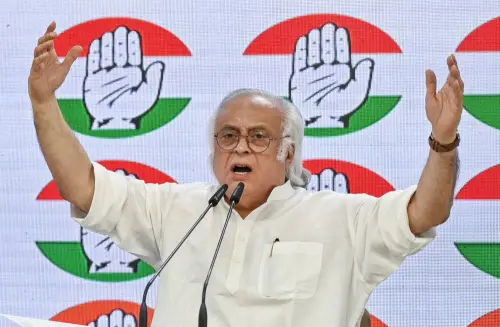
New Delhi: Congress MP Jairam Ramesh on Sunday mounted a sharp attack on the Rashtriya Swayamsevak Sangh (RSS) following remarks by its chief Mohan Bhagwat, questioning the organisation’s origins, ideology and its understanding of nationalism. Ramesh invoked historical references, including statements by Sardar Vallabhbhai Patel, while accusing the Bharatiya Janata Party (BJP) and RSS ecosystem of selectively invoking nationalism.
Referring to the historical roots of the RSS, Ramesh began by questioning the organisation’s stated objectives and the actions taken against it in the past. He recalled that the RSS was once banned and urged people to revisit what national leaders had said about its functioning. “With what objective was the RSS formed in 1925, and what did Sardar Patel say? Sardar Patel imposed the ban on the RSS. What did Sardar Patel say to Guru Golwalkar?” Ramesh said.
He went on to explain Patel’s concerns about the RSS operating without transparency and functioning away from public scrutiny. Highlighting correspondence from that period, Ramesh said Patel had asked the organisation to change its character. “You are a secret society. Become an institution. Bring transparency. Don't work secretly. This is Sardar Patel's letter. This is Sardar Patel's statement”, he added.
Ramesh then pointed to the RSS’s approach towards national symbols, claiming that it reflected a deeper ideological issue. He alleged that the national flag was not flown at the organisation’s headquarters for decades. “For 50 years, the national flag was not hoisted at their headquarters in Nagpur,” he said.
Drawing attention to events following the adoption of the Constitution, the Congress leader alleged that an atmosphere of hostility was created against key figures of the freedom movement. “The Constitution of India was adopted on November 26, 1949. Within three or four days, in Ramlila Maidan, effigies of Ambedkar, Sardar Patel, Jawaharlal Nehru, Mahatma Gandhi were burned”, he said.
Linking those incidents to a broader ideological debate, Ramesh questioned what he described as the mindset that led to Mahatma Gandhi’s assassination. “Which ideology created this atmosphere, due to which Mahatma Gandhi was killed?” he asked.
Ramesh also cited a recent political controversy to underline his argument about nationalism being selectively defined. He referred to a BJP MP from West Bengal who was asked to choose between Gandhi and Nathuram Godse. “Even today, a BJP MP from West Bengal was asked, Gandhi or Godse? He said, I will have to think,” he added.
He concluded by alleging that despite such remarks, the MP was rewarded politically, raising questions about the standards being applied. “They gave him the ticket. He was made to win. Such people are busy distributing certificates of nationalism”, Ramesh concluded.
His remarks came after Mohan Bhagwat alleged that a “political conspiracy” was underway to revive the Babri Masjid dispute. Speaking at an RSS programme in Kolkata, the RSS chief rejected claims that it was anti-Muslim, and said misconceptions had been spread through misleading campaigns. Bhagwat also opposed the construction of religious structures using government funds, recalling that the Somnath temple was built through public donations when Sardar Vallabhbhai Patel was Home Minister, even though the President attended its inauguration.