Cockroach Janta Party protest: Can CJP turn online hype into street power?
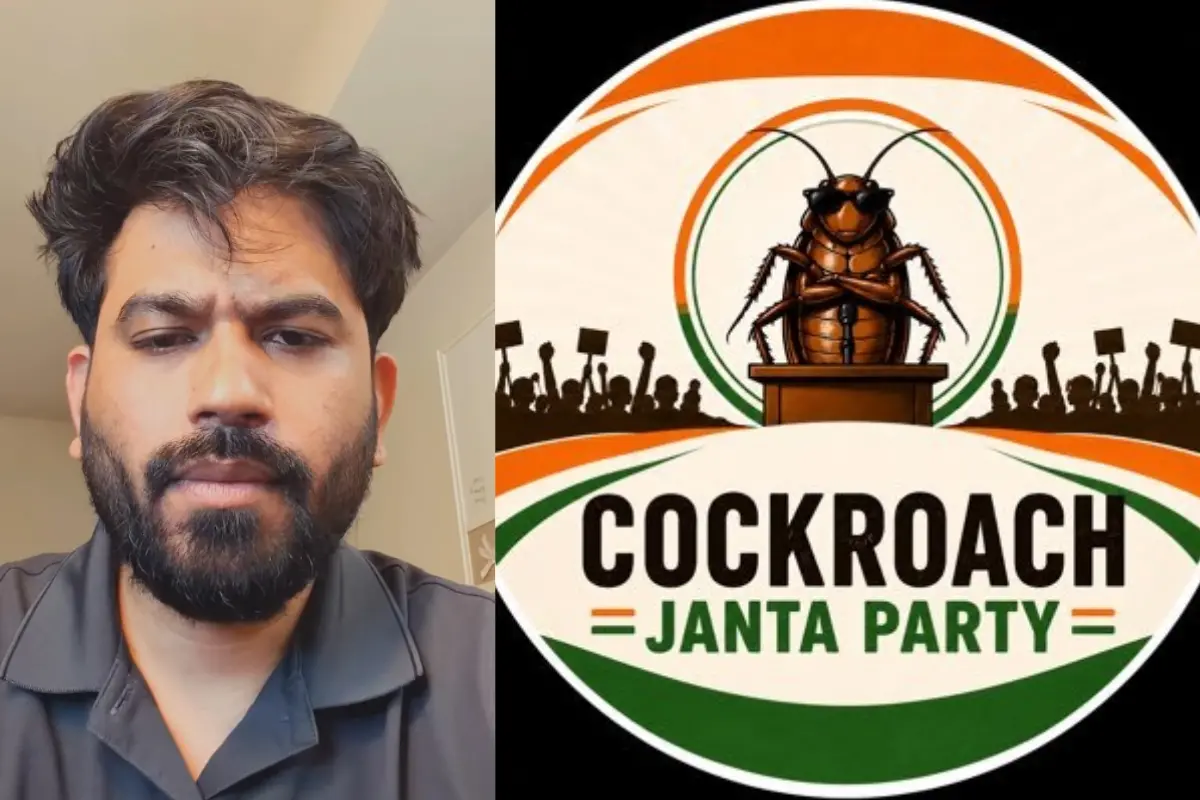
New Delhi: The Cockroach Janta Party (CJP), a viral student-led and social media-driven movement, is set to hold a major protest at Delhi’s Jantar Mantar, with founder Abhijeet Dipke expected to return from the United States to lead the demonstration.
The proposed rally, scheduled for June 6, comes amid growing online support from young people and heightened debate over alleged irregularities in major competitive examinations, even as the event faces procedural hurdles over the lack of prior police permission.
What is the Cockroach Janta Party?
The Cockroach Janta Party (CJP) began as a satirical social media movement founded by Abhijeet Dipke, a Boston University graduate. The initiative emerged after controversial remarks attributed to Chief Justice of India Surya Kant referring to certain youths as "cockroaches" during a court hearing.
While the remarks later became the subject of clarification, the term quickly went viral online. Dipke capitalised on the moment by creating the CJP's website and social media platforms, which rapidly attracted millions of followers and transformed into a broader youth-focused movement.
Why is the protest being organised?
According to CJP leaders, the June 6 protest is aimed at demanding accountability in India's education system.
The movement has focused heavily on alleged irregularities surrounding major examinations, including NEET, CBSE and CUET. Organisers claim that paper leaks, technical failures and examination-related controversies have affected lakhs of students and require urgent government action.
The group is also demanding the resignation of Union Education Minister Dharmendra Pradhan over the handling of examination controversies.
Delhi protest faces procedural hurdles
The proposed demonstration at Jantar Mantar faces uncertainty because organisers have not yet secured official permission from authorities.
Under existing procedures, applications for public protests are generally expected to be submitted several days in advance. However, CJP spokespersons have said the organisation plans to seek permission on the day of the protest itself.
Meanwhile, the Delhi High Court declined to urgently hear a petition seeking crowd-control measures ahead of the planned gathering.
As anticipation grows over a potentially large turnout, Dipke has urged supporters not to gather at Delhi airport upon his arrival from the United States.
Instead, he has called on participants to remain peaceful and law-abiding. He stated that the movement intends to operate within constitutional and democratic frameworks and has appealed for responsible conduct during the demonstration.
Questions over representation within CJP
Even as the movement gains popularity, it has faced criticism regarding representation among its leadership.
Social media users questioned the absence of women and members of several communities among the organisation's spokespersons. In response, Dipke said female members were offered public-facing roles but chose not to step into the spotlight because of online abuse and threats.
The issue has sparked a wider debate about inclusivity within rapidly expanding digital movements.
Can online popularity become political influence?
The June 6 protest is likely to be the first major test of whether CJP's enormous online following can be converted into meaningful public mobilisation.
The movement has attracted attention from activists, students and public figures, including social activist Sonam Wangchuk and actor Prakash Raj.
While CJP currently presents itself as a protest platform rather than a conventional political party, the scale of Saturday's turnout could determine whether it remains a viral social media phenomenon or evolves into a broader political force.