More powers for CBI, ED? Chidambaram says 'all hell will break loose'
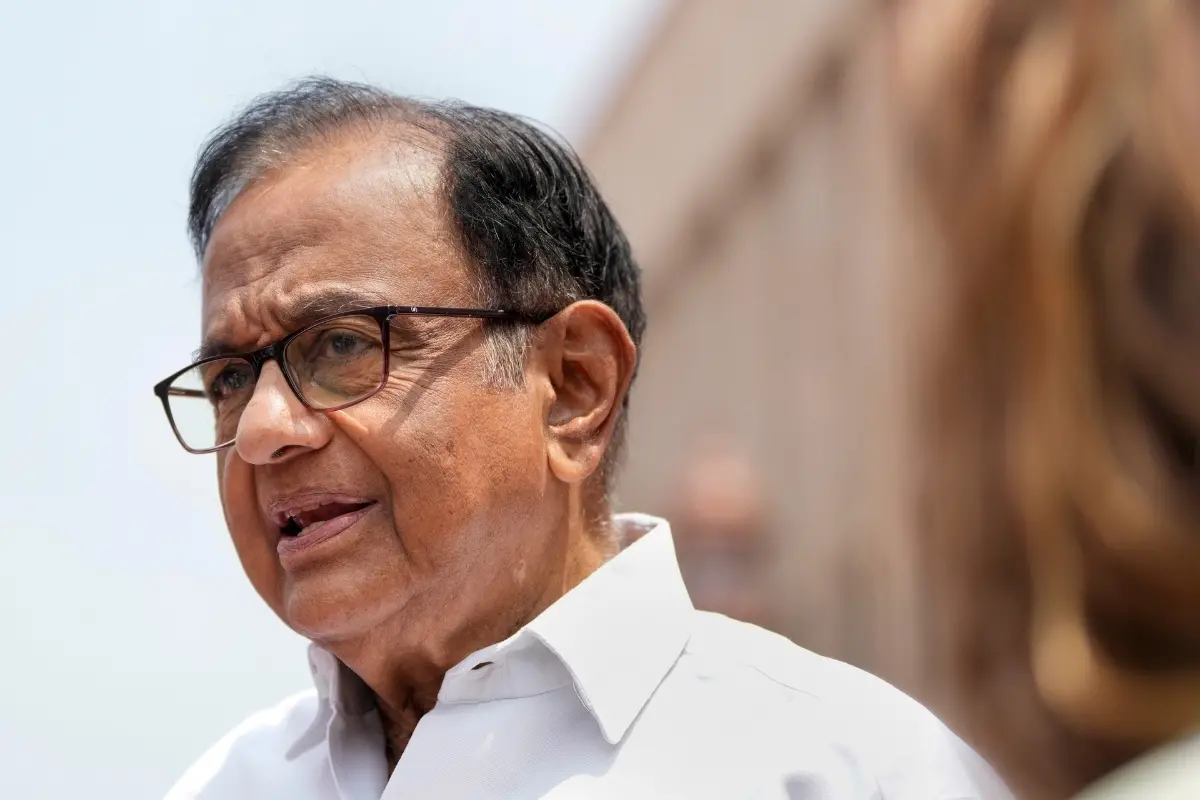
New Delhi: Former Union Home Minister P Chidambaram on Friday opposed calls for greater powers and autonomy for the Central Bureau of Investigation (CBI) and Enforcement Directorate (ED), arguing that stronger agencies without adequate oversight could become even more powerful and unaccountable.
Speaking at a panel discussion held to mark the launch of Policing the Republic, a book by former Intelligence Bureau special director Yashovardhan Azad, Chidambaram called for internal reforms as well as stronger external supervision of central investigative agencies.
The discussion focused on police reforms, institutional accountability and alleged excesses by uniformed personnel.
Addressing a question on police excesses, Chidambaram pointed to the hierarchy within the police, extending from the station house officer (SHO) to the director general of police (DGP).
"The CBI is manned by fine officers, most of whom are on deputation from states. He is a fine officer in the state.
"Why does he become a bad officer at the Centre? Because of a lack of supervision and oversight, a caged parrot can sometimes become a pit bull," he said.
Chidambaram acknowledged that political interference cannot be ruled out at the state level and "may be at the central level", but maintained that officers must follow organisational hierarchy and discipline.
'All hell will break loose'
Chidambaram also disagreed with Azad's suggestion that agencies such as the CBI and ED should be given greater powers.
"I disagree with Yashovradhan; it seems he has some admiration for the CBI and ED, and he says they should be given more powers. If they are given more powers, all hell will break loose in this country.
"CBI and ED have far exceeded their legitimate authority. They have become a law unto themselves," he said.
Chidambaram, who was arrested by the CBI in the INX Media case in August 2019, questioned why senior IAS and IPS officers are unable to resist political pressure.
He said the worst consequence an officer could face for standing up to politicians was a transfer, arguing that they could not be physically harmed for doing so.
Chidambaram bats for independent oversight
The former home minister said investigative agencies require mechanisms outside their own organisational structures to ensure accountability.
"The CBI and ED have required, according to me, external supervision and oversight. Unlike in America, there is legislative oversight over the FBI and other organisations.
"What will happen if there is parliamentary oversight or legislative oversight over police agencies, I leave it to your imagination. But there should be an oversight," he said.
Chidambaram cited an amendment to the National Investigation Agency Act, 2008, which he said included a provision requiring NIA chargesheets to be examined by an independent panel comprising a retired High Court judge and a senior police officer.
He also referred to a similar arrangement involving the Central Vigilance Commission (CVC), but alleged that the mechanism had "completely failed" in India, pointing to cases where chargesheets approved by the commission eventually ended in acquittals or were rejected by courts.
"How can the CVC approve every chargesheet? They should throw out a few chargesheets... But I think every chargesheet must be vetted by an independent body before a serious crime is alleged against the person," he said.
Azad calls for Lokpal oversight of CBI
Earlier in the discussion, Azad argued that the Lokpal should be given responsibility for supervising politically sensitive cases handled by the CBI.
"There is no will to do anything. You may have 19 organisations, and each of them does nothing. Why? Because they are under political control.
"The ED will do what politics says. And criminal laws are helping with it. In UAPA, we had some restrictions, but now even a thanedar can file a case against anyone," he said.