'Chakka Jam': 3-day transport strike in Delhi; commuters left stranded | VIDEO
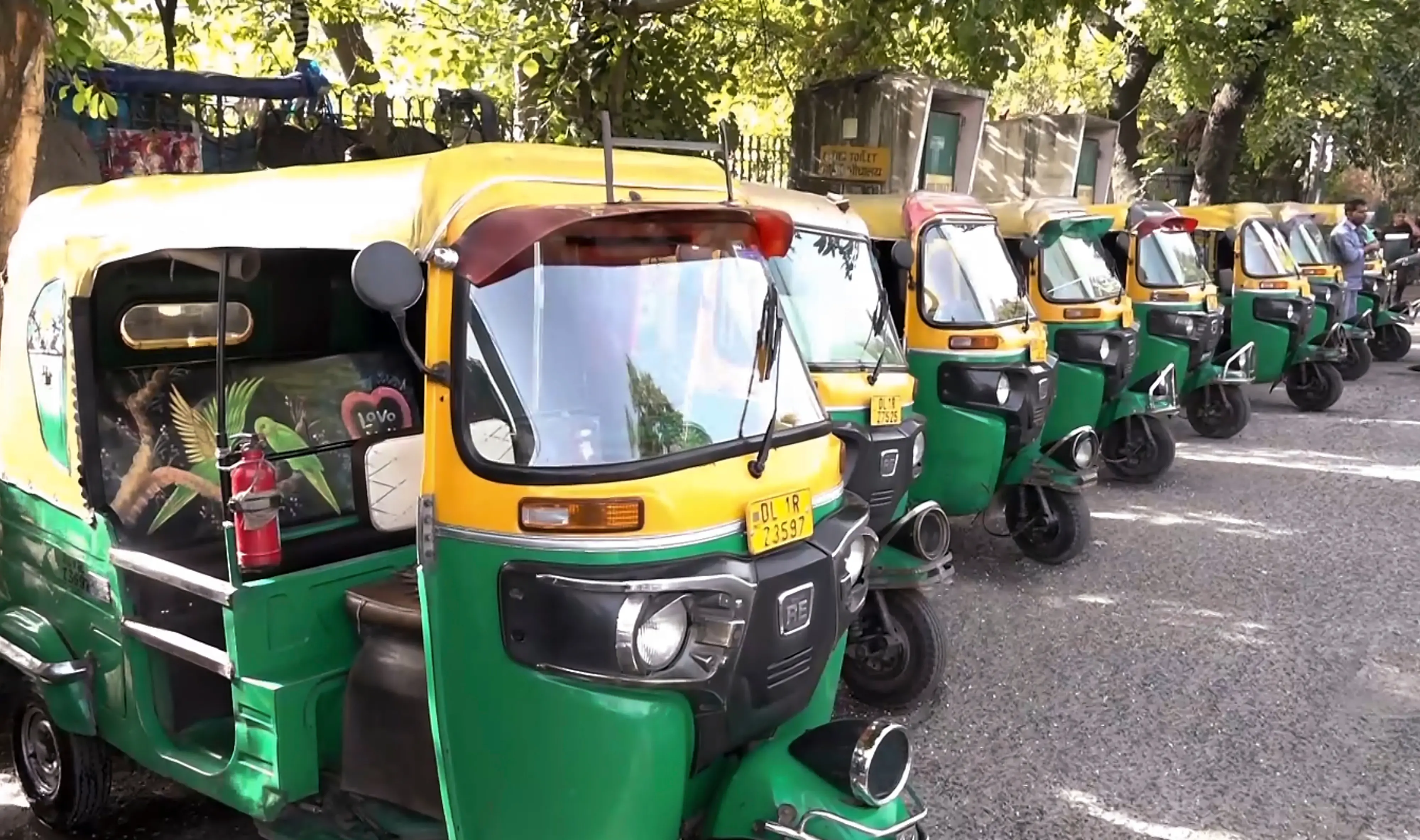
New Delhi: Commuters navigating parts of the national capital region faced notable travel disruptions on Thursday morning as various transport and taxi federations launched a three-day strike. The regional shutdown, scheduled to continue through Saturday, May 23, is organised to protest surging compressed natural gas (CNG) rates and a newly hiked environmental tax imposed by the local administration.
Transit hotspots across New Delhi—including the central Mandi House metro station, Anand Vihar and the New Delhi Railway Station—witnessed severe shortages, leaving travelers stranded or facing steep booking fares. Concurrently, freight operations stalled as hundreds of trucks staged a sit-in, parking permanently in massive freight zones like Sanjay Gandhi Transport Nagar.
"We tried booking a taxi for our home, but the wait time was taking longer than usual, and there were very few auto-rickshaws also available at the station. The cost of cab booking was also high," a commuter said.
The trigger: Fuel costs Vs unused 'green funds'
The strike action was spearheaded by the All India Motor Transport Congress (AIMTC), an umbrella network managing private commercial carriers, interstate buses, and taxi operators. Transporters are explicitly challenging the Delhi government's choice to escalate the Environmental Compensation Cess (ECC) penalising commercial carriers.
Unions argue that while high taxes are collected under the guise of ecology, the capital’s logistics infrastructure continues to suffer.
"We support efforts to reduce pollution, but despite collecting nearly Rs 1,500 crore through the Environmental Compensation Cess over the last 10-12 years, the government has not properly used the funds for transport welfare, parking, roads, or pollution-control measures," Harish Sabharwal, National President, All India Motor Transport Congress (AIMTC), said.
"Euro-VI vehicles were sold to us as pollution-free variants, yet pollution taxes are still being imposed on them, which is contradictory. The government should not place the entire burden on transporters and must also come forward with practical solutions," Sabharwal added.
Stagnant fares forcing drivers to the brink
The agitation has received widespread backing from regional commercial driving syndicates, who stress that operating costs have scaled out of proportion to permissible baseline passenger fares. Organizers state that current legal measures dictated by tribunals, the Commission for Air Quality Management (CAQM), and local governance are suffocating intermediate transit workers.
Anuj Kumar Rathore, vice-president of the ‘Chaalak Shakti Union’, pointed out that inflation has made survival untenable for daily-wage drivers.
"Due to the continuously increasing prices of CNG, petrol and diesel, middle-class drivers are struggling to support their families. Therefore, in coordination with other organisations of Delhi, the 'Chaalak Shakti Union' has called for a 'chakka jam' and appealed not to operate vehicles on May 21, 22 and 23," he said.
Local auto operators mirrored this distress, stating that inflexible state regulations are blocking necessary income adjustments.
"The prices of petrol and diesel have increased, but the minimum charge in our autos remains the same; customers do not pay extra, the government has not changed the rules. It is becoming difficult to afford food amid inflation," an auto-rickshaw driver said.
Appeals and division among unions
The Chaalak Shakti Union escalated its concerns earlier in the week by delivering a formal manifesto to Delhi Lieutenant Governor Taranjit Singh Sandhu and Chief Minister Rekha Gupta. Ground realities at retail fuel outlets highlighted the growing friction, with localised shutdowns choking distribution chains.
"Petrol and CNG prices have increased, but our income is not increasing. I have been seeing for the last two days that CNG vehicle drivers are facing a lot of problems. Some pumps are shut. In Ghazipur, out of 4-5 pumps, 2 were closed yesterday, because of which there was a long queue stretching up to one kilometre," Kuldeep Singh, a taxi driver, said.
Despite the disruption across major pockets, the strike's impact remains partial. Six independent auto-rickshaw collectives have publicly declined to participate, ensuring that a fragment of the city's three-wheeler fleet remains functional for ordinary travelers.
PTI