CBSE announces class 9 open book assessments in 2026-27; community radio in works
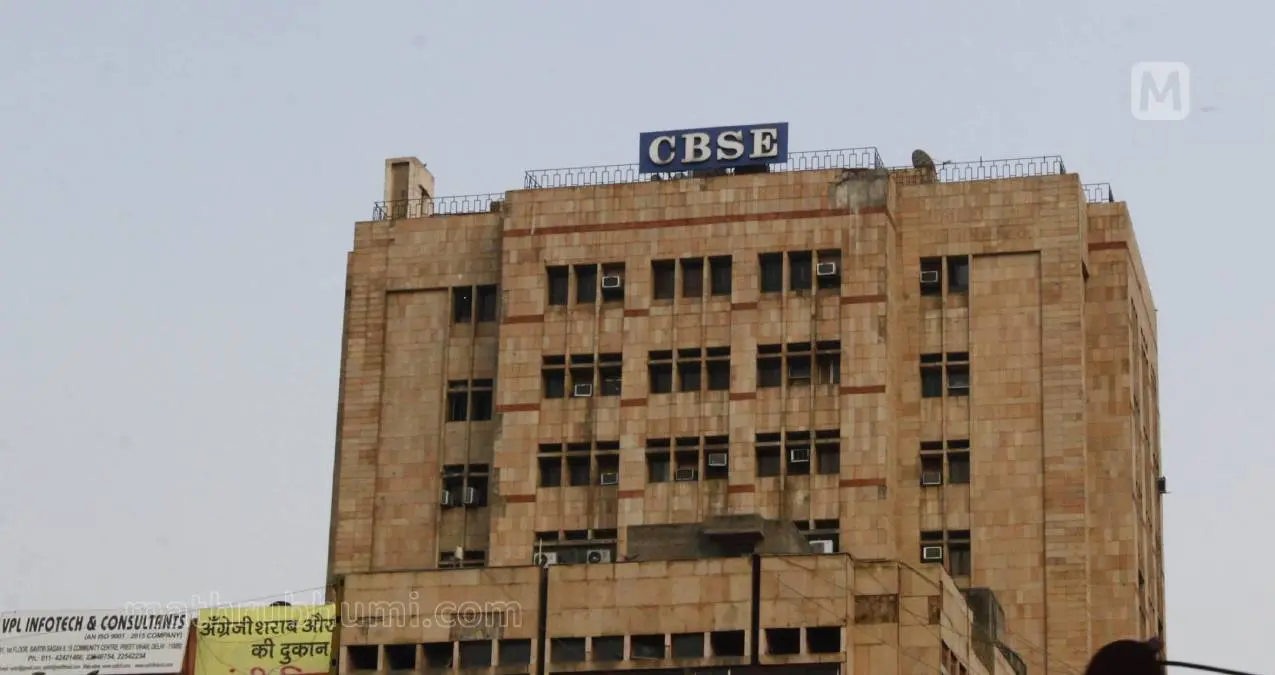
New Delhi: The Central Board of Secondary Education (CBSE) will roll out open book assessments (OBAs) for Class 9 students starting from the 2026-27 academic year. The decision was finalised during the governing body’s meeting in June. The board is also preparing to launch a dedicated community radio station for its students, teachers, and other stakeholders, officials confirmed.
As per the meeting minutes, the National Curriculum Framework for School Education (NCFSE) 2023 “underscores the need to transition from rote memorisation to competency-based learning, with OBAs serving as a catalyst for this shift.”
The approach, approved by the curriculum committee and ratified by the governing body, proposes incorporating OBAs into the three pen-paper tests conducted each term in languages, mathematics, science, and social science.
The decision draws on a pilot study that avoided additional reading materials and tested cross-cutting themes from the curriculum. Student scores ranged from 12 per cent to 47 per cent, revealing "challenges in effectively utilising resources and grasping interdisciplinary concepts." Despite this, the minutes note that "teachers expressed optimism about OBAs, noting their potential to foster critical thinking."
To ensure quality, CBSE will develop standardised sample papers and provide structured guidance to help students navigate reference materials and apply knowledge contextually.
The board expects the initiative to reduce exam stress, encourage real-world application of knowledge, and strengthen conceptual understanding.
Meanwhile, the proposal to set up a community radio was approved in the recent Governing Body meeting of the board, where it was decided that the application for procuring a license would be moved.
"The proposal to set up a community radio station was approved by the board's Governing Body. It was decided that consultative meetings will be held in next six months with stakeholders and experts for preparing and processing application for community radio license detailed, " a senior CBSE official said.
The board has also decided that financial implications be worked out, the official added.
The CBSE already runs a podcast called Shiksha Vani which disseminates timely audio content for various subjects of grades 9-12 in a lucid and seamless manner.
CBSE-Shiksha Vani is available on Play Store for Android phone users. Shiksha Vani has, so far, uploaded approximately 400 pieces of content in accordance with NCERT curriculum.
"The modalities of the content which will be broadcast on the community radio station will be worked out once the license is procured," the official added.
Community Radio is an important third tier in radio broadcasting, distinct from public service radio broadcasting and commercial radio. Community radio stations are low-power radio stations, which are meant to be set up and operated by local communities.
It provides a platform to air voices among the local community, especially marginalised sections of society, on issues concerning health, nutrition, education, agriculture etc. Moreover, since the broadcast is in local languages and dialects, there is a possibility of more connect among people.
According to official statistics, there are 540 commissioned community radio stations in India. These stations are operated by non-profit organisations like educational institutions, NGOs and societies.
The Indian government has been actively promoting the growth of community radio, particularly in rural and remote areas, through various initiatives and schemes.
(with inputs from PTI and ANI)