Bengal poll duty relief: High Court says professors cannot be forced into election roles
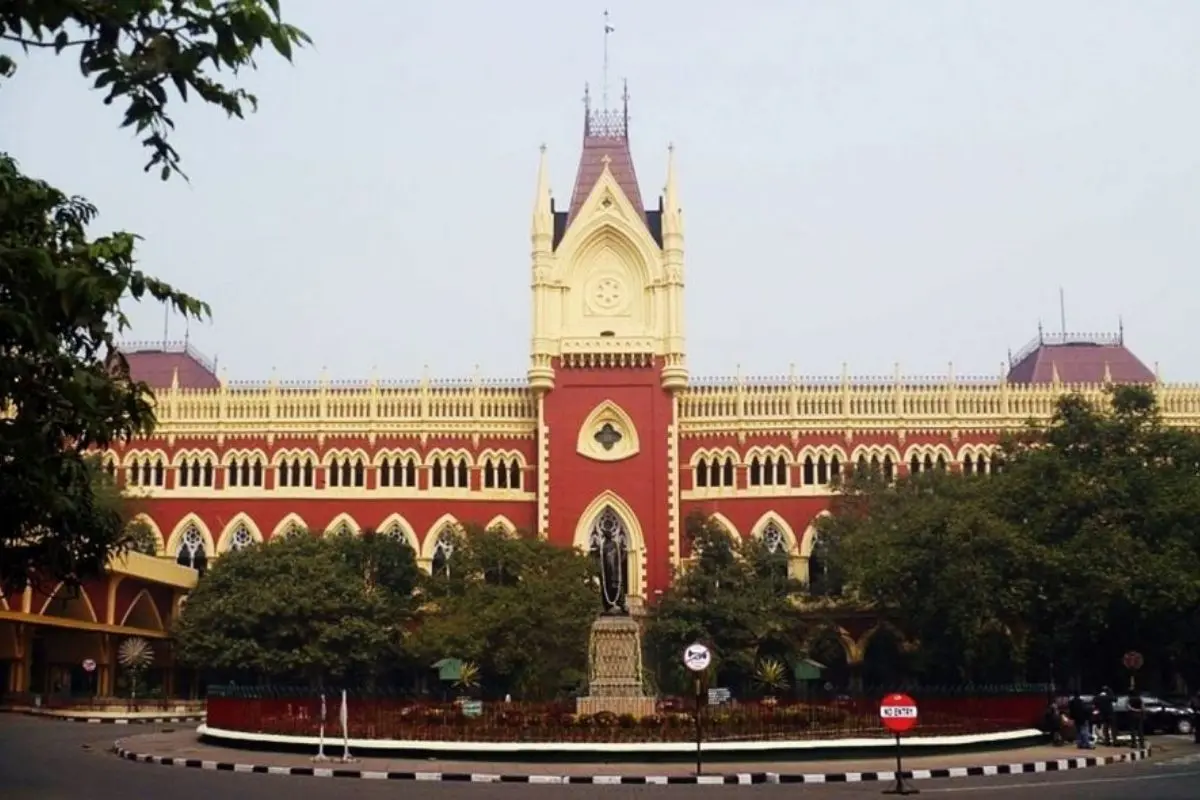
In a significant relief for college faculty ahead of the West Bengal Assembly elections, the Calcutta High Court has set aside the Election Commission’s order directing assistant and associate professors of government colleges to serve as presiding officers at polling booths.
The order, which came just days before polling scheduled on April 23 and April 29, was quashed by Justice Krishna Rao, who held that the Election Commission (EC) failed to justify why professors were being deployed for election duty despite repeated directions from the court.
A group of assistant professors had approached the High Court challenging the EC’s directive, arguing that their appointment as presiding officers violated established guidelines and lacked proper reasoning.
The court agreed, noting that the Commission did not produce any material to show that such appointments were necessary due to “unavoidable circumstances.”
“This Court finds that the authorities failed to produce any document to show that due to some unavoidable circumstances, the authorities have taken a decision for appointment of the petitioners as presiding officer in the polling booth,” Justice Rao observed in his order.
The court emphasised that while the Election Commission has the authority to appoint officials for election duty, such powers are not absolute and must be exercised in accordance with its own rules and circulars.
Specifically, the court referred to a February 2010 circular, which requires authorities to record clear reasons before assigning higher-ranking officials, such as college professors, to polling duties.
Justice Rao noted that the EC had appointed the professors without following these guidelines.
“The authorities, without taking any decisions, have appointed the petitioners… in violation of the circular,” the court said, adding that such appointments were therefore “set aside and quashed.”
During the hearing, the court repeatedly asked the Commission to clarify which rules governed the appointments and to provide evidence of any exceptional circumstances that warranted such deployment.
However, the EC was unable to furnish adequate documentation. Representing the Election Commission, senior advocate Soumya Majumdar argued that a more recent circular dated June 7, 2023, had superseded earlier guidelines.
He also pointed out the logistical challenges involved in conducting elections across nearly 90,000 polling booths, stating that strict adherence to rank and pay parity is not always practical given the scale of operations.
Majumdar further referred to Section 26 of the Representation of the People Act, which allows district election officers to appoint presiding officers for polling stations as deemed necessary, provided they are not connected to any contesting candidate.
However, the court was not convinced. In a sharp remark, Justice Rao said that such a broad interpretation of the law could lead to unreasonable outcomes.
“Then you can appoint judges as polling officers… I am ready to go. It is not a joke, every time you are changing your notification,” he said during the hearing.
On the other hand, senior advocate Bikash Ranjan Bhattacharya, representing the petitioners, argued that the issue was not about the Commission’s authority but about following due procedure.
He maintained that the EC is required to record specific reasons before assigning Group A equivalent officers, like assistant professors, to such roles.
Bhattacharya also dismissed concerns that the court’s intervention would affect election preparedness.
He pointed out that the Commission has a large reserve pool of officials available for deployment. “The election is not going to be affected… these are imaginary apprehensions,” he argued.
In its final order, the High Court clarified that its decision would not impact individuals who had already undergone training for election duty under the EC’s directive.
However, it granted relief to the petitioners by cancelling their appointments as presiding officers.
The court also made it clear that the Election Commission is free to assign duties to the professors in roles that match their rank, pay, and status, as per existing guidelines.
The ruling is being seen as a reminder that even constitutional bodies like the Election Commission must adhere strictly to procedural rules and ensure transparency in decision-making, especially in matters involving large-scale public administration such as elections.