‘CAA protests staged for global attention’: Delhi Police claims in Supreme Court while citing Trump’s 2020 India visit
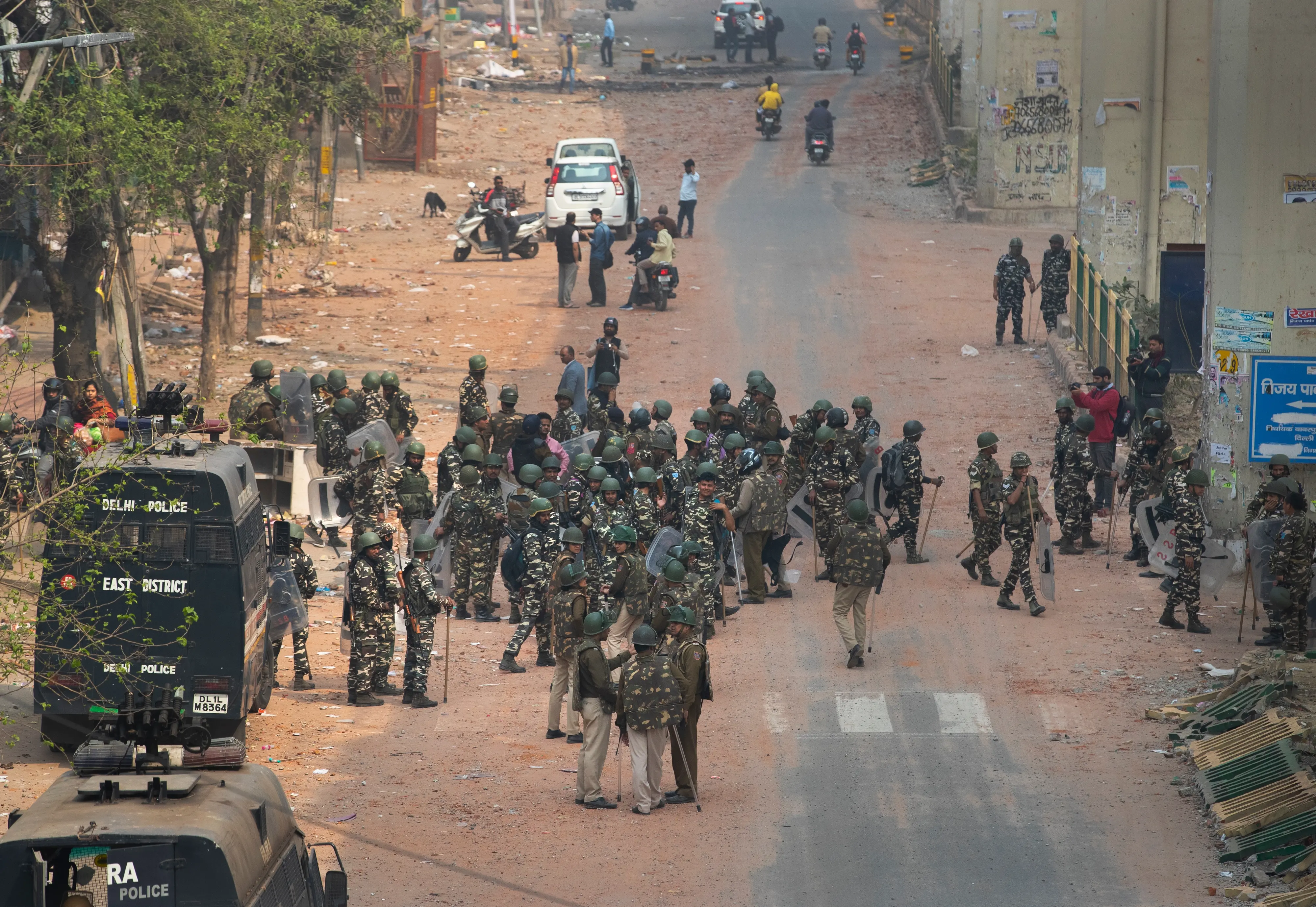
New Delhi: Delhi Police informed the Supreme Court on Thursday that the protests against the Citizenship Amendment Act (CAA) and the National Register of Citizens (NRC) were strategically organised to overlap with US President Donald Trump’s visit to India in February 2020. According to the police, the scheduling was intentional and aimed at drawing international media coverage during a major diplomatic engagement.
The submission came during the continued hearing of the bail pleas filed by six accused in the Delhi riots conspiracy case—Gulfisha Fatima, Sharjeel Imam, Meeran Haider, Umar Khalid, Shifa Ur Rehman and Mohd Saleem Khan. All six are charged under the Unlawful Activities (Prevention) Act (UAPA), a stringent anti-terror law under which obtaining bail requires the court to be satisfied that the accusations are not prima facie true.
Solicitor General Tushar Mehta argued that the violence that unfolded in northeast Delhi between 23 and 26 February 2020 was not the result of spontaneous disagreement over the CAA, but a “well-crafted, orchestrated, preplanned, choreographed” sequence of events. Mehta submitted that the alleged conspiracy aimed to create communal tension, disrupt public order and destabilise the government through what he described as coordinated protests, road blockades and speeches.
Countering the defence claim that students and civil society activists were being targeted for peaceful dissent, Mehta asserted that investigators had placed on record multiple “provocative speeches with communal overtones” allegedly delivered by some of the accused prior to the riots. He said a narrative had been created inside and outside courtrooms describing the violence as a reaction to lawful protests, a representation he called misleading.
The police also denied allegations that it had caused delays in the trial. Additional Solicitor General S V Raju presented case records from the trial court, including hearing logs and adjournment orders, to argue that the progress of the charges hearing had been slowed by repeated adjournment requests from several accused persons and their counsel. Raju told the bench that although the court began hearing arguments on charges in September 2023, substantial progress occurred only a year later in September 2024 because of what he described as delays on the defence side. He noted that only 11 of the 18 accused had completed their arguments on charges so far.
Earlier, accused Umar Khalid had informed the Supreme Court that the delays stemmed primarily from the police taking nearly four years to conclude the investigation and from frequent postponements caused by the absence of the presiding officer or the public prosecutor. The bench is presently examining the bail requests on both factual and procedural grounds, including whether the statutory conditions for bail under UAPA have been satisfied.
Context on CAA and NRC
The Citizenship Amendment Act (CAA), passed by Parliament in December 2019, provides an expedited pathway to Indian citizenship for undocumented migrants from Afghanistan, Bangladesh and Pakistan belonging to six non-Muslim religious communities—Hindus, Sikhs, Buddhists, Jains, Parsis and Christians—who entered India on or before 31 December 2014. The Act does not extend the same provision to Muslims, leading to widespread protests nationwide in late 2019 and early 2020, including significant demonstrations at Shaheen Bagh and in university campuses.
The National Register of Citizens (NRC) is a proposed nationwide population register meant to document legal citizenship. While the NRC has not been implemented outside Assam, critics argue that a nationwide NRC combined with the CAA could disproportionately affect Muslim residents unable to produce adequate documentation. The government maintains that the CAA is a humanitarian measure to protect persecuted minorities from neighbouring Islamic-majority countries and has repeatedly stated that Indian citizens, including Muslims, have nothing to fear from the Act.
The Supreme Court’s current proceedings relate specifically to the allegations of conspiracy surrounding the 2020 Delhi riots and do not address the constitutionality of the CAA, which is being examined separately in ongoing petitions.