C-2 jets land; F-2A fighters next: Why upcoming India-Japan air combat drill is significant
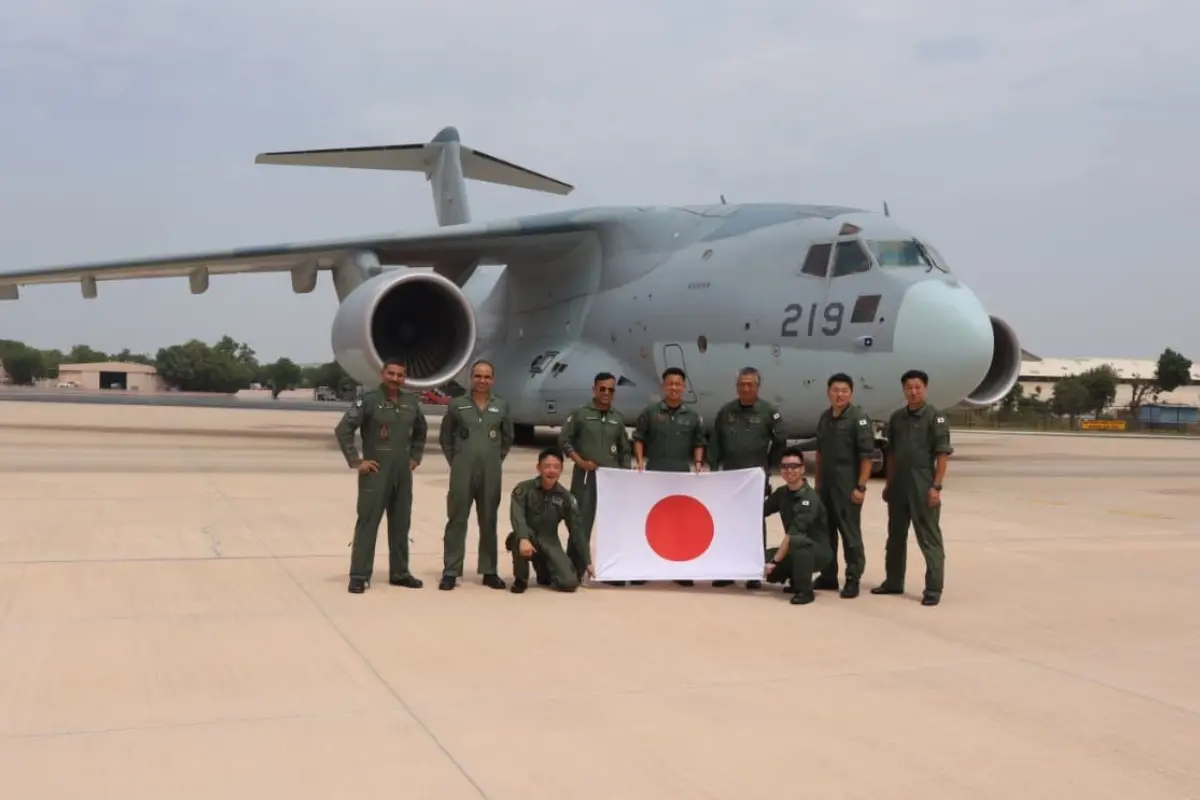
The skies over western Rajasthan are preparing for an unprecedented roar as back-to-back military drills begin. Starting on September 09, the Indian Air Force (IAF) and the Japan Air Self-Defense Force (JASDF) will launch the second edition of their bilateral exercise, Veer Guardian 2026. This marks a historic first, as Japanese fighter aircraft deploy to operate directly from an Indian air base.
Japanese jets land on desert soil
Preparations are already under way at the Jodhpur Air Force Station. Two Japanese C-2 transport aircraft have touched down, carrying the advance Japanese contingent and equipment. They will soon be joined by three Japanese F-2A fighter jets and around 110 personnel.
EXERCISE VEER GUARDIAN 26
Ex Veer Guardian 2026 is being conducted between #IndianAirForce and Japanese Air Self-Defense Force (JASDF) at Jodhpur from 09 Sep to 22 Sep 26.
Two JASDF C-2 aircraft touched down at Air Force Station Jodhpur, marking the arrival of the Japanese… pic.twitter.com/X1VXUTTfiG— Indian Air Force (@IAF_MCC) September 5, 2026
The combat teams will sharpen tactical skills and practice integrated air combat training alongside Indian jets. This is a major step forward from their inaugural joint exercise, which was hosted by Japan in January 2023. To secure the training arena, India has temporarily reserved massive stretches of airspace up to 40,000 feet. Some of these restricted sectors lie just 20 kilometres from the international border.
Border drills and regional security shifts
The choice of location in western Rajasthan carries significant strategic weight. The drills sit close to the Pakistan border, coming in the wake of tensions from last year's Operation Sindoor. During those hostilities, Indian jets used long-range standoff weapons to strike targets deep inside Pakistan without crossing the Line of Control. This demanding environment will test pilot coordination before India transitions into Tarang Shakti, a larger multinational air exercise scheduled for late September.
Indian officials are also increasingly worried about Chinese naval assertiveness in the Indian Ocean and South China Sea. By flying together, India and Japan are sending a quiet but firm message. Both nations recently signed a major maritime agreement in New Delhi, pledging to keep vital shipping lanes free and open. They have openly opposed any attempts to change regional borders by force, showing a united front.
By building deep military ties near the border, New Delhi and Tokyo are working to ensure regional stability and secure sea and air lanes.