Emerged from the fire of ‘emergency’, Yechury, the pragmatic communist, leaves a legacy of his own
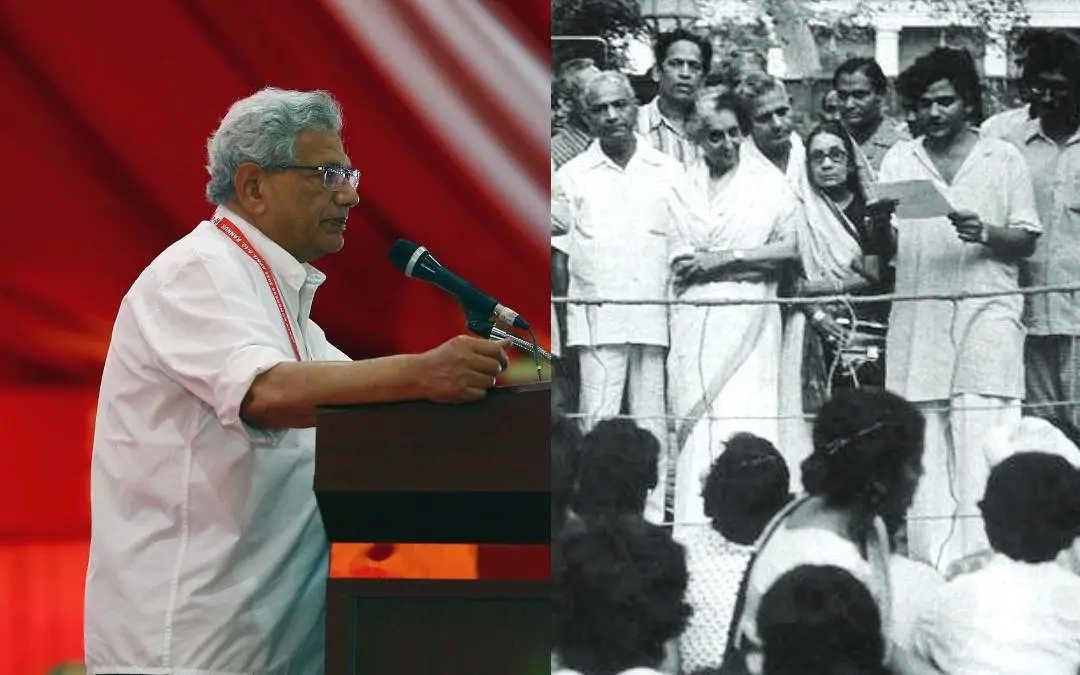
Sitaram Yechury was only 32 years old when he was first elected to the Central Committee of the Communist Party of India (Marxist) [CPM] in 1984. During the party congress, he approached E.M.S. Namboodiripad, the General Secretary at the time, to request a reconsideration of the committee's decision. Yechury expressed his reluctance to assume such a demanding responsibility. E.M.S. Namboodiripad responded that the CPM is a centrally organized democratic party, and its members are expected to abide by the committee's decisions. Yechury accepted this explanation and was inducted into the central committee.
Despite serving as the General Secretary of India’s largest Communist Party for around a decade, the zeal that Yechury cultivated as a student leader in JNU remained undiminished. The intensity of the Emergency era had ignited a fervor in Yechury and his fellow Communists and had been influential in shaping his political career. From his early days as a leader in the JNU Students’ Union to his role as CPM General Secretary during times of crisis, Yechury made his mark as a Marxist theoretician, organizer, skilled parliamentarian, and populist.
Tumultuous times
In 1977, during one of India's most tumultuous political periods, Indira Gandhi lost the Lok Sabha elections. During this time, a group of JNU students, including Yechury, marched to Gandhi's residence, vocally denouncing the Emergency and labeling those in power as ‘criminals of emergency.’ Gandhi, accompanied by Om Mehta, the Home Minister during the Emergency, emerged smiling. The students ceased their protest when she appeared.
Yechury walked towards Indira Gandhi and delivered a memorandum outlining the government's abuse of power during the Emergency. As the youngster continued to unleash a barrage of allegations, Gandhi’s smile faded and she retreated, visibly dismayed.
The protest aimed to address Gandhi's continued role as the chancellor of the university despite her electoral defeat. The following day, Gandhi resigned, marking a victory for the student movement. Yechury's courageous stand against one of India's most formidable leaders during this period was a defining moment in his early political career. The grit, courage, and determination of the young leader had captured the attention of political observers and party supporters.
Yechury's involvement in student politics began with his election as president of the JNU Students' Union, a position he held three times. After joining the Students' Federation of India (SFI) in 1975, Yechury’s political engagement deepened, leading him to abandon his research in economics and face imprisonment during the Emergency. By 1984, he had ascended to the role of All India President of the SFI, and later that year, he was invited to the CPM Central Committee. In 1985, he joined the Central Committee alongside Prakash Karat, and in 1992, he was elected to the Politburo at the Chennai Party Congress. This period also saw him strengthening connections with communist leaders globally.
Marxist twins
The media initially referred to Yechury and Karat as the "Marxist twins," marking a generational shift in the politburo, which challenged the perception of it as an organization of elderly leaders. The presence of young and enthusiastic leaders like Yechury and Prakash Karat inspired party members and invigorated the organization.
As Yechury moved through the ranks from a branch unit to the politburo, his youth and modern approach revitalized the party. His tenure, alongside Karat, marked a new chapter for the CPM, characterized by a blend of traditional Marxism and contemporary political strategies.
As a Rajya Sabha member from Bengal for 12 years starting in 2005, Yechury earned a reputation as one of the most influential parliamentarians of his era. His speeches, delivered fluently in multiple languages, captivated audiences and commanded respect across party lines. His critiques of the BJP government, including its policies on citizenship and demonetisation, and his interventions on various national issues established him as a major political voice in India.
Challenging times
Yechury became the General Secretary of the CPM in 2015, steering the party through challenging periods with a combination of ideological commitment and pragmatic strategy. His leadership was marked by efforts to present alternative political lines, particularly evident in the 2018 Hyderabad Party Congress, where he advocated for an independent approach to alliances. Despite initial resistance within the politburo, Yechury’s influence grew, leading him to play a key role in various political struggles, including the farmers' protests and maintaining the CPM’s presence in Kerala.
As a political strategist, Yechury was instrumental in shaping decisive policy frameworks and alliances. He contributed to the formulation of the United Progressive Alliance's Common Minimum Programme in 2004 and played a crucial role in negotiating the nuclear deal issue. His involvement in mediating the conflict in Nepal, working closely with Maoist leaders to guide them towards democratic solutions, highlighted his diplomatic acumen.
During the rise of the Modi government, Yechury’s role in building opposition coalitions underscored his political expertise. Despite the CPM's relative weakness, he emerged as an important figure in national opposition politics, even earning accolades from Congress leaders. At the same time, he maintained a critical stance towards Congress policies, emphasizing the importance of both political criticism and opposition unity.
Sitaram Yechury's career reflects a complex blend of ideological commitment, political strategy, and effective leadership, making him a significant figure in contemporary Indian politics.