Inside Boeing 787 Dreamliner's safety and redundancy systems
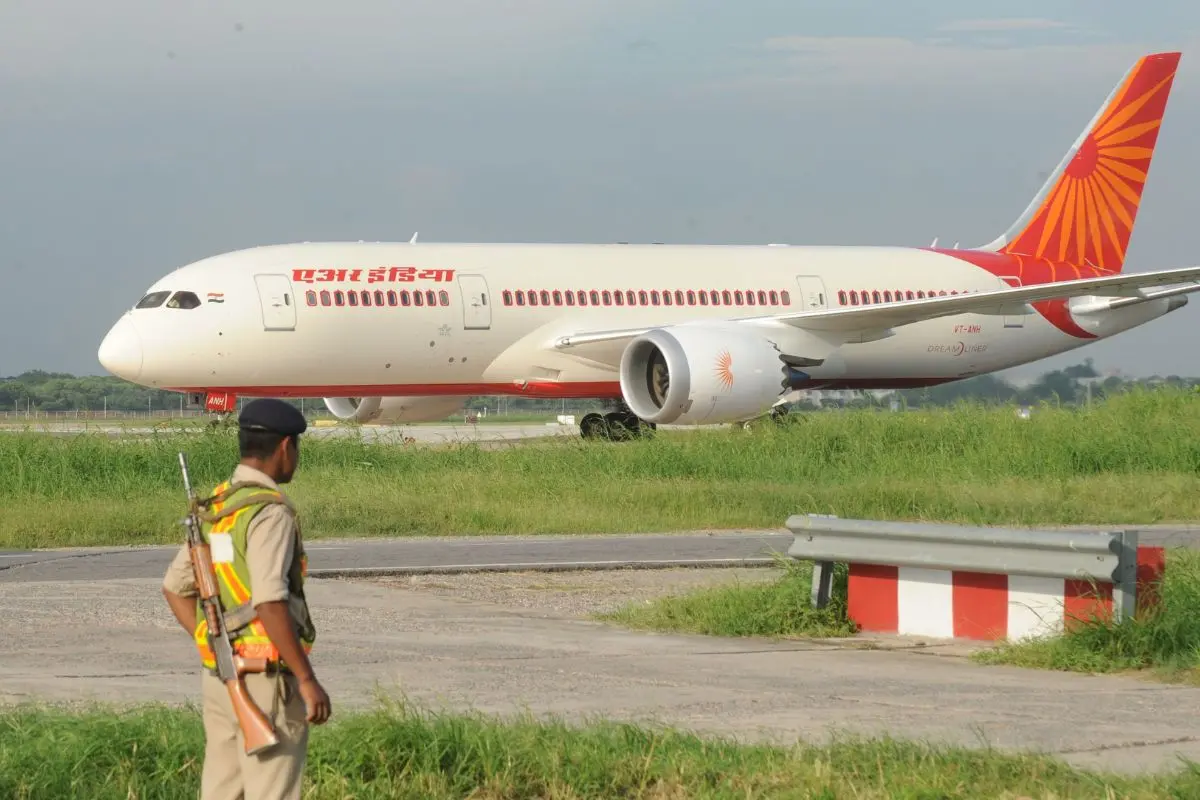
The aircraft involved in the Ahmedabad crash was a Boeing 787 Dreamliner, one of the most technologically advanced and fuel-efficient wide-body airliners flying today. Designed to usher in a new era of long-haul travel, the Dreamliner combines cutting-edge engineering with an emphasis on passenger comfort, operational efficiency, and safety.
As investigations continue into the cause of the crash, here’s a closer look at the aircraft’s key features and the technology that has made it a staple in the fleets of major international carriers, including Air India.
Safety and redundancy systems
The Boeing 787 is equipped with a multi-tiered safety architecture, designed to mitigate failures and ensure safe operation even in abnormal scenarios. Instead of traditional manual controls, the 787 uses a digital fly-by-wire system that interprets pilot input electronically and adjusts control surfaces with precision. The system has triple redundancy, ensuring fail-safe operations in case of individual system faults.
The aircraft has advanced cabin pressure control helps reduce fatigue and improve passenger well-being on long flights. It also has higher humidity levels and larger windows with electronic dimming. The flight is equipped with emergency evacuation slides for all exit doors, designed for rapid deployment and also has reinforced cockpit doors and advanced access control systems for security.
Fire detection and suppression
•Equipped with smoke detectors in cargo holds, lavatories, and electronics bays
•Built-in halon-based fire suppression systems
•Flame-retardant materials throughout the cabin and wiring compartments
Electrical and power safety
•Advanced electrical architecture based on lithium-ion batteries, though early operational incidents led to further redesigns and safety enhancements.
•The system powers hydraulic, environmental, and lighting systems more efficiently.
Flight control and avionics
•Features large-format digital LCD displays in the cockpit
•Real-time Health Monitoring Systems capable of transmitting performance and maintenance data to ground control during flight
•GPS-based navigation, terrain awareness, and automated flight path monitoring
Aircraft design and materials
One of Dreamliner’s most revolutionary aspects is its construction material. Over 50% of the aircraft structure is made from composite materials, primarily carbon-fibre-reinforced plastic. This makes the aircraft significantly lighter and more resistant to corrosion compared to traditional aluminum designs. The lighter airframe translates to 20–25% lower fuel burn and emissions, enabling longer ranges and reduced operating costs.
The aircraft’s aerodynamic design includes:
•Raked wingtips for improved fuel efficiency
•Smooth nose contour and advanced engine nacelles to reduce drag and noise
•Noise-reducing engine chevrons that make the Dreamliner among the quietest jets in its class
Aircraft Overview: Boeing 787 Dreamliner
•Manufacturer: The Boeing Company (USA)
•First Commercial Flight: 2011
•Variants: 787-8, 787-9, and 787-10
•Typical Seating Capacity:
o787-8: 242 passengers
o787-9: 296 passengers
o787-10: 318 passengers
•Range: Up to 14,010 km (787-9)
•Cruising Speed: Mach 0.85 (around 903 km/h)
Air India operates both the 787-8 and 787-9 variants, using them on medium- to long-haul international routes, including to Europe, the US and Australia.
The Boeing 787 has an impressive safety record globally. While there have been isolated incidents involving technical snags or electrical systems, no fatal accident involving passengers had been recorded on the type until this incident, pending confirmation of casualties.
Its reputation as a reliable, long-haul workhorse is why more than 1,800 aircraft have been ordered by over 80 airlines, including major Indian carriers like Air India and Vistara.
India’s relationship with the Dreamliner
Air India was among the early adopters of the Boeing 787 in Asia, integrating it into its fleet in 2012. It now operates more than two dozen Dreamliners, forming the backbone of its international operations.
The aircraft’s ability to fly long routes non-stop from Indian metros to destinations like London, Frankfurt, Sydney, and New York has been vital to Air India’s network expansion.
What happens next
As the Directorate General of Civil Aviation (DGCA) leads the investigation, a detailed assessment of flight data recorders (black boxes), maintenance logs, and air traffic control communication will be critical to determine the root cause of the crash.
A team from Boeing is also expected to assist Indian authorities under international aviation protocols, especially given the high profile of the incident and the aircraft involved.
The Boeing 787 was designed to be one of the safest and most efficient aircraft ever built. As the investigation continues, authorities will aim to understand how a jet with such a strong reputation experienced such a catastrophic event during take-off.