‘Blood and water will not flow together’: Jaishankar in RS on Pahalgam Attack, Article 370 & Indus Treaty | WATCH
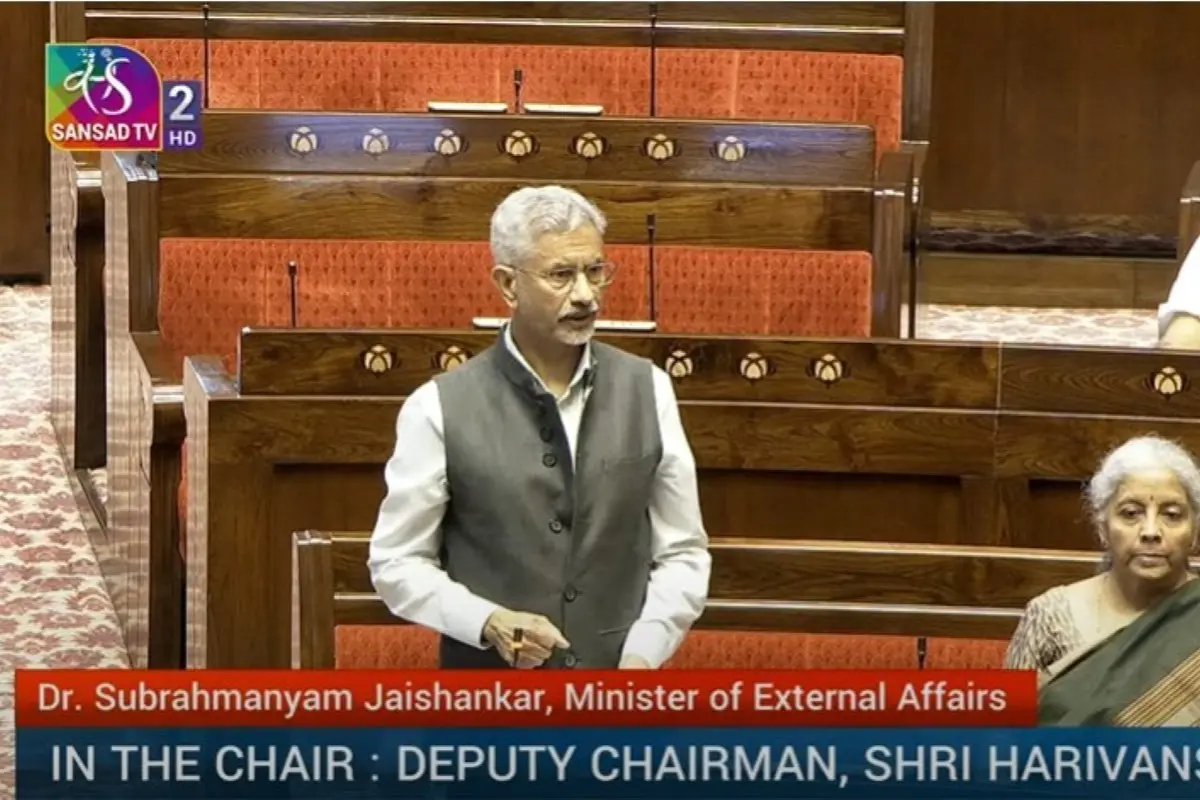
New Delhi: In a powerful statement during a Rajya Sabha debate on Operation Sindoor and the Pahalgam terror attack, External Affairs Minister Dr S Jaishankar declared a shift in India’s foreign policy towards Pakistan, asserting that the Indus Water Treaty (IWT) has been placed in abeyance until Islamabad permanently halts its support for terrorism.
Referring to the April 22 Pahalgam terror attack, in which 26 civilians were brutally killed, Jaishankar said the assault marked a turning point. “It was a shocking attack for a variety of reasons -- the manner in which people were killed in front of their families, the fact that their religion was asked before killing them, and the intent of destroying the economy of Jammu and Kashmir which had returned to prosperity and normalcy after the end of Article 370 -- all of this angered the country. There was grief and shock. Across the world, there was solidarity and sympathy”
He emphasised that such an attack was absolutely unacceptable and had crossed India's red lines.
"There had to be severe consequences. There had to be accountability of the perpetrators, and they and their supporters had to be brought to justice," Jaishankar said.
He further stated that the Cabinet Committee on Security's decision on April 23 was a reflection of India’s “anger, resolve, and determination,” marking the beginning of a multi-pronged response to the attack. These steps included the cancellation of Pakistani visas under SAARC, reduction in diplomatic mission strength, expulsion of military advisors, and the holding of the Indus Water Treaty in abeyance.
JaisHankar criticised the origins of the 1960 Indus Water Treaty, saying it was rooted in a policy of appeasement. He highlighted that the agreement was heavily tilted in Pakistan’s favour, allowing it access to significant portions of river waters originating in India, without any reciprocal benefit.
“The Indus Water Treaty in many ways is a very unique agreement. I cannot think of any agreement in the world where a country has allowed its major rivers to flow to the next country without having rights on that river. It was an extraordinary agreement, and it is important, when we have put it in abeyance, to recall the history of this event,” he said.
Citing parliamentary debates from the 1960s, Jaishankar accused former Prime Minister Jawaharlal Nehru of prioritising Pakistan’s interests over India’s own farmers in Kashmir, Punjab, Rajasthan, and Himachal Pradesh.
“Not a word about the interests of our own people. He said, 'We purchased peace'. But within a year, that same Prime Minister admitted there was no peace with Pakistan. What we purchased was not peace, but appeasement,” Jaishankar said.
He added that while the treaty was signed in the spirit of goodwill, India had received “neither goodwill nor friendship from Pakistan” in return, only terrorism, wars, and hostility for over six decades.
“Such a treaty had to be dealt with, and this government dealt with it,” Jaishankar affirmed.
The EAM also highlighted that previous governments had long claimed “nothing can be done” about the mistakes of the past. “We were told Pandit Nehru’s mistake cannot be corrected. The Modi government has shown that it can,” he said, referencing both the revocation of Article 370 and the reconsideration of the Indus Water Treaty as part of a broader correction of historical policy errors.
In a sharp message to Pakistan, Jaishankar reiterated, “The Indus Water Treaty will remain suspended until Pakistan irrevocably gives up support for terrorism. Blood and water will not flow together.”
IANS inputs