Bihar election 2025: Women and first-time voters set to reshape the state’s political landscape
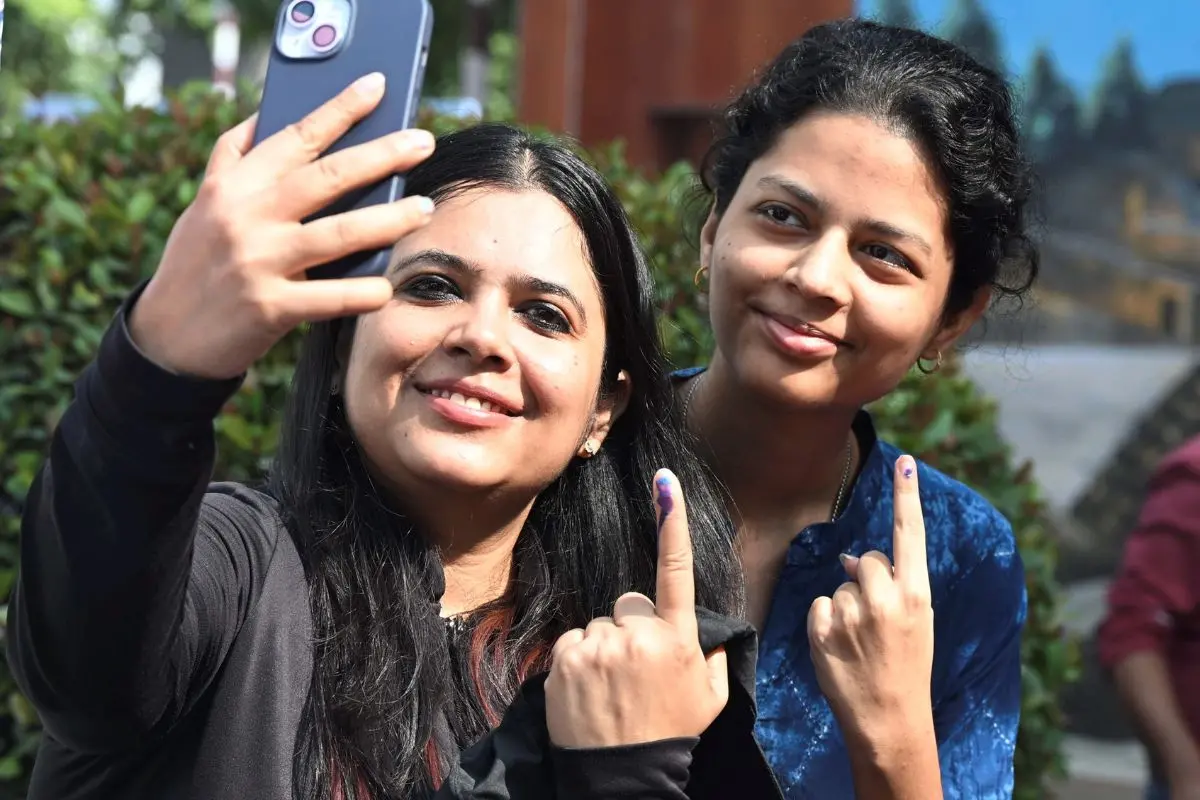
Bihar has created electoral history. The state has recorded its highest voter turnout since India’s first general election in 1951, with an impressive 66.91 per cent participation across the two phases of polling for the 2025 Assembly elections. The milestone, however, is not just about numbers — it marks a profound shift in Bihar’s democratic narrative, driven largely by women and first-time voters.
Record-breaking turnout led by women
According to data released by the Election Commission of India (ECI), women voters have once again outperformed men at the ballot box, registering a remarkable 71.6 per cent turnout — the highest in the state’s history. In comparison, male turnout stood at 62.8 per cent, nearly a 10 per cent gap.
Chief Election Commissioner Gyanesh Kumar hailed the development as a moment of pride for Indian democracy. “Voters have made history in independent India. They cast the highest percentage of votes since 1951, at approximately 66.9 per cent. Women have expressed complete faith in the Election Commission, leading to the highest turnout ever,” he said, praising the peaceful and transparent conduct of the polls.
The ECI noted that over 8.5 lakh polling staff, 1.4 lakh polling agents, and nearly 350 observers were involved in ensuring smooth polling across 243 constituencies.
Women voters at the forefront
The trend of women leading the voting charts is not new in Bihar. Over the last three state elections, female voter participation has consistently surpassed that of men by three to seven percentage points. What makes 2025 exceptional, however, is the scale of engagement — and the political implications it carries.
Political analysts say that women in Bihar have evolved from being silent participants to decisive stakeholders. Their increasing presence at the polls reflects not just political awareness, but also economic empowerment, social mobility, and greater personal agency.
Nitish Kumar’s women-centric welfare schemes are widely believed to have strengthened this bond. Initiatives such as Jeevika Didi, Lakhpati Didi, and the Mukhyamantri Mahila Rozgar Yojana have enhanced women’s roles in household decision-making and rural entrepreneurship.
“Women have given their blessings to Nitish Kumar,” said JDU leader Neeraj Kumar, expressing confidence that the high female turnout would translate into electoral gains for the ruling NDA. “The same trend was seen in 2019, 2020, and 2024 — women have supported Nitish Kumar because his work speaks for itself.”
Meanwhile, the opposition INDIA bloc, led by Tejashwi Yadav, has also actively courted female voters. Promises like the Mai-Behan-Maan Scheme and 200 units of free electricity for women-headed households highlight a growing political consensus: women now form the most influential constituency in Bihar’s politics.
The rise of first-time voters
Alongside women, first-time voters have also played a defining role in the 2025 elections. Young voters, many between the ages of 18 and 25, approached polling day with enthusiasm and a sense of responsibility.
In Patna, Sonal Kumari, a student from Sri Krishna Nagar, travelled over 500 kilometres from outside the state to cast her first vote. “I came home just to vote — it’s my way of contributing to Bihar’s future,” she told TOI in an interview. She added that her priority was to choose a representative who would “improve Bihar’s image” and create more opportunities for the youth.
Another young voter said his generation is more policy-driven than the previous one. “We focus on governance and development, not just party identity or caste. Migration and unemployment are our biggest concerns,” he said.
This sentiment was echoed across constituencies such as Kumhrar, Bankipore, and Patna Sahib, where first-time voters cited education, employment, and clean governance as their top priorities.
Migration, education and employment: The youth agenda
Migration remains a central issue in Bihar’s electoral discourse. Young voters repeatedly expressed frustration over the state’s “talent drain” — the exodus of skilled youth to other parts of India for jobs and education.
“There are more opportunities for women and youth now, but Bihar still loses much of its talent to other states,” said Bhavya Singh, another first-time voter from Patna, speaking to PTI. “The next government must address migration by improving higher education and job creation.”
Bhavya also criticised the persistence of caste-based politics, calling for a more meritocratic political culture. “Even after 70 years of independence, caste politics dominates Bihar. It’s time for change,” she said.
Her brother Shivam Singh added that education must go beyond literacy. “Voters should be guided by reason, not rhetoric. Proper education will help citizens make informed choices,” he remarked, urging the media to play a more balanced role in shaping public opinion.
A shift in political power dynamics
The record turnout among women and the youth points to a broader shift in Bihar’s political dynamics. Both demographics are demanding performance-based governance rather than identity-driven politics.
Analysts argue that the empowerment of women has altered electoral calculations across parties. From welfare distribution to safety measures and leadership representation, every political alliance now frames its agenda around women’s participation.
Moreover, the young electorate — digitally aware, mobile, and politically conscious — is challenging traditional campaign strategies. They prioritise employment, education, and governance over caste equations or legacy politics.
A peaceful and historic election
Despite the magnitude of the exercise — spanning 7.25 crore voters and two phases of polling — the elections were largely peaceful, aided by heavy security deployment and improved logistics. The counting of votes is scheduled for November 14, coinciding with Children’s Day, adding symbolic weight to what many see as a generational transition in Bihar’s democracy.
Opposition leader Tejashwi Yadav welcomed the high turnout, calling it a “festival of democracy.” He said, “My heart is filled with joy seeing such participation. From youth to elderly, every class and caste has joined this movement of change.”
The road ahead
As Bihar awaits results, the message from the electorate is clear: the state’s democracy is evolving. Women have asserted their independence and confidence, while first-time voters have infused new energy into the political landscape.
Beyond political alliances, these voters have turned the 2025 Assembly elections into a referendum on governance, empowerment, and accountability. Whether under the NDA or INDIA bloc, the next government will inherit a more assertive, self-aware electorate — one that expects progress, not promises.
The Bihar election of 2025, thus, may be remembered not only for its historic turnout but for redefining who truly holds power in Indian democracy — the people, led by women and youth, shaping the state’s future with their votes. (With inputs from Agencies)