Bharatiya Antariksh Station’s first module on track for 2028 launch, govt confirms
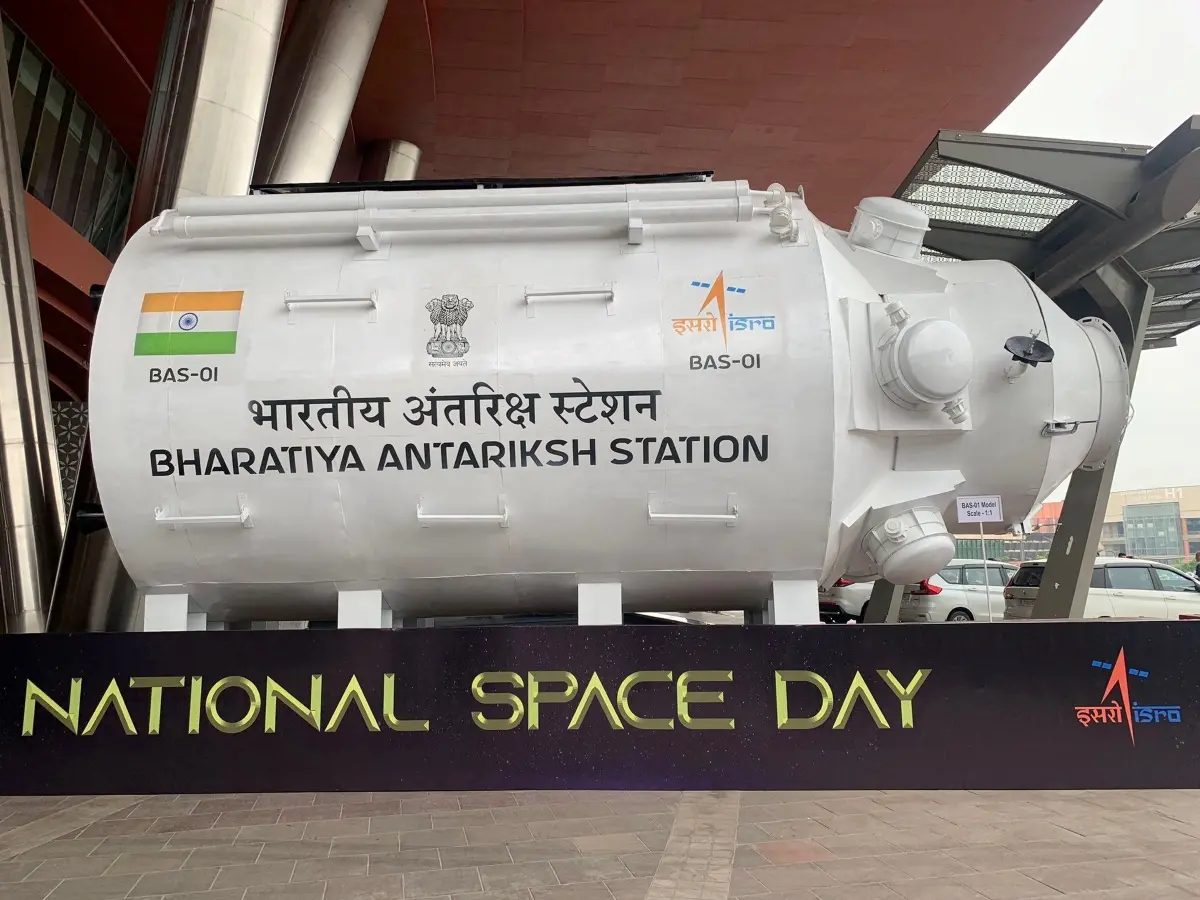
New Delhi: The government on Wednesday informed Parliament that work on the first module of the indigenous Bharatiya Antariksh Station is progressing steadily and is expected to meet its launch target of 2028.
When will the first BAS module launch?
In a written reply, Union Minister of State for the Department of Space Jitendra Singh stated that the development and launch of the first module, the Base Module (BAS-01), is targeted for 2028. He added that the fully operational Bharatiya Antariksh Station, comprising five modules, is expected by 2035.
“In September 2024, the Union Cabinet approved the development and launch of the first module of Bharatiya Antariksh Station (BAS-01) by 2028,” Singh said.
How is the development progressing?
According to the Minister, “overall system engineering of BAS-01 module and technology development activities of various subsystems are progressing well.”
He further noted that the budgetary allocation for BAS-01 has been included in the revised scope of the Gaganyaan Programme, which has received additional funding in the already approved expenditure of Rs 20,193 crore.
Is international collaboration involved?
Singh informed Parliament that “ISRO is incorporating necessary international standards in the design of BAS-01 subsystems, which ensures interoperability of BAS-01 with systems provided by other international agencies,” adding that “support for utilising niche test facilities is also being explored”.
These efforts are being facilitated through existing cooperation instruments with other space agencies.
What does BAS mean for India’s space programme?
Describing the project’s significance, Singh said, “Bharatiya Antariksh Station (BAS) is the next logical step in the sustained Indian Human Space Programme.”
He added that developing the indigenous space station “will open up further avenues in space exploration, which will lead to utilisation of the unique microgravity environments in Low Earth Orbit (LEO) for advanced scientific research and technology development activities”.
According to the Minister, the station will also “support further Indian human exploration missions Indian landing on Moon as envisioned in India’s Space Vision 2047.”
IANS inputs