PM Modi at ASEAN Summit: What is the grouping and what role does India play?
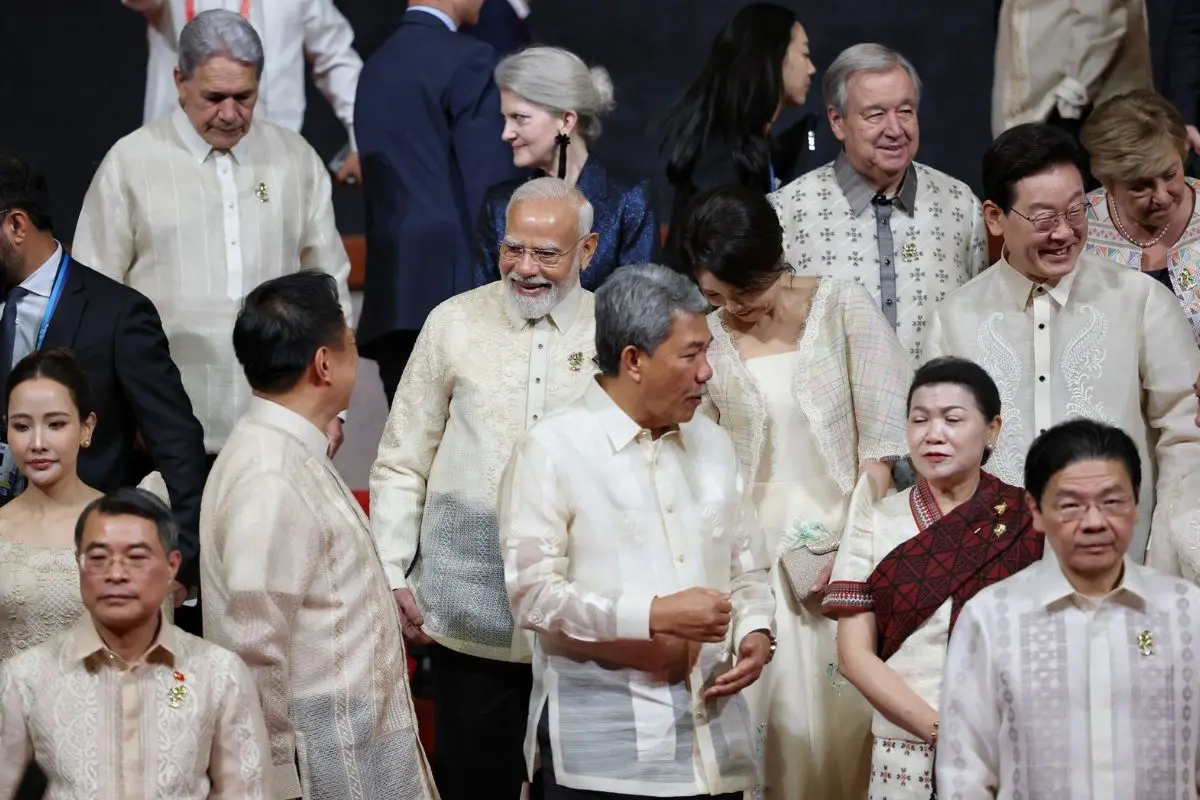
The Philippines is hosting the 49th Association of Southeast Asian Nations (ASEAN) Summit and Related Summits in Manila from November 15 to 17, 2026. The meetings bring together leaders from Southeast Asia and major global powers to discuss regional security, economic cooperation and emerging geopolitical challenges.
Modi arrived in the Philippines on November 16 for a three-day visit, during which he will participate in both summits, according to the Ministry of External Affairs (MEA).
The meetings are being held under the theme 'Navigating Our Future, Together'. Maritime security, tensions in the South China Sea, the situation in Myanmar and regional economic cooperation are among the key issues expected to feature in the discussions.
But what exactly are ASEAN and the East Asia Summit? How did these groupings come into existence, and what role does India play in them?
What is ASEAN and why was it established?
The Association of Southeast Asian Nations (ASEAN) is a regional organisation established on August 8, 1967, through the signing of the Bangkok Declaration in Thailand.
Indonesia, Malaysia, the Philippines, Singapore and Thailand were its five founding members.
The organisation was formed against the backdrop of the Cold War, when Southeast Asia was facing political instability, regional conflicts and growing tensions between major powers. Its founding members recognised the need for a common platform to build cooperation and prevent differences from escalating into larger conflicts.
The Bangkok Declaration outlined three broad objectives: promoting economic growth, social progress and cultural development through collective efforts; maintaining regional peace and stability; and encouraging cooperation among member countries.
Respect for justice, the rule of law and the principles of the United Nations Charter were also identified as important foundations of the grouping.
What began as an effort to strengthen cooperation among five countries has since evolved into one of the most influential regional organisations, with a wider economic and diplomatic role.
How did ASEAN expand to 11 members?
ASEAN gradually expanded beyond its five founding members, bringing almost the entire Southeast Asian region into the grouping.
Brunei joined in January 1984, followed by Vietnam in July 1995. Laos and Myanmar became members in July 1997, while Cambodia joined in April 1999.
Timor-Leste became the 11th member on October 26, 2025, following a lengthy process of integration into the organisation.
As its membership expanded, ASEAN also strengthened its institutional structure. In 2015, it formally established the ASEAN Community, organised around three pillars:
ASEAN Political-Security Community: Focuses on regional peace, security, political cooperation and stability.
ASEAN Economic Community: Promotes economic integration, trade, investment and stronger regional connectivity.
ASEAN Socio-Cultural Community: Addresses social development, education, culture, public welfare and cooperation among people.
Together, these pillars provide a framework for addressing challenges that extend beyond individual national borders.
What is the East Asia Summit?
While ASEAN primarily brings together Southeast Asian countries, the East Asia Summit (EAS) provides a wider platform for engagement with major powers and other countries in the Indo-Pacific.
Established in 2005, the East Asia Summit held its inaugural meeting in Kuala Lumpur, Malaysia, on December 14.
The first summit included the 10 ASEAN members at the time, along with Australia, China, India, Japan, New Zealand and South Korea, taking the total number of participating countries to 16.
Unlike a grouping focused exclusively on Southeast Asia, the EAS was conceived as a leaders-led forum for discussing broader strategic, political and economic issues affecting the region.
The 2005 Kuala Lumpur Declaration identified dialogue on issues of common interest and concern as the central purpose of the forum.
The United States and Russia joined the East Asia Summit at its sixth meeting in Bali, Indonesia, in November 2011.
Following Timor-Leste's admission to ASEAN in 2025, the EAS has 19 participating countries: the 11 ASEAN members and eight external partners.
Its discussions cover a wide range of subjects, including maritime security, international trade, energy security, climate change, public health and regional stability.
ASEAN continues to play a central role in the forum, with the ASEAN chair also presiding over the East Asia Summit.
Why are both summits important?
Although ASEAN and the East Asia Summit have different membership structures, they serve complementary purposes.
ASEAN provides a regional framework for Southeast Asian countries to coordinate policies, strengthen economic ties and address common security concerns.
The East Asia Summit extends these conversations to countries with significant economic, political and military influence in the Indo-Pacific.
This wider participation is particularly important at a time when the region faces competing geopolitical interests, maritime disputes and uncertainty over global trade and security arrangements.
The South China Sea, for instance, remains a major source of tension involving China and several Southeast Asian countries. Similarly, the political crisis in Myanmar continues to pose challenges to regional stability.
Both forums offer opportunities for dialogue at the highest political level, even when member countries have differing interests and positions.
What is India's role in ASEAN and the East Asia Summit?
India's relationship with Southeast Asia has developed over several decades, with ASEAN emerging as an important partner in its regional engagement.
India established a sectoral dialogue partnership with ASEAN in 1992. This was upgraded to a full dialogue partnership in 1996 and a summit-level partnership in 2002.
India was also among the 16 founding participants of the East Asia Summit in 2005.
Its participation in these forums reflects its broader strategic interest in strengthening economic, diplomatic and security ties with Southeast Asia and the wider Indo-Pacific region.
A significant policy shift came in 2014, when India announced its Act East policy, building on the earlier Look East policy.
The initiative seeks to deepen India's engagement with Southeast Asian countries through stronger connectivity, trade, investment, cultural exchanges and strategic cooperation.
The MEA identifies ASEAN as a central pillar of India's Act East policy. The partnership also provides India with a platform to engage with major regional powers on issues ranging from maritime security to economic integration.