Ambedkar wanted Article 356 to remain a 'Dead Letter'; it was used 135 times
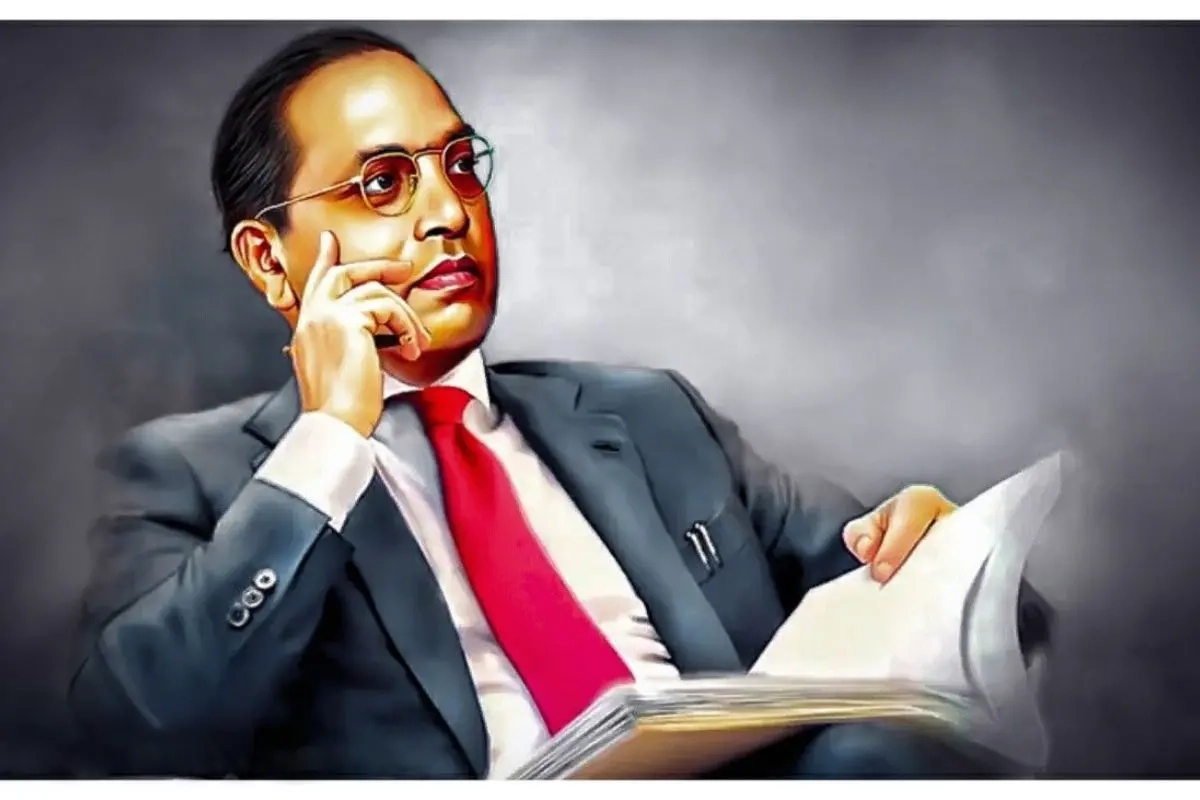
New Delhi: BR Ambedkar hoped Article 356 would stay a "dead letter" but it was used 135 times since 1951 to dismiss state governments. The Congress has invoked it 90 times while in power with Indira Gandhi's dispensation alone accounting for 50 of these instances, according to an analysis.
In an article published in newspapers on Thursday, Prime Minister Narendra Modi, without naming the Congress, accused it of weakening the Constitution during its rule and said that repeated misuse of Article 356 to dismiss elected state governments presents another troubling chapter.
The Modi government has also used Article 356 as many as 10 times.
According to the government analysis, since 1950, President's Rule has been imposed about 135 times and the Congress governments account for around 90 of these cases, or two thirds of the total. The Indira Gandhi government alone accounts for 50.
The Janata Party and other coalitions governments used Article 356 as many as on 28 occasions and BJP-led governments 17.
During Jawaharlal Nehru's government, Article 356 was used eight times, including in Punjab (1951), PEPSU (1953), Andhra State (1954), Travancore-Cochin (1956), Kerala (1959), Odisha (1961), Goa (1964).
PEPSU (Patiala and East Punjab States Union) was an amalgamation of the pre-independence princely territories of Patiala, Jind, Nabha, Faridkot, Kapurthala, Kalsia, Malerkotla (Maler Kotla), and Nalagarh.
During Nehru's tenure, when Article 356 was used in Kerala to dismiss EMS Namboodiripad's elected Communist government, it was widely criticised as the first major political use of the constitutional provision.
During Lal Bahadur Shastri's government, it was used once -- in Kerala (1964), after the ruling Congress lost its majority due to internal party splits.
Indira Gandhi used Article 356 a total of 50 times - Haryana (1967), West Bengal (1968, 1970, 1971), Tamil Nadu (1976), Gujarat (1976) and nine opposition states in 1980.
She often used the provision to dismiss non-Congress governments, notably Tamil Nadu (1976) during the Emergency despite DMK's majority and nine states in February 1980 (UP, Bihar, Rajasthan, MP, Punjab, Odisha, Gujarat, Maharashtra, Tamil Nadu) upon returning to power following the general elections, the analysis said.
Late prime minister Moraraji Desai used the provision 16 times -- first nine Congress-ruled states Uttar Pradesh, Bihar, Madhya Pradesh, Rajasthan, Punjab, Haryana, Himachal Pradesh, Odisha, West Bengal after the Janata Party's Lok Sabha victory, arguing they had lost the public mandate.
The Desai government also dismissed seven more state governments, including Karnataka, Manipur, Tripura, Mizoram, Puducherry in 1978.
Late prime minister Charan Singh used Article 356 four times -- Sikkim (1979), Manipur (1979), Kerala (1979), Assam (1979) -- triggered by shifting coalition loyalties, defections, and the onset of the Assam Agitation.
Rajiv Gandhi used the provision six times -- Punjab (1987), Tamil Nadu (1988), Nagaland (1988), Mizoram (1988), Karnataka (1989).
When the SR Bommai's Janata Dal government in Karnataka was dismissed in 1989 it was later struck down by the Supreme Court in a landmark ruling.
During VP Singh's regime, the Article 356 was used twice -- Jammu and Kashmir in 1990, and Karnataka (1990). Jammu and Kashmir was placed under central rule due to escalating militancy while Karnataka saw a brief spell amid Congress internal turmoil.
The provision was used five occasions when Chandra Shekhar was the prime minister -- Assam (1990), Goa (1990), Tamil Nadu (1991), Haryana (1991), Puducherry (1991).
Tamil Nadu's (1991) M Karunanidhi-led DMK government was dismissed over alleged LTTE links despite holding a clear assembly majority.
When PV Narasimha Rao was the prime minister, Article 356 was used 12 times, including Nagaland (1992), Manipur (1993), Bihar (1995), UP (1995).
Rao also dismissed four BJP-led state governments following the Babri Masjid demolition Uttar Pradesh, Madhya Pradesh, Rajasthan, Himachal Pradesh in 1992.
During HD Deve Gowda's tenure, the provision was used only once in Uttar Pradesh in 1996 following a hung assembly after the assembly elections.
During Atal Bihari Vajpayee's tenure as prime minister, Article 356 was used six times, including Goa (1999), Manipur (2001), Uttar Pradesh (2002), J&K (2002).
Vajpayee dismissed Rabri Devi's RJD government in Bihar in 1999 citing law-and-order collapse, but revoked it within 26 days after facing defeat in the Rajya Sabha.
The Manmohan Singh government used the provision on 13 occasions, including in Karnataka (Twice in 2007), J&K (2008), Jharkhand (2009, 2010, 2013), Delhi (2014; Article 239AB instead of Article 356) and Andhra Pradesh (2014).
The Congress-led UPA also dissolved the hung assembly in Bihar allegedly to prevent the NDA from staking a claim. The Supreme Court later declared the dissolution unconstitutional.
The same government also dismissed the Manohar Parrikar government in Goa in 2005.
The Modi government has used Article 356 as many as 10 times, including in Maharashtra twice (2014, 2019), Arunachal Pradesh (2016), Uttarakhand (2016), J&K (2015, June 2018, Dec 2018, 2019 UT), Puducherry (2021), Manipur (2025).
Article 356 was used in Maharashtra due to political instability, in Arunachal Pradesh and Uttarakhand after the respective government faced party rebellions. In Manipur, the provision was used after the then chief minister N Biren Singh's resignation following ethnic conflict.
(Except for the headline, this story has not been edited by Mathrubhumi and is published from a syndicated feed.)