Artemis II launch: Why one US mission costs more than India’s 3 Chandrayaan missions
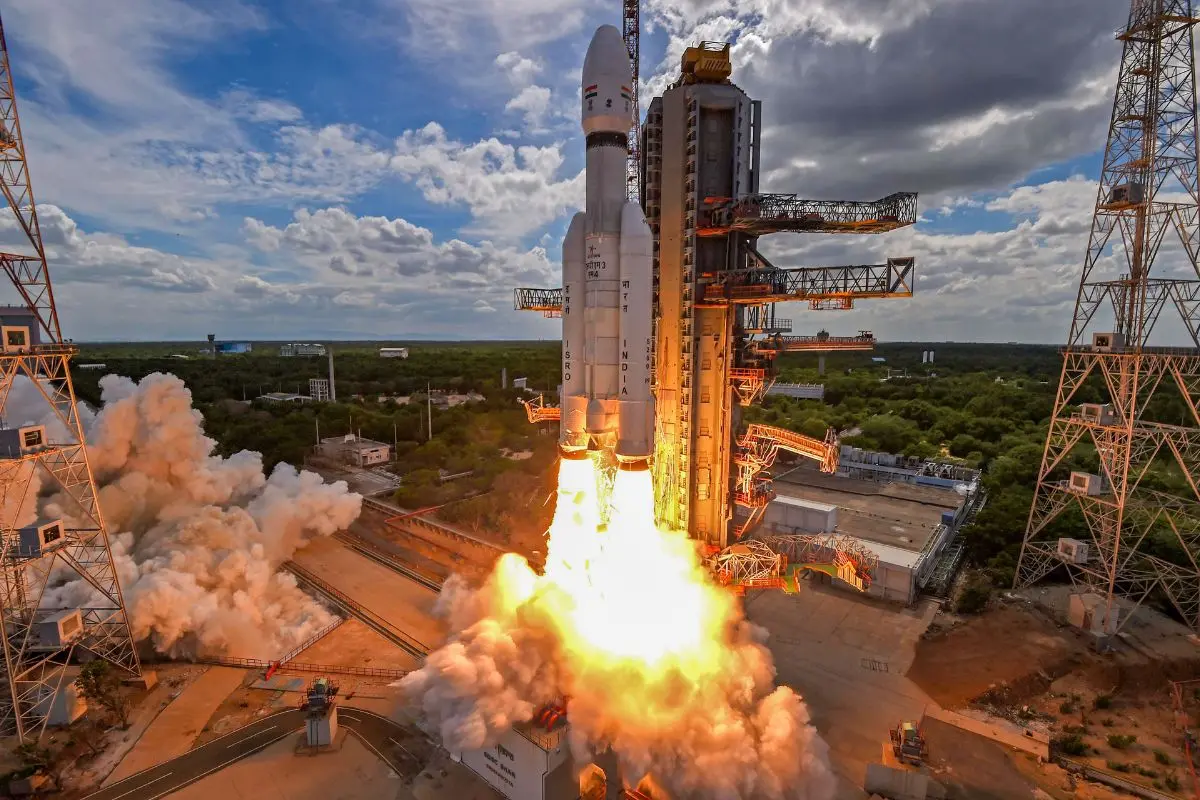
Four astronauts are currently circling the Earth, preparing for a high-stakes "catapult" towards the Moon after successfully reaching orbit on Wednesday. This Artemis II moon mission, marks humanity's first lunar voyage in over half a century and serves as the primary test for a planned landing in two years.
As the crew spends their 25-hour Earth-orbit phase checking vital systems, space experts are highlighting the staggering financial and technical differences between NASA's approach and India's budget-conscious lunar programme.
The staggering price of human flight
The financial divide between the two nations is vast. A single Artemis launch carries an estimated price tag of $4.1 billion, or roughly Rs 34,000 crore. To put that into perspective, this one American mission costs 17 times more than India’s entire Chandrayaan programme (All 3 Missions Combined) combined. While NASA has projected a total spend of $93 billion (around Rs 7.7 lakh crore) through 2025, India has managed its three lunar missions for a total of approximately Rs 2,000 crore.
NASA’s high costs are largely driven by the necessity of keeping people alive in deep space. Unlike India’s robotic Chandrayaan missions, which are lighter and simpler, the Artemis II crew requires advanced life-support systems, radiation shielding, and multiple layers of safety redundancies. These systems are essential for the 10-day journey, during which the crew will test communication, navigation, and the spacecraft's heat shield during a high-speed return to Earth.
Robotic precision versus human ambition
India’s strategy has focused on maximum scientific output with minimal spending. By using domestic capabilities and reusing proven technology, ISRO successfully landed Chandrayaan-3 near the lunar south pole in 2023 for just a fraction of the cost of a Western mission. However, the current Artemis II flight represents a different level of complexity, shifting the focus from robotic exploration to the survival of a human crew in a hostile environment.
While the US relies on a mix of government funding and private partners like SpaceX, India operates within a much tighter national budget. This efficiency has allowed India to become the first country to reach the Moon’s south pole, a region both nations are keen to explore because of its potential water ice. This ice is a critical resource that could one day provide drinking water and fuel for long-term lunar bases.
India's road to the Moon and beyond
Though India is not currently participating in the Artemis II mission, it is moving closer to the programme. India signed the Artemis Accords in 2023, joining a global framework for responsible space exploration and data sharing. Government officials earlier maintained that ISRO is actively exploring the possibility of participating in the Artemis programme in the future.
For now, India is focused on building its own independent capabilities. The nation is working on the Gaganyaan missions to send its own astronauts into space, with the goal of constructing an Indian space station by 2035 and achieving a human lunar landing by 2040. The next immediate step, Chandrayaan-4, will focus on landing and bringing physical samples back from the Moon to Earth.