Akhilesh's Rs 5 economy: Canteen meals, free Metro rides and laptops in SP's UP poll pitch
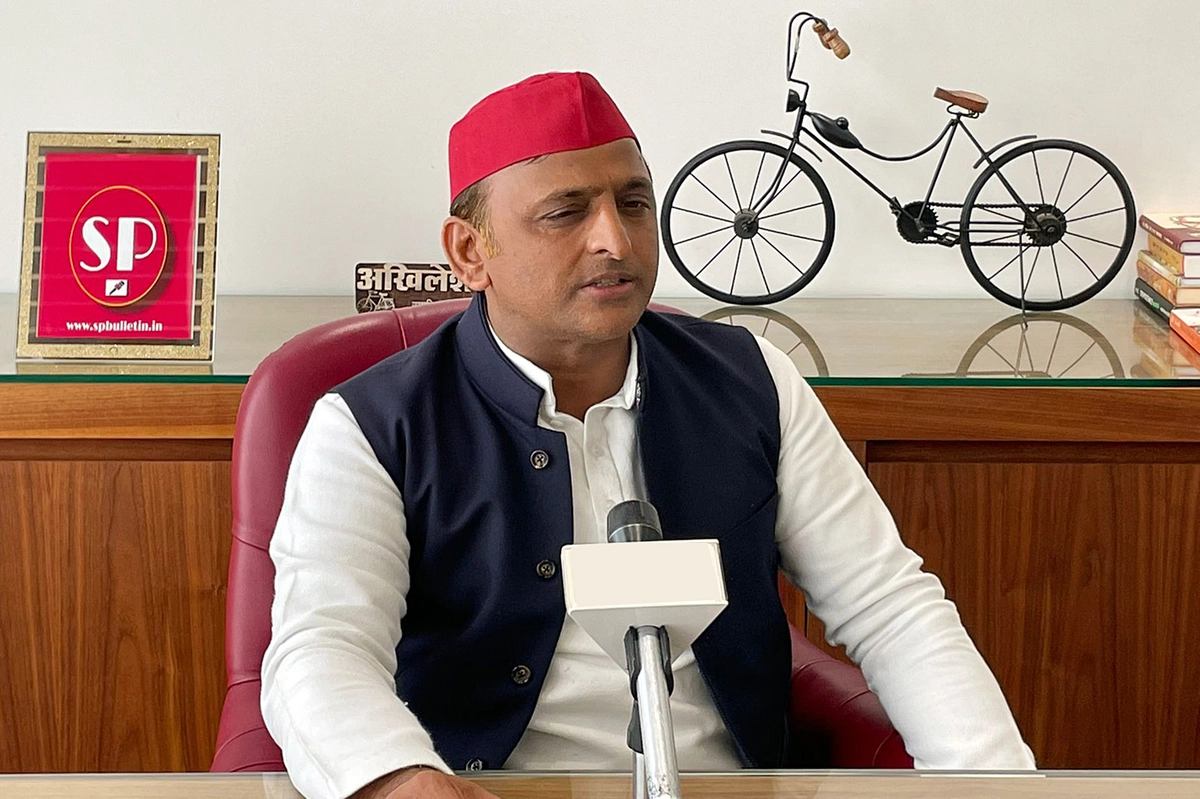
Lucknow: Samajwadi Party (SP) chief Akhilesh Yadav on Thursday, November 26, unveiled the party's manifesto for the 2027 Uttar Pradesh Assembly elections, announcing an extensive set of welfare and employment promises covering farmers, women, students, unemployed graduates and marginalised communities.
Titled Sattais Ka Sankalp: PDA Ka Pran Patra – Jan-Man Ka Manifesto 2027, the document promises 25 lakh government jobs over five years, a monthly allowance of Rs 5,000 for unemployed graduates, an immediate farm loan waiver and a legal guarantee for minimum support prices (MSP) covering 23 crops and milk.
The manifesto also promises the reopening of 26,000 primary schools, the revival of the free laptop distribution scheme for Class 12 pass students, Rs 10 lakh health insurance for people below the poverty line (BPL) and the restoration of the Old Pension Scheme (OPS).
The announcement came on Constitution Day, as the SP seeks to strengthen its PDA political coalition, comprising Pichhda (Other Backward Classes), Dalit and Alpsankhyak (minorities), while reaching out to women and younger voters.
At the manifesto launch, Yadav took a swipe at the BJP's 2014 election slogan, saying, "Acche din aaye nahin, bure din jaane wale hain" (The good days never came, but the bad days are about to end).
He also said the party would release a separate manifesto for women and district-specific manifestos based on local requirements.
25 lakh government jobs and Rs 5,000 monthly unemployment allowance
Employment is one of the central promises in the SP manifesto. The party has pledged to provide 25 lakh government jobs over five years and create another two to three crore employment opportunities across other sectors.
Unemployed graduates would receive Rs 5,000 every month until they secure employment or another source of work.
To address recruitment delays, the party has proposed an annual calendar for government vacancies. It has promised to complete recruitment processes involving single-stage examinations within three months and those involving multiple stages within six months.
The manifesto also proposes a system to prevent examination paper leaks, with officials and ministers to be held personally accountable for irregularities.
The party has further promised skill development centres to train five lakh young people every year. Career guidance and skill development centres at the tehsil level are expected to benefit 20 lakh young people annually.
An urban employment guarantee law is also among the proposals.
Immediate farm loan waiver and legal MSP guarantee
Farmers feature prominently in the manifesto, with the SP promising an immediate loan waiver and a legal guarantee for MSP covering all 23 crops and milk.
The party has also proposed a price compensation mechanism for agricultural produce such as potatoes, tomatoes and onions, which fall outside the existing MSP system.
Other agricultural promises include:
- Free electricity for agricultural irrigation.
- Up to 300 units of free electricity for rural domestic consumers.
- A Rs 15,000-crore corpus fund to ensure sugarcane farmers receive payments within 24 hours.
- Annual increases in sugarcane prices based on the actual cost of cultivation.
- Rs 1.5 lakh crore for rural infrastructure development.
These proposals place farm debt, crop prices, irrigation costs and delayed payments at the centre of the SP's rural outreach.
Free laptops, reopening of 26,000 schools
The SP has promised to revive its free laptop distribution scheme for students who pass their Class 12 examinations.
The scheme was introduced during the party's 2012-2017 government, when laptops were distributed to eligible students to support access to technology and digital learning.
The manifesto also promises to reopen 26,000 primary schools that the party says were shut by the current Uttar Pradesh government.
Other education-related commitments include:
- Wi-Fi facilities in all primary and secondary schools.
- Spending 6 per cent of the state's GDP on education.
- Filling vacant posts in the education system within a year.
- Increasing the monthly honorarium of Shiksha Mitras by Rs 5,000 until their regularisation process is completed.
The party has also proposed free Metro rides for students and a stricter system to prevent examination paper leaks.
Rs 40,000 annual assistance for women and Rs 5 meals
Women and household welfare form another major part of the SP's electoral pitch.
The party has promised annual financial assistance of Rs 40,000 for women, along with Samajwadi canteens across Uttar Pradesh that would offer meals for Rs 5 to women, poor people and PDA communities.
The manifesto also includes proposals for:
- 33 per cent representation for women in new police recruitments.
- CCTV cameras and drone surveillance in public places.
- Dedicated cybercrime units in every district.
- Free medical treatment for poor and PDA communities in government hospitals.
The party is also seeking to attract women voters through its promise of financial assistance, while the proposed canteens are aimed at providing subsidised meals to economically weaker sections.
Rs 10 lakh health insurance and hospital upgrades
The SP has promised health insurance cover of Rs 10 lakh for families below the poverty line.
It has also pledged free treatment for poor people and PDA communities in government hospitals.
The proposed healthcare measures include upgrading all district hospitals with intensive care units and ventilator facilities, establishing super-speciality hospitals in all 18 divisions and constructing five such hospitals in rural areas.
The party has also promised to make the super-speciality cancer hospital in Lucknow, built during an earlier SP government, operational and provide free cancer treatment there.
PDA focus, caste census and reservation-related promises
The manifesto places the PDA coalition at the centre of the SP's social justice agenda.
The party has promised to conduct a caste census in Uttar Pradesh to assess the social and economic status of different communities.
It has also proposed allocating 20 per cent of the state budget to the development of Scheduled Castes and Scheduled Tribes and launching a special recruitment drive to fill backlog vacancies in government services.
Another proposal is to reserve 50 per cent of government contracts worth up to Rs 50 crore for Dalit and PDA communities.
The party has also promised a separate policy to address the concerns of marginalised communities and expand their access to government opportunities.
OPS restoration, industrial policy and media welfare
The SP has pledged to restore the Old Pension Scheme, which was in place before 2005, and end outsourcing in government departments.
The manifesto also proposes AI and IT hubs in major cities, Wi-Fi zones across villages and urban areas, and a new industrial policy aimed at promoting businesses that generate employment.
For media professionals, the party has promised a welfare policy covering health insurance and social security for media workers and field journalists.
It has also proposed media facilitation centres at the tehsil level and media convention centres in Noida and Lucknow. A separate policy for YouTubers and social media influencers is part of the manifesto.
Separate women's manifesto and district-level commitments
Akhilesh Yadav said the SP would release a separate manifesto for women, along with district-specific documents based on local requirements.
The party's early announcement is also significant because the BJP is reportedly working on a separate financial assistance scheme for women.
Uttar Pradesh Chief Minister Yogi Adityanath had indicated on November 3 that the government would soon announce a special financial assistance package aimed at women's economic empowerment.
The BJP's proposed scheme is expected to cover women from BPL families and Scheduled Caste and Scheduled Tribe communities. The SP's early announcement puts women's financial assistance at the centre of the election discussion ahead of the BJP's proposed announcement.
The manifesto was released amid unresolved seat-sharing negotiations between the SP and its INDIA bloc ally, the Congress. The two parties are yet to settle their seat-sharing arrangement for the 2027 Assembly elections.
How Akhilesh Yadav is expanding the PDA strategy
The SP's manifesto reflects an attempt to take its PDA strategy beyond caste-based mobilisation and build a wider electoral coalition through welfare, employment and economic support.
The PDA grouping of backward classes, Dalits and minorities remains central to the party's political messaging. However, the manifesto's promises on women's financial assistance, student benefits, employment and subsidised food indicate an effort to reach voters across caste and community lines.
1. Women voters become a major focus
The proposed Rs 40,000 annual financial assistance, Rs 5 meals and healthcare commitments place women's welfare prominently in the SP's campaign. The timing is significant as the BJP is also working on a financial assistance scheme for women in Uttar Pradesh.
2. Youth employment and recruitment concerns
The promise of 25 lakh government jobs, Rs 5,000 monthly assistance for unemployed graduates and time-bound recruitment processes addresses concerns around unemployment and examination-related irregularities. The proposed skill development centres and employment guarantee measures add to this pitch.
3. Farmers remain a key constituency
An immediate farm loan waiver, legal MSP guarantee, free irrigation electricity and faster sugarcane payments are aimed at addressing agricultural debt, production costs and payment delays. The proposed guarantees would require detailed policy and financial planning if implemented.
4. The PDA agenda gets a policy dimension
The proposed caste census, budget allocation for Scheduled Castes and Scheduled Tribes, and reservation-related measures seek to give the PDA platform a more defined policy agenda.
5. The question of implementation and funding
The manifesto contains several large financial commitments, including government recruitment, unemployment assistance, farm loan waivers, electricity subsidies and healthcare coverage. Their implementation would depend on the state's financial position, budgetary allocations, administrative capacity and the legal framework required for individual proposals.
The political contest will therefore involve not only the scale of the promises but also their funding, feasibility and implementation record.
For the SP, the challenge is to translate its combination of social justice and welfare commitments into a broader electoral appeal ahead of the 2027 Uttar Pradesh Assembly elections.