'Bure Din are about to go': Akhilesh Yadav launches PDA manifesto, sets SP's agenda for 2027 UP polls
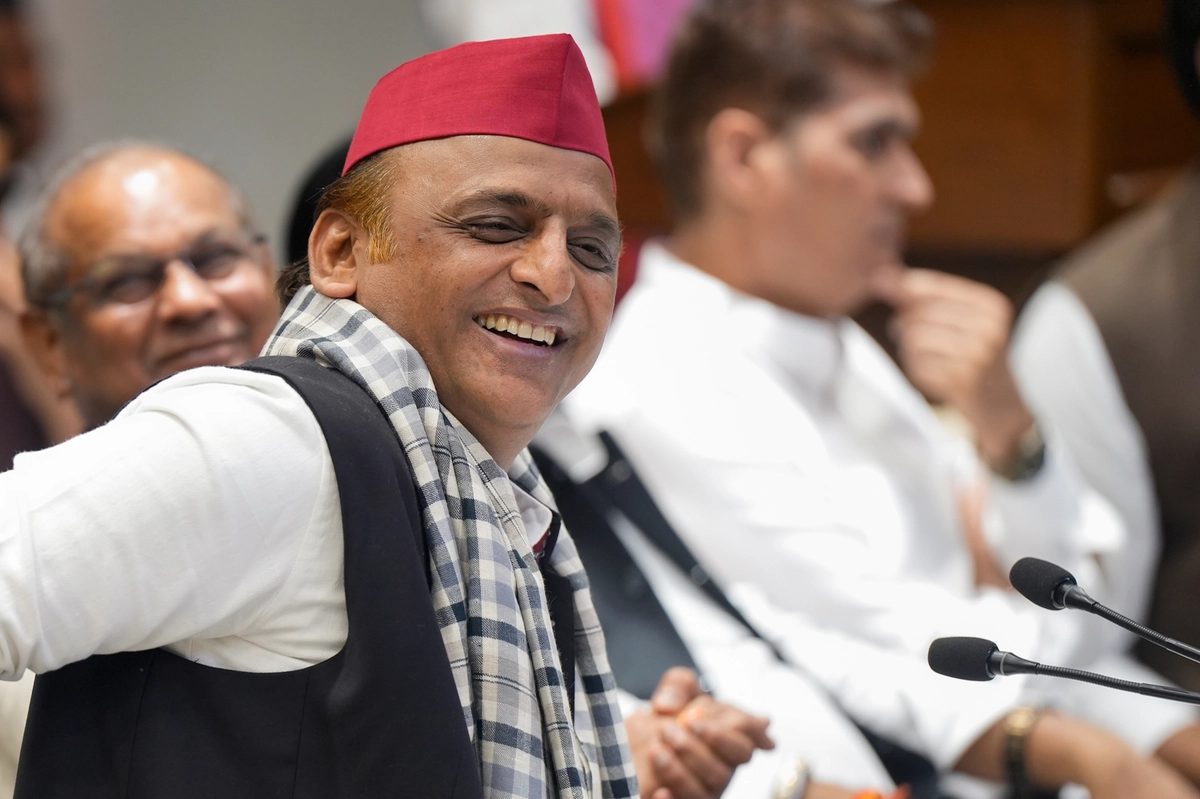
Lucknow: Samajwadi Party (SP) chief Akhilesh Yadav on Thursday unveiled the party's 'PDA Ka Prannpatra' ahead of the 2027 Uttar Pradesh Assembly elections, choosing Constitution Day to announce its electoral roadmap.
The launch marks an early start to the SP's preparations for the state elections, which are expected to see a contest between the BJP and the opposition led by the Samajwadi Party. The party has indicated that releasing its manifesto well ahead of polling will give it more time to take its proposals to voters and engage with different sections of society.
Addressing the gathering in Lucknow, Yadav linked the manifesto launch to Constitution Day and criticised the BJP government.
"We are meeting on Constitution Day. We are releasing our manifesto today because 'Acche Din' never came but 'Bure Din' are about to go away. They know that they are about to be ousted, so their language has changed," he said.
The party's PDA formulation refers to Pichhde (backward classes), Dalits and Alpsankhyak (minorities). The manifesto is also being described as the 'Jan-Man Manifesto'.
While the party has announced the document's launch, the detailed proposals and commitments were not available in the information released ahead of the announcement. A senior party functionary said the early rollout was intended to provide a longer window for communicating the party's promises to different sections of society.
Why did Akhilesh choose Constitution Day?
The timing gives the SP an opportunity to associate its electoral programme with constitutional values and democratic institutions.
On October 19, Yadav had announced the plan on social media with the slogan, "Sattais ka Sankalp: PDA ka Prannpatra" (Resolve for 2027: PDA's pledge). He had said the 'Jan-Man Manifesto' would be released on the occasion of Constitution Day.
The party's decision also marks a departure from its previous manifesto-release schedules. In 2017, the SP released its manifesto on January 22, around 20 days before polling began on February 11. In 2022, Yadav unveiled the 'Samajwadi Vachan Patra' on February 8, two days before the first phase of voting on February 10.
By releasing its electoral document earlier this time, the SP appears to be seeking more time to build its campaign around the PDA social coalition.
Azam Khan backs Akhilesh, predicts bigger political role
Senior SP leader Azam Khan attended the manifesto-related programme after meeting Akhilesh Yadav at his residence. He was accompanied by his son Abdullah Azam.
Speaking to reporters before the meeting, Khan said, "A new dawn is coming. Welcome it."
At the event, Khan expressed confidence that Yadav would return as chief minister and suggested that he could go on to play a larger political role.
"He will be Chief Minister again and again, and perhaps even much more," Khan said.
When asked about AIMIM chief Asaduddin Owaisi's remark that Uttar Pradesh's next deputy chief minister would be a Muslim, Khan responded sarcastically, suggesting that he himself should be made prime minister.
Other senior leaders present included Dimple Yadav, Shivpal Yadav, Rajendra Chaudhary, former chief secretary Alok Ranjan, Ayodhya MP Awadhesh Prasad, former SP state president Naresh Uttam and Uttar Pradesh Leader of Opposition Mata Prasad Pandey.
SP-Congress alliance talks remain a key factor
The Samajwadi Party is expected to contest the 2027 Assembly elections in alliance with the Congress against the BJP-led government.
However, seat-sharing negotiations between the two parties remain unresolved. According to sources cited in the report, the SP has offered the Congress 26 seats in the initial round of discussions, while the Congress has sought 120 seats and is unwilling to accept a lower number.
The negotiations will be important in determining the shape of the opposition alliance ahead of the election.
What happened in the 2022 Uttar Pradesh elections?
The 403-member Uttar Pradesh Assembly is expected to witness a major contest between the BJP and the SP-led opposition.
In the 2022 Assembly elections:
- The BJP won 255 seats.
- Its ally Apna Dal (Sonelal) secured 12 seats.
- The Samajwadi Party won 111 seats.
- The Congress secured two seats.
- The Bahujan Samaj Party (BSP) won one seat.
The SP received approximately 32 per cent of the vote and emerged as the principal opposition party.
The BJP has governed Uttar Pradesh since 2017. The SP was in power from 2012 to 2017 under Akhilesh Yadav, while the BSP, led by Mayawati, governed the state from 2007 to 2012.
The 2027 election will therefore be another major test for the SP as it seeks to return to power after defeats in the 2017 and 2022 Assembly polls.
Why the PDA manifesto matters for the 2027 UP elections
The early release of the PDA manifesto signals that the Samajwadi Party wants to make its social coalition a central part of the 2027 election campaign.
The PDA formulation brings together backward classes, Dalits and minorities, three broad voter groups that have considerable political significance in Uttar Pradesh. By placing this coalition at the centre of its electoral messaging, the SP is seeking to consolidate support beyond its traditional voter base.
The choice of Constitution Day also carries political significance. It allows the party to frame its campaign around constitutional values, representation and social justice. However, the actual impact of this strategy will depend on the specific commitments in the manifesto and how effectively the party communicates them to voters.
The early launch also gives the SP additional time to publicise its proposals, respond to the BJP's campaign and build its electoral narrative before the formal election schedule is announced.
The Congress alliance remains another major variable. Although both parties are expected to contest together, the reported difference between the SP's initial offer of 26 seats and the Congress's demand for 120 highlights the challenge of negotiating an agreement. The final seat-sharing arrangement could influence the opposition's campaign strategy and coordination.
For the BJP, which has governed the state since 2017, the SP's early mobilisation presents the prospect of a longer campaign period. However, the electoral outcome will depend on several factors, including alliances, candidate selection, voter turnout, local issues and the performance of the incumbent government.
The manifesto launch is therefore an early political signal rather than a complete picture of the SP's election promises. Its significance will become clearer once the party's detailed proposals and campaign commitments are made public.