Air India AI171 crash probe enters final phase
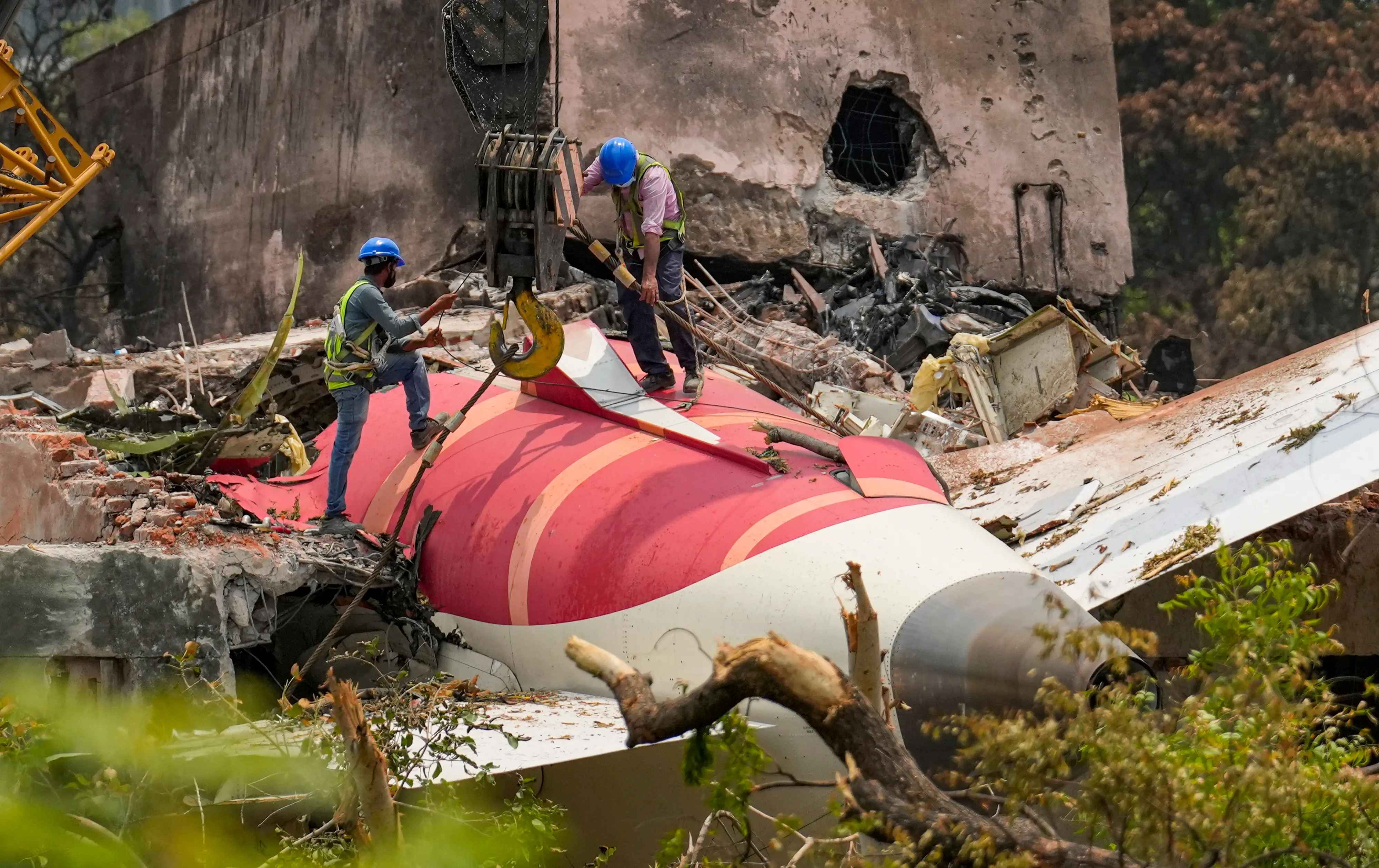
More than a year after the tragic crash of Air India Flight AI171, India's aircraft accident investigators have entered what they describe as the final analytical phase of the investigation. While many questions remain unanswered, the latest court filings by the Aircraft Accident Investigation Bureau (AAIB) provide the clearest picture yet of how extensively the investigation has progressed and why authorities continue to urge patience before drawing conclusions.
The investigation has attracted worldwide attention because it involves a Boeing 787 Dreamliner, one of the world's most technologically advanced commercial aircraft. The accident, which occurred shortly after take-off from Ahmedabad on June 12, 2025, claimed 260 lives, making it one of India's deadliest aviation disasters in recent decades.
Although speculation surrounding the crash has intensified over the past year, investigators insist that the inquiry remains focused on establishing facts rather than assigning blame.
Investigation enters its final analytical stage
According to an affidavit submitted by the Ministry of Civil Aviation and the AAIB before the Supreme Court, investigators have completed the majority of the technical work required under international accident investigation procedures.
Out of the 66 procedural steps prescribed for a major aircraft accident investigation, 49 have already been completed. The remaining work is expected to take approximately six weeks, provided pending technical inputs from external agencies are received on schedule.
Once the investigation is completed, the AAIB plans to prepare a draft final report by around October. In accordance with International Civil Aviation Organization (ICAO) procedures, the draft will first be shared with accredited participating countries, including the United States' National Transportation Safety Board (NTSB), before the final report is officially published.
This review process could take another 30 to 60 days, depending on the comments received from participating authorities.
What investigators have examined so far
The AAIB has disclosed that investigators have carried out one of the most comprehensive aviation accident investigations undertaken in India.
The inquiry has included interviews with Air India Boeing 787 pilots, cabin crew members who had previously flown with the accident crew, aircraft maintenance personnel involved in preparing the aircraft before departure, air traffic controllers, meteorological officials, and specialists in human factors and Crew Resource Management (CRM).
Investigators also met the families of the flight crew during the early stages of the investigation to gather additional background information. In addition, the cockpit voice recorder transcript has now been prepared, providing investigators with a complete record of conversations inside the flight deck before the accident.
Another significant element of the investigation has been the completion of a psychological autopsy, an investigative technique used to understand behavioural, operational and decision-making factors leading up to an accident. However, the AAIB has not disclosed whose psychological profile was examined or what conclusions, if any, have emerged from that assessment.
Meanwhile, analysis of data recovered from one of the aircraft's engine monitoring systems remains pending. Investigators also continue to examine organisational and operational factors surrounding the flight.
Why investigators are looking beyond the cockpit
Modern aviation accident investigations rarely focus on a single event or individual. Instead, investigators attempt to understand how technical systems, operational procedures, organisational culture and human performance interact before an accident occurs.
This approach follows the internationally accepted "systems safety" philosophy, which recognises that major aviation accidents usually result from a combination of contributing factors rather than one isolated mistake.
That explains why the AAIB says its current work spans operational, technical, organisational and human-factor analysis simultaneously.
Such investigations often require extensive cross-verification of engineering data, maintenance records, operational procedures, flight recorder information and witness statements before investigators can establish a probable sequence of events.
Pilot speculation complicates the investigation
One of the most notable disclosures in the court filing concerns the impact of media speculation on the investigation itself. The AAIB stated that widespread public narratives attributing responsibility to the pilots had made several witnesses reluctant to cooperate fully with investigators.
According to the Bureau, some witnesses became "restrictive and non-responsive" during interviews because of the ongoing public debate surrounding possible pilot actions.
This issue gained prominence after Captain Sumeet Sabharwal's father filed a petition before the Supreme Court, alleging that investigators had suggested his son deliberately cut fuel supply to both engines shortly after take-off.
The family has argued that the preliminary investigation report fuelled public speculation about pilot error before the investigation had been completed.
Separately, Reuters had earlier reported that preliminary assessments by US officials indicated cockpit voice recordings appeared consistent with one pilot cutting fuel flow to both engines. However, the AAIB has repeatedly maintained that it is too early to reach any definitive conclusions and has cautioned against interpreting incomplete evidence.
Why cockpit recordings will remain confidential
The petitioners have also sought access to the cockpit voice recorder (CVR) recordings. The AAIB has opposed this request, arguing that India's Aircraft (Investigation of Accidents and Incidents) Rules, 2025 prohibit public disclosure of cockpit voice recordings.
According to investigators, protecting such recordings encourages pilots, air traffic controllers and other aviation professionals to cooperate openly during safety investigations without fear that sensitive conversations could later become public.
This principle is consistent with international aviation investigation practices followed by accident investigation agencies worldwide.
No parallel investigation, says Centre
The Union government has also opposed demands for an independent or court-monitored investigation. According to the affidavit, India's accident investigation framework already complies fully with ICAO standards and provides a complete legal mechanism for investigating aircraft accidents.
The government argues that introducing a parallel investigation would risk creating conflicting conclusions and undermine internationally accepted accident investigation procedures.
Officials have also emphasised that aircraft accident investigations are conducted solely to improve aviation safety rather than determine criminal or civil liability.
A highly technical investigation with global participation
Unlike many accident investigations conducted solely within one country, the Air India investigation involves multiple international agencies because of the aircraft's design and manufacturing origins.
As the Boeing 787 was designed and built in the United States, the U.S. National Transportation Safety Board (NTSB) is participating as the accredited representative of the State of Design and Manufacture, as required under ICAO rules.
Such international cooperation allows investigators to access aircraft manufacturers, component suppliers, flight data specialists and technical experts whenever specialised analysis is required.
Any recommendations emerging from the final report could influence airline operating procedures, pilot training, aircraft system design, maintenance practices and regulatory oversight, not only in India but internationally. The Boeing 787 Dreamliner operates thousands of flights daily worldwide, making the investigation closely watched by airlines, regulators and manufacturers alike.
Industry experts note that accident investigations often take considerable time precisely because investigators must separate facts from assumptions and validate every technical finding before publication.
The wait for answers continues
For the families of the victims, the aviation community and the travelling public, the investigation remains emotionally significant. The Supreme Court itself recently observed that pilots, families and the wider public continue to await answers while cautioning that the investigation should not become a "blame game."
If the current timeline is maintained, investigators are expected to complete their remaining work within the next six weeks before circulating a draft report internationally around October.
Until then, the AAIB continues to emphasise that the investigation remains incomplete, and that any conclusions regarding the causes of the accident should await the publication of its final report one that is expected to shape aviation safety lessons for years to come.