240 critically endangered Black Softshell Turtle hatchlings released in Assam's Biswanath
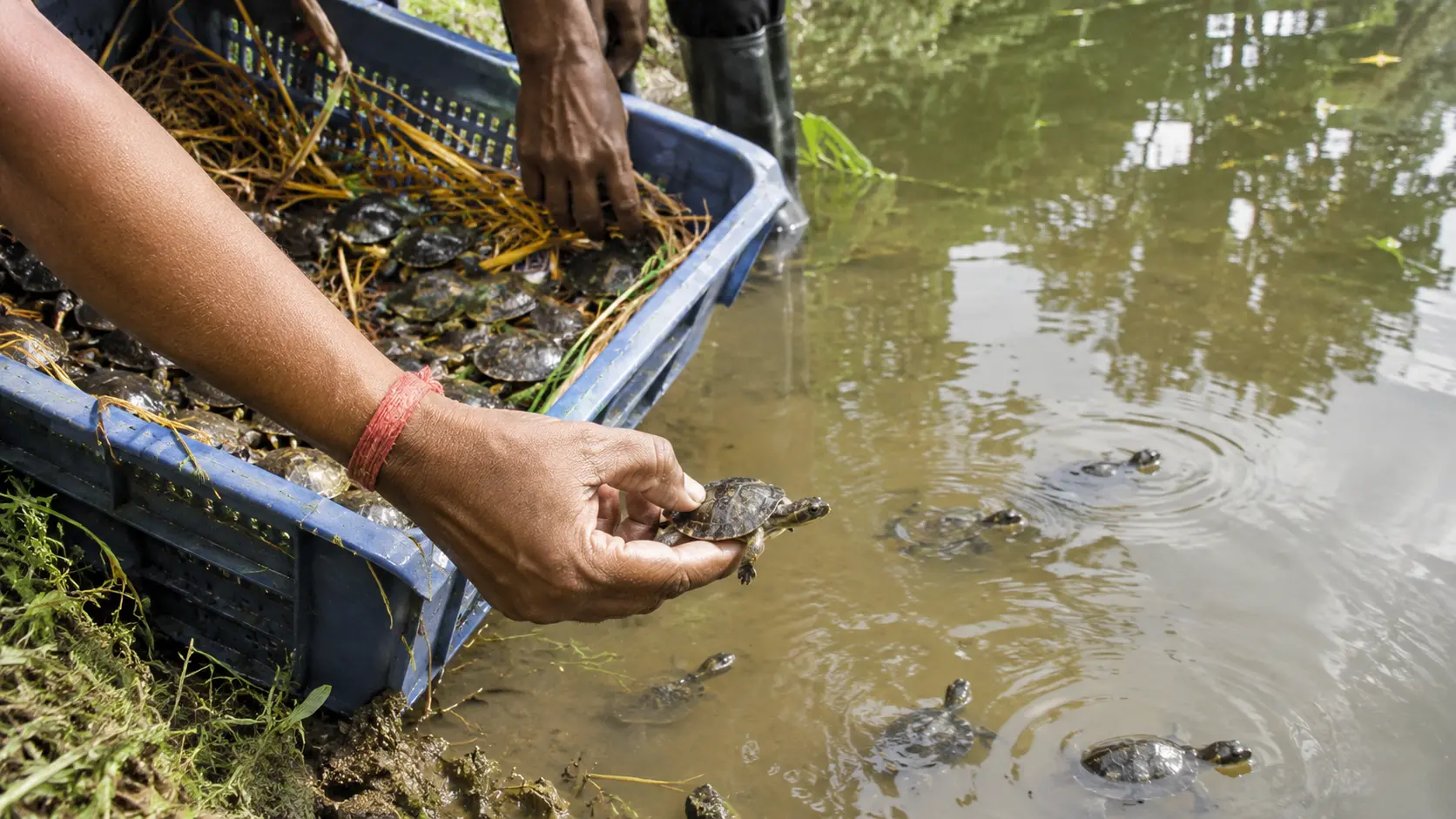
Guwahati: In a step to protect freshwater wildlife, 240 critically endangered Black Softshell turtle hatchlings were released into the protected wetland, Roumari Beel in Assam's Biswanath district, Minister for Environment and Forests Jayanta Malla Baruah said on Friday.
The release of the turtles, locally known as Bormuria Kaso and once considered extinct in the wild, was part of a collaborative conservation initiative led by the Biswanath Wildlife Division, Kaziranga Tiger Reserve and the Wildlife Survival Alliance Foundation India (WSAFI), Baruah said in a social media post.
The Black Softshell Turtle (Nilssonia nigricans) has survived in Assam largely through captive breeding programmes and faith-based conservation efforts at temple ponds, including those associated with Hayagriva Madhava Temple and Nagshankar Temple.
These traditional conservation practices have played an important role in keeping the species alive and creating opportunities for its recovery, the minister said.
The latest release, earlier this month, forms part of a multi-year recovery and rewilding programme.
More than 300 hatchlings have emerged across project sites in Assam and Tripura during the current season, reflecting the growing efforts to rebuild populations of this critically endangered turtle.
"This milestone demonstrates what sustained conservation partnerships can achieve. Government wildlife authorities, conservation organisations and communities can work together to protect species that face the risk of disappearing from their natural habitats," the minister said.
Roumari Beel now offers these hatchlings an important opportunity to establish themselves in a protected wetland environment, with continued habitat protection, monitoring and community participation essential to support their survival, he said.
"Every hatchling released represents hope for the future of this remarkable species. By combining scientific conservation with the traditional protection of wildlife, we can help ensure that Bormuria Kaso continue to thrive in Assam's wetlands for generations to come," Baruah said.
(This story has not been edited by Mathrubhumi and is published from a syndicated feed.)