Family fortune worth Rs 100 Cr; a fall theory: How brain mapping cracked family murder mystery in Kerala
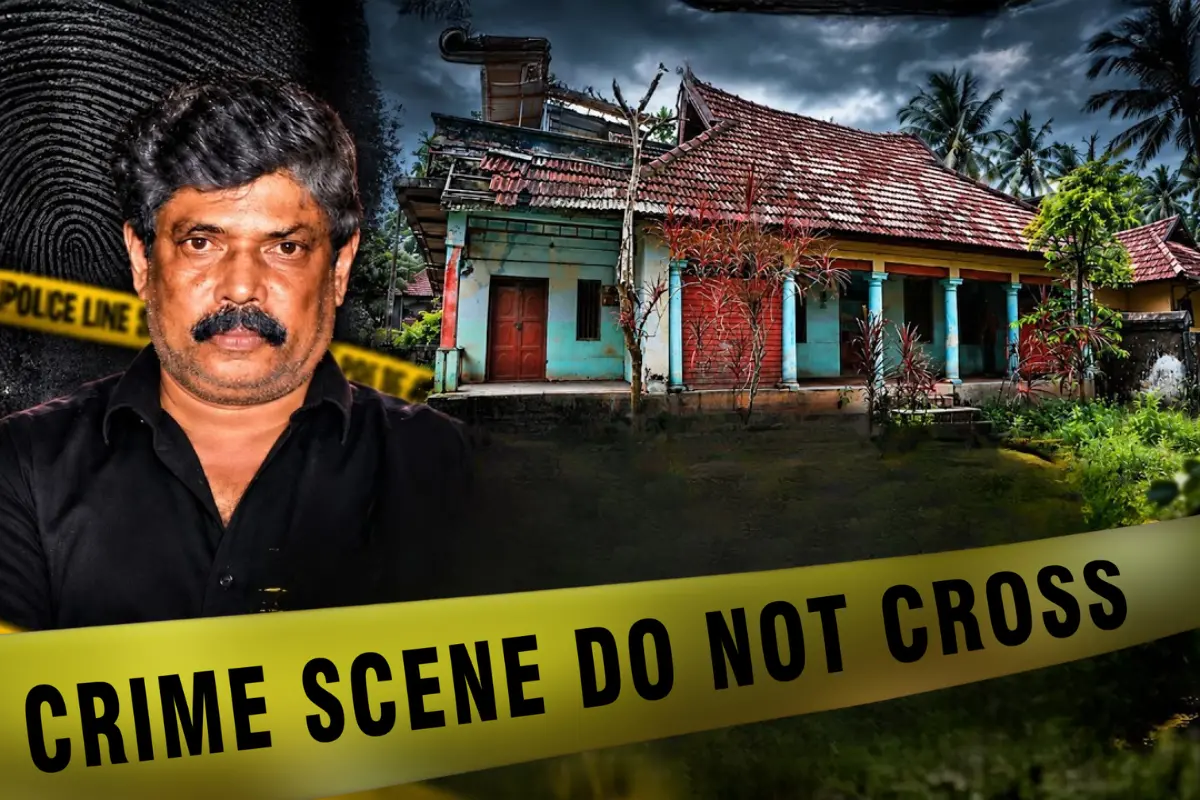
When Jayamadhavan Nair was rushed unconscious to a hospital in Thiruvananthapuram on April 2, 2017, caretakers claimed he had suffered a fatal fall from his bed. Local police initially treated the demise of the 63-year-old bachelor as an accidental death, allowing his body to be swiftly cremated. However, this quiet passing marked the final chapter in a grim 26-year trail of seven mysterious deaths within the wealthy Koodathil family of Karamana. Nine years after the incident, a Crime Branch investigation revealed that what was presented as a tragic accident was actually a calculated murder executed for immense wealth.
A decades-long tragedy in a silent mansion
Between 1991 and 2017, seven members of the Koodathil family passed away under suspicious circumstances at their ancestral home, Uma Mandiram. The deceased included family patriarch Gopinathan Nair, his wife Sumukhiyamma, their three children, and two nephews. After Gopinathan Nair and his wife died, the family affairs were managed by Raveendran Nair, a former court employee who served as the estate caretaker. As family members died one after another, Raveendran quickly arranged for their cremations on the estate grounds or at public crematoriums before deep inquiries could be made. By 2017, Jayamadhavan Nair, who suffered from mental health issues and lived alone in the old mansion, remained the sole surviving heir. Suspicious relatives and local residents eventually approached authorities, pointing out that vast family assets were quietly shifting into the caretaker's hands.
Greed, forged wills, and a fatal marriage decision
The primary driver behind the crime was the family’s immense fortune, valued at nearly 100 crore rupees, comprising land across prime locations in Thiruvananthapuram. Raveendran Nair had systematically prepared forged wills and legal documents to transfer properties worth tens of crores into his own name. He drew upon extensive legal loopholes and knowledge gained during his tenure as a senior superintendent in the court record section, as well as prior police training. The deadly turning point came when the unmarried Jayamadhavan decided to get married. Fearing that a new legal heir would invalidate his fake documents, Raveendran decided to eliminate him. On the day of the murder, Raveendran assaulted Jayamadhavan, slamming his head against a wall or furniture. When Jayamadhavan cried out, Raveendran stuffed a pillow over his face and smothered him to death.
Bloodstains and brain waves break a hardened defense
The cover-up began immediately as Raveendran claimed Jayamadhavan fell from his cot, paying an auto driver Rs 5 lakh to provide false statements to investigators. Although local police initially ignored suspicious anomalies, the District Crime Branch took over the case in 2019 and began assembling scientific proof. Medical reports and an analysis from NIT Calicut confirmed the severe head injury could not have been caused by a simple fall. Forensic teams uncovered microscopic human bloodstains matching the victim on a bed, a wooden block on the veranda, and a statue in the courtyard. Investigators even tracked down a car used on the day of the crime that had been resold three times across the state, recovering matching bloodstains from its floor carpet. Furthermore, court-ordered forensic tests proved the signature on the 2016 will was forged.
The final breakthrough arrived through advanced technology. Investigators brought Raveendran to a laboratory in Bengaluru for Brain Electrical Oscillation Signature profiling, also known as brain mapping. The scientific test measured brainwave responses to specific case details, exposing his lie about not knowing his driver accomplice. Confronted with the undeniable brain mapping results at police headquarters, the suspect finally confessed to the murder.
What lies ahead in the investigation
Police have identified two accomplices in the murder plot: Anil Kumar, who passed away three years ago, and Saju, who is currently residing abroad and facing extradition efforts. Investigators also suspect the housemaid, Leela, assisted in destroying critical evidence by disposing of blood-soaked bedsheets and pillows. Crime Branch officers are currently taking Raveendran into custody for scene reconstructions to wrap up the remaining forensic and procedural requirements.