Four bodies, missing-person cases and a police scandal: What is happening on Jeju Island?
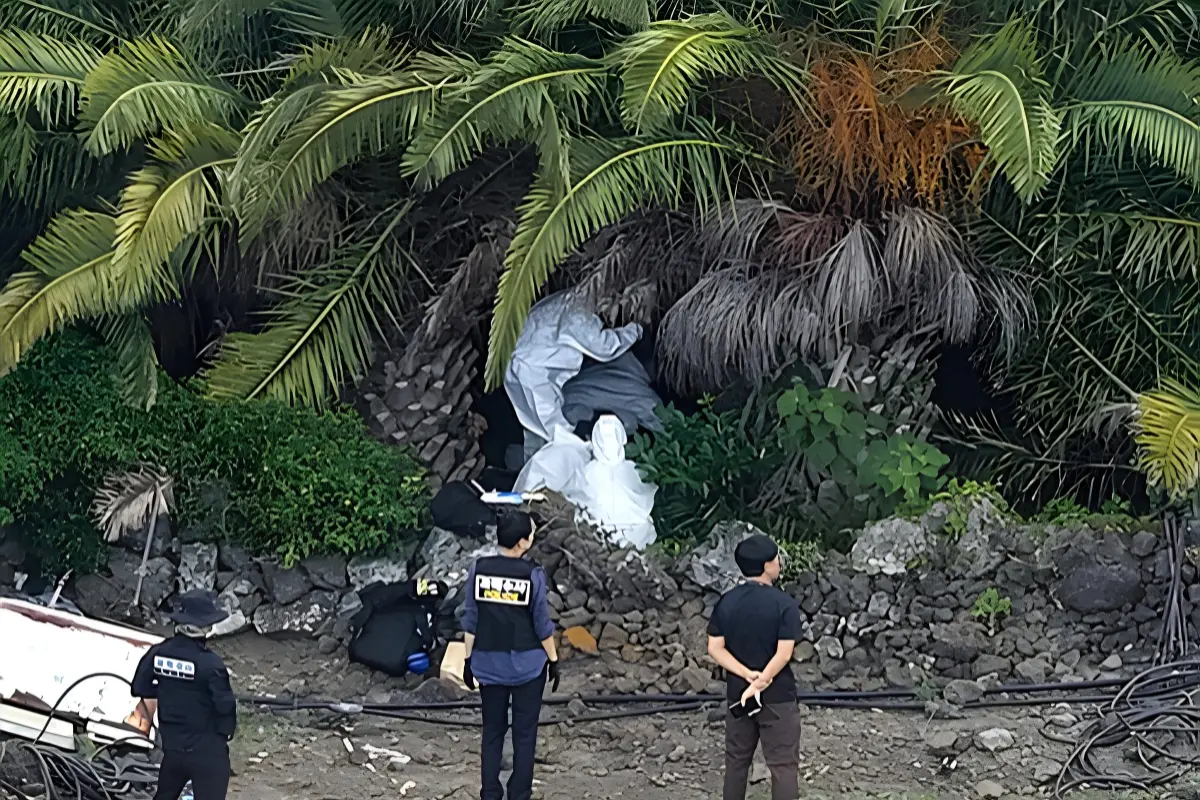
Four people reported missing have been found dead on South Korea’s Jeju Island within three days, intensifying public concern over a growing police scandal involving allegations that missing-person cases were closed without proper verification.
The discoveries come as authorities investigate a police sergeant accused of falsely telling families that missing relatives were safe and prematurely closing cases. The officer, identified by his surname Bu, is alleged to have mishandled hundreds of missing-person reports during his time with the missing-person investigation team at Jeju Western Police Station.
The cases have triggered questions about whether failures in the handling of missing-person reports contributed to delays in finding those who disappeared. South Korean President Lee Jae-myung has ordered a wider examination of police procedures and called for reforms.
Four bodies found in three days
The recent discoveries began on Saturday, when police found the body of a man in his 60s from Jeju City who had been reported missing on June 28.
His family had previously been told by police that he had been located safely but did not want to reveal his whereabouts. According to local reports, the case had been closed after that explanation was given.
According to BBC, the man's son told reporters: "We believed the police when they said my father was safe and waited, but after 51 days, what returned was his body,"
A second body was found on Sunday in waters near Sinheung-ri in Jocheon-eup. The deceased man was believed to be in his 70s and had also been reported missing.
Police discovered another body on Monday near a valley in Aewol-eup. Authorities have not established a connection between these deaths and the police officer at the centre of the investigation.
The fourth discovery involved 37-year-old Jang Mi-ran, whose disappearance has become the most prominent case in the scandal.
What happened to Jang Mi-ran?
Jang disappeared in May, with her partner reporting her missing several days after she was last seen. Police have since faced questions over why the case was closed so soon after it was reported.
Investigators allege that Bu told Jang's partner that he had contacted her by telephone and that she did not want to maintain contact with him. Police later found no supporting call records for that conversation.
Jang's case was subsequently closed, according to investigators. Authorities are now examining whether information connected to the case was removed from the police missing-person system.
Her body was eventually found on Monday at a palm farm in Hallim-eup, several hundred metres from the accommodation where she had been staying. Reports said the remains were in an advanced state of decomposition.
Police identified her through an autopsy, while separate DNA testing is continuing. Investigators said there were no obvious signs of external injury. The location and condition of the body initially led police to consider suicide, but the precise cause of death remains under investigation.
Police are also examining Jang's mobile phone as part of the inquiry.
Police sergeant accused of closing cases prematurely
Bu has become the central figure in the police investigation. He worked with the missing-person team at Jeju Western Police Station for about 17 months and handled 298 missing-person reports during that period, according to investigators.
Authorities allege that he independently closed numerous cases without properly establishing whether the missing people were safe.
In Jang's case, investigators say the officer claimed to have spoken to her despite there being no evidence of such a call. He allegedly then closed the case and removed related information from the missing-person database.
Bu is also accused of mishandling the case involving the man in his 60s whose body was found on August 22.
He appeared before a court for an arrest-warrant hearing and faces allegations including dereliction of duty, falsifying official electronic records and obstruction of official duties through deception.
Authorities are now examining all the missing-person reports he handled to determine whether other cases were improperly closed.
Four senior officers placed on leave
The controversy has widened beyond the accused sergeant.
The National Police Agency has placed four senior officers at Jeju Seobu Police Station on administrative leave. They include the station's current and former chiefs and two senior investigators.
The action reflects concerns over how an officer could close missing-person cases without sufficient checks from supervisors.
The National Police Agency has also begun examining procedures surrounding missing-person investigations, including the safeguards used before cases are formally closed.
Is there a serial killer on Jeju Island?
The discovery of four bodies in such a short period has fuelled speculation online about a possible serial killer, homicide network or trafficking operation on the island.
Social media users have circulated maps showing missing-person reports and the locations where bodies were discovered. However, there is currently no evidence establishing that the four deaths are connected, and police have not identified a common perpetrator.
Authorities have also not confirmed that the deaths were the result of foul play. The circumstances surrounding the individual cases remain under investigation.
The claims circulating online should therefore be treated as speculation rather than evidence of an organised killing spree on Jeju.
Why are missing-person cases under scrutiny?
The scandal has raised broader questions about how South Korean police approach reports involving missing adults.
More than 70,000 adults are reported missing in South Korea each year, with about 99% of cases recorded as resolved within a month.
Lee Yung-hyeock, a professor specialising in police science at Konkuk University, told Yonhap news agency that officers can become accustomed to seeing missing adults located quickly and may consequently approach individual cases with assumptions.
"After experiencing on the field that the absolute majority of missing adults are found quickly, [the officers] tend to assume all cases are like that,"
The issue is particularly sensitive because South Korea has a comparatively low violent-crime rate, while suicide remains a major public health concern. Experts have suggested that the country's generally low level of violent crime may contribute to complacency in some missing-person investigations.
Jeju police face wider scrutiny
The controversy has now moved beyond the island.
The Seoul Metropolitan Police Agency said it would review about 92,800 missing-person reports filed and subsequently closed in the capital between January 2024 and August 2026. The review is intended to identify cases where officers may have failed to carry out appropriate investigations or verification before closing them.
South Korea's national police chief was questioned by lawmakers during an emergency National Assembly hearing on Monday. He acknowledged that "there is a fault in the system".
The National Police Agency has also been ordered to examine missing-person investigations nationwide.
President Lee Jae-myung has called for a comprehensive investigation into the Jeju cases and a review of how missing-person investigations are supervised and closed.