Gen z Protest: Glitches in the Architecture of Control
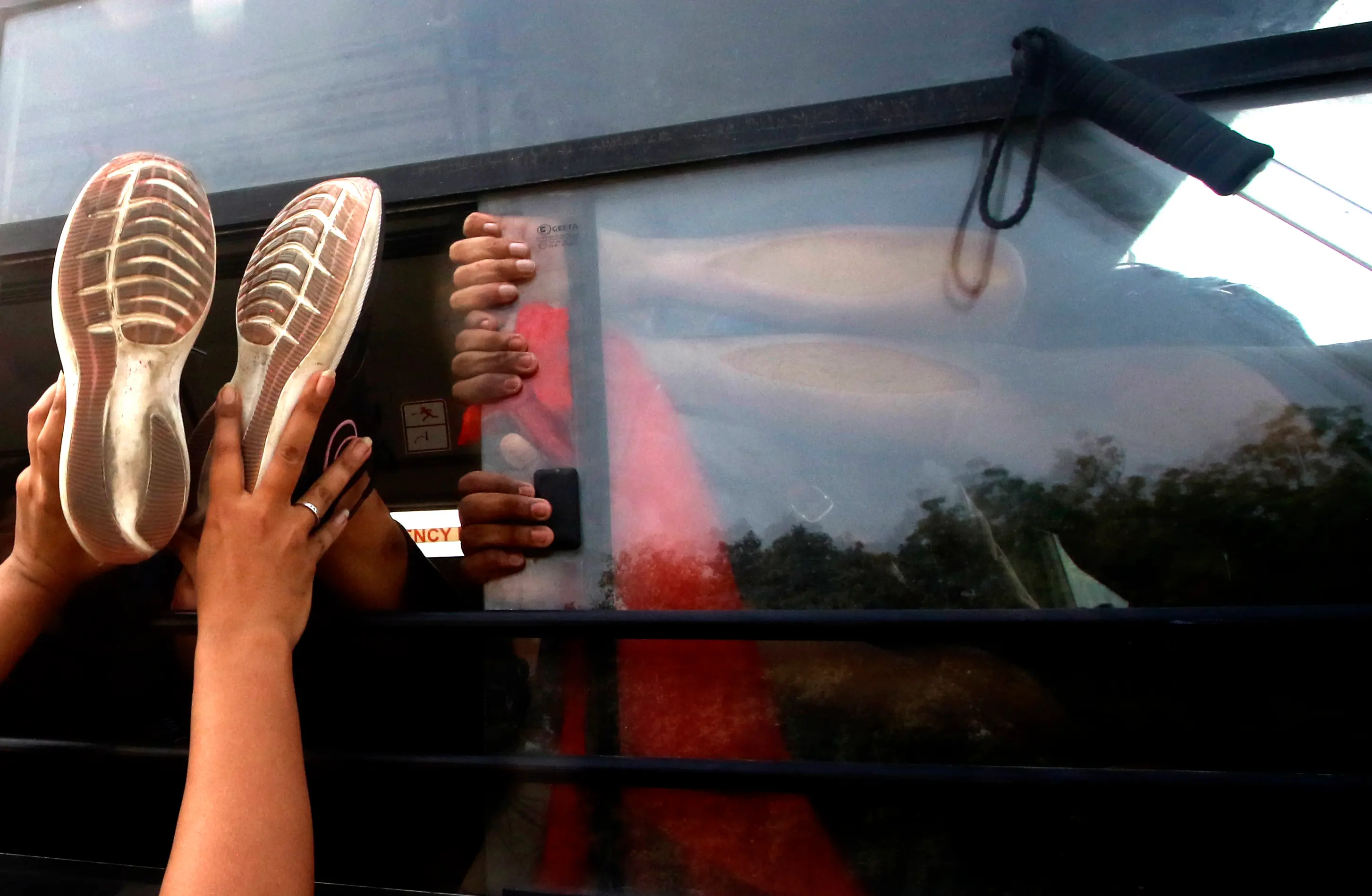
Before a protest has a square, it has a body.
A woman steps into the street carrying a placard. She raises her voice and moves toward a police barricade. Around her, other protesters gather. Their bodies turn an ordinary stretch of asphalt into something else: a place where a political claim can be made.
Then the police line advances.
A hand reaches for her arm. She is pushed backward. She is dragged away from where she was standing. In some encounters, the violence becomes more intimate: hands crossing bodily boundaries, clothing pulled or torn, physical contact transformed into humiliation.
At that moment, the state is doing more than dispersing a crowd.
It is removing a body from a place.
That distinction matters. Protest is not only speech. It is presence. To protest is to occupy somewhere, to remain somewhere long enough for a political demand to become visible.
For a woman, that presence has always carried another burden. The female body has long been watched, interpreted, disciplined, protected, and controlled. Its movement through public space is surrounded by rules some written into law, many embedded in custom about where a woman should be, how she should behave, how much space she should occupy, and what kinds of visibility are considered acceptable.
The protesting woman violates those expectations simply by refusing to remain where she has been assigned.
She enters the street, she speaks, she confronts authority, She stays.
Her body becomes political because it refuses to remain merely private.
Now consider a different kind of removal.
A public square disappears from the geography of protest.
For years, Jantar Mantar was one of New Delhi's most recognizable places of dissent. Protesters gathered there not simply because it was available, but because of where it was. Its proximity to Parliament and the institutions of government gave political grievances a particular visibility.
To protest at Jantar Mantar was to place one's body and one's demand within sight of power.
Its importance was never simply that citizens could assemble there.
It was that they could assemble near power.
In October 2026, Delhi Police de-notified Jantar Mantar as a designated protest site and identified alternative venues elsewhere in the city.
The language of administration is different from the language of bodily force.
A notification does not have hands.
A relocation order does not drag a protester by the arm.
But something important nevertheless happens in both cases: a political presence is removed from a place.
The woman is told to move.The protest is told to move.The body is displaced.The square is displaced.
They are not equivalent events. But they raise a related question: who has the authority to decide where dissent is allowed to exist?
That is where the politics of the female body begins to intersect with the politics of Jantar Mantar.
The Square Is Made, Not Given
A space is not an empty container waiting to be filled by human activity. It is produced through social relations, institutions, laws, practices, and struggles. More importantly, the spaces produced by society can become instruments of control and domination.
A square, in this sense, is never merely a square.
Its meaning changes according to who gather there, who is permitted to gather there, what institutions surround it, and what authorities decide can happen within its boundaries.
Jantar Mantar acquired its political meaning through use.
People came there to demand justice, challenge governments, protest policies, mourn, fast, speak, shout, sit, and refuse to leave. Over time, those acts turned a stretch of central Delhi into something more than a piece of urban infrastructure.
It became a recognized geography of dissent.
That geography could also be altered.
When the state changes the permitted location of protest, it is not merely moving a crowd. It is reorganizing the relationship between the crowd and the institutions it wants to confront.
Space can be an instrument through which power is exercised.
The state does not always have to silence a protest.
Sometimes it can change its address.
And changing the address can change the politics.
When Dissent Is Moved
This is what makes the removal of Jantar Mantar from the map of designated protest sites politically significant.
A protest can still exist somewhere else. A citizen can still hold a placard. A crowd can still assemble.
The formal right may remain.
But geography is part of political speech.
A demonstration outside Parliament does not mean the same thing as a demonstration pushed far from the institutions being addressed. The Supreme Court recognised this tension in its 2018 decision concerning Jantar Mantar, rejecting a complete prohibition and directing authorities toward regulated use of the area. The petitioners had argued that moving protests away from the concentration of political power would diminish their effectiveness.
The distinction is crucial.
The state can regulate a protest without necessarily destroying it.
But regulation can become a form of political displacement when the conditions imposed make dissent less visible, less immediate, or less capable of reaching its intended audience.
A protest can survive legally while becoming weaker geographically.
That is the quieter power of removal.
The Woman at the Barricade
The same question becomes more intimate when the protesting subject is a woman.
The female body has historically been assigned places.
The home,The family,The private sphere,The protected space,The respectable space.
Public protest unsettles that geography.
A woman who walks into the street carries the supposedly private body into a public political arena. She does not simply express an opinion. She occupies a place from which she has historically been expected to remain absent, or at least carefully regulated.
This is where the male gaze becomes more than a question of looking.
A woman protesting in public is not always seen simply as another citizen. Her body may be read through a gendered vocabulary: vulnerable, provocative, disorderly, respectable, threatening, indecent, out of place.
She becomes visible as a woman before she is fully recognised as a political subject.
She may hold a placard demanding justice, but attention shifts toward her clothing.
She may speak about constitutional rights, but her physical presence becomes the object of scrutiny.
She may claim public space, but her occupation of that space becomes the problem.
The gaze can therefore become a form of spatial discipline.
It tells her, implicitly or explicitly, that there are places where she belongs and places where she does not.
The barricade makes that message physical.
The Institution That Removes
This is where the character of policing and other security institutions becomes important.
Modern security institutions are organized around command, hierarchy, discipline, physical force, territorial control, and the capacity to impose order. None of these qualities is inherently male, and it would be simplistic to suggest that every officer who uses force is consciously acting from patriarchal beliefs.
But institutions have histories.
Many security institutions have been shaped by masculine cultures of authority cultures in which strength, discipline, control, physical dominance, and the ability to impose order have traditionally been highly valued.
That history matters when such an institution encounters a woman whose political act consists partly of refusing to submit.
The encounter is not simply between an officer and a civilian.
It can become an encounter between an institution accustomed to commanding bodies and a body refusing the position assigned to it.
When the encounter becomes sexualized, humiliating, or deliberately invasive, gender cannot be treated as irrelevant to what has occurred.
The body being controlled is not politically neutral.
Nor is the institution doing the controlling.
The Removal of a Body, the Removal of a Place
This is where the analogy with Jantar Mantar becomes sharper. The state can remove a woman from a protest site. The state can also remove the protest site from the geography available to citizens. In one case, the person is displaced. In the other, the place is displaced. The first happens at the scale of the body. The second happens at the scale of the city. The political question underneath both is the question of presence.
Where may dissent appear?
The answer is never determined by geography alone. It is determined by authority.
A woman may be told that she cannot remain here.
A protester may be told that this is no longer the place to protest.
Jantar Mantar may remain physically present as a street, a landmark, an astronomical monument, a familiar corner of central Delhi.
But if citizens can no longer use it as a designated place of dissent, its political meaning has been altered.
The state has not demolished the square.
It has changed what the square is allowed to mean.
That is precisely why Lefebvre's understanding of produced space is so useful. Space is shaped not only by buildings and roads but by institutions, rules, practices, and power. The political character of a place can therefore be strengthened, narrowed, redirected, or emptied through decisions about who may use it and for what purpose.
The removal of Jantar Mantar as a protest site is, in this sense, not simply the removal of people from a place.
It is the removal of a place from a particular form of political life.
The Body as Territory
The language of territory makes the connection more intimate.
States constantly speak through territorial concepts. Borders are defended. Unauthorized entry is prohibited. Boundaries are policed. Sovereignty is asserted through control over physical space.
Patriarchal societies have historically applied a comparable logic to women's bodies.
Where she can go, who can touch her, How she should dress, When she should return, How she should behave.
How much physical and political space she should occupy.
The female body becomes something whose boundaries are socially negotiated by others.
The contradiction becomes especially stark during protest.
A woman enters public space to assert autonomy. The state encounters her through institutions whose function includes managing bodies in space.
The question of sovereignty therefore moves from the territory of the state to the territory of the individual.
Who controls this body?
That question lies at the heart of sexualized violence during political repression.
Such violence does not merely injure. It violates the boundary between the citizen and the authority acting upon her. It turns bodily vulnerability into an instrument of political discipline.
And it can transform the space of protest into a space of fear.
The woman who entered the street to make herself visible receives another lesson about visibility: being seen can make her vulnerable to physical control.
The political becomes intimate.
The street enters the body.
The Geography of Defiance
The female protester is therefore a revealing political figure.
She challenges two expectations at once.
One tells her where dissent may occur.
The other tells her where a woman belongs.
She refuses both.
She crosses the boundary between private and public, between obedience and confrontation, between being represented politically and representing herself.
Her body becomes more than the vehicle carrying a political message.
It becomes part of the message:
I have the right to be here.
The sentence sounds ordinary.
It is not.
A woman standing in a protest asserts that public space belongs to her as much as it belongs to anyone else.
A woman who refuses to move asserts that citizenship cannot be reduced to permission.
And when she confronts a police barricade, she forces the state to answer a deceptively simple question:
Why must I leave?
Jantar Mantar once posed a similar question at the scale of the city.
Why here?Why not here?
Why must this particular place disappear from the geography of dissent?
The answer to those questions determines more than the location of a demonstration.
It determines the distance between the citizen and power.
The Politics of Distance
This was what made Jantar Mantar politically significant.
Its importance was relational.
Parliament was nearby.
Government offices were nearby.
The institutions of national power were nearby.
The protester could stand within the political field she was trying to address.
Moving dissent elsewhere therefore does not simply move people from one piece of ground to another.
It alters the relationship between citizen and state.
Distance becomes political.
A protest at the centre of power and a protest pushed toward the margins may possess the same legal vocabulary, but they do not possess the same visibility.
This is the paradox of managed dissent.
The state can preserve the formal right to protest while changing the geography through which that right is exercised.
The citizen can still speak.
But she is told where. She can still gather. But she is told where.
She can still dissent. But the state determines how close that dissent may come to power.
At the level of the body, the conflict becomes immediate.
A woman who refuses to move is making a claim about physical presence:
I will remain here.
The coercive apparatus answers:
You cannot remain here.
At the level of the city, the language is more bureaucratic:
This is no longer the place.
The effect, however, is still one of displacement.
The Geography of Democratic Citizenship
The struggle over Jantar Mantar is therefore not merely a struggle over a particular protest ground in central Delhi.
It is a struggle over the geography through which citizenship becomes visible.
The struggle over the female protester's body brings the same question to its most intimate scale.
One concerns the state changing the conditions under which citizens may occupy a public place.
The other concerns a citizen's ability to retain sovereignty over her own body.
They are not the same struggle.
A government notification is not a hand on a woman's body.
The removal of a protest site is not sexual violence.
The analogy should never erase those differences.
But the comparison reveals something about the architecture of control.
In both cases, authority confronts a political presence and seeks to determine its limits.
One is told to leave.
The other is told where it may go.
The square is emptied of one political function.
The body is pushed out of one political position.
And in both cases, the question is ultimately about who controls the conditions of presence.
The barricade around a protest site and the hand forcibly placed on a woman's body are not equivalent acts.
But both force us toward a democratic question:
Who has the right to decide where a citizen may stand?
A democracy is not only a system in which citizens possess the formal right to speak. It is also a political order in which citizens must have somewhere to appear, somewhere to gather, and somewhere to be seen.
For women, that right carries an additional demand: appearing in public as a political subject should not require surrendering control over one's own body.
Jantar Mantar is therefore more than a square, The female body is more than a body, Both can become political spaces.
Both can become contested spaces.
And both can become sites from which power demands withdrawal.
When a state removes a protest from a square, it changes the geography of dissent.
When authority removes a woman from a protest through force, it changes the physical conditions of her citizenship.
The scales are different. The consequences are different.
But together they reveal the deeper architecture of control: the power to determine where a citizen may stand, how a body may move, which spaces remain politically available, and whether dissent will be permitted to remain visible.