India's new heroes don't wear loafers, this is how Telugu cinema beat Bollywood
Bollywood hasn't had fire in a while, probably not since Amitabh Bachchan started wearing those toupees. The numbers back it up, only about 11 percent of Indians went to a theatre in the last year, though that climbs sharply in Andhra and Telangana, where single-screen theatres still hold ground. A seventies Bachchan blockbuster could reach a quarter of the country. Today's biggest Hindi hit, ‘Dhurandhar’, struggles to clear 3 percent.
The audience went south instead. It's an open secret that the industry's real energy has shifted from Mumbai to Hyderabad. ‘Pushpa 2’s Hindi dub became the highest-grossing Hindi film ever, a record since broken by ‘Dhurandhar’, whose hero sports a suspiciously Telugu-coded beard and roughly 60 percent of ‘Pushpa 2’s revenue came from Hindi-speaking viewers alone. Hindi India is hungry for something real, and it's finding that in a film industry it barely remembers exists.
Telugu culture plays a familiar role in the national imagination, the designated embarrassment, blamed for casteism and provincial trashiness in a way Tamil cinema's confidence or Kerala's progressive reputation never are.
Every society needs a heartland to call backward so its center can feel modern by comparison and every society builds its underdog myths from exactly that place. The accented, unpolished hero who wins through sheer endurance, a ‘Rocky Balboa’, a ‘Forrest Gump’ is never coincidentally from the ‘wrong’ side of the map.
Also Read: ‘Bachelor Party Deux’ First Look out; oozes style and swag
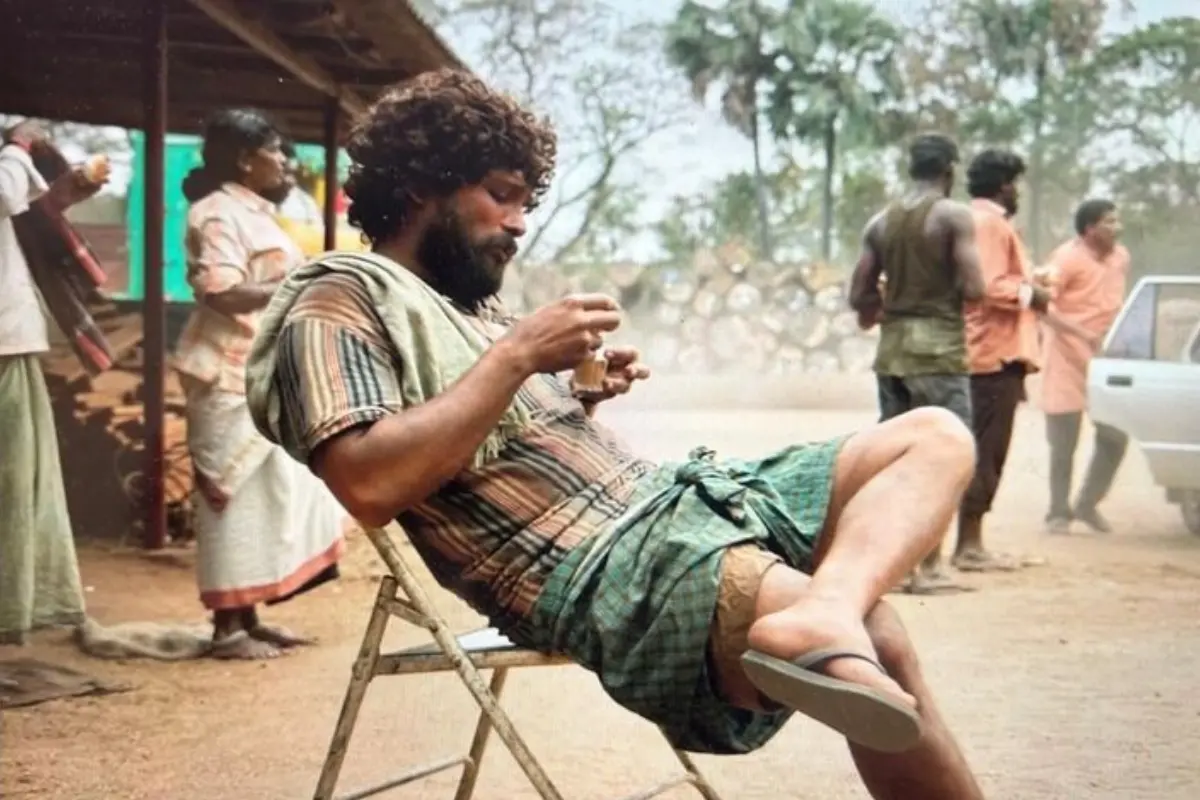
‘Pushpa: The Rise’ is Telugu cinema's version of that myth, engineered for mass identification. ‘Pushpa’, the illegitimate son of a landowner, rises from lungi-clad forest laborer to sandalwood-smuggling kingpin, speaking the rougher Telugu of Rayalaseema rather than Hyderabad's Sanskritized version.
He adores his mother, chants shlokas unapologetically, and would rather pay five thousand rupees for a single kiss than take one uninvited. The only thing that diminishes him is being asked his surname, a wound that makes him both lower-caste-coded and secretly high-born, so that almost any man with an ‘unimpressive’ name can pour his resentment into Pushpa's revenge, regardless of which side of that ladder he actually stands on.
The appeal quit the job that disrespects you, humiliate the moneylender who humiliated you, buy the car of the man who drove off in his, make the family that rejected you beg. It's wish-fulfillment for men who have very little power and know it.
Also Read: Is unhappiness a love language? What ‘the invite’ gets right about marriage
So why doesn't Hindi cinema do the same?
Partly because it can't, Bollywood's idea of the ‘common man’ tends to be a star from a film dynasty in a hoodie playing at Dharavi for a weekend, as in ‘Gully Boy’. It plays well to the multiplex crowd it was made for, and rings hollow everywhere else.
The deeper reason is that Bollywood's tastemakers don't want to make this cinema, they want films that shows their own worldview back at them.
‘Rocky Aur Rani’ sets up a real culture clash, a brash Delhi gym-bro falling for an upper-crust Bengali intellectual then resolves it in one direction only. He learns to perform Kathak and soften his masculinity, she never has to bend.
‘Laapaata Ladies’ does similar in miniature, pausing its plot so an educated woman can lecture a farmer on sustainable agriculture. Both films were critically adored. Neither found the audience they were nominally about.
That gap points to the powerless dream of power, winning, being desired, driving off in someone else's car. The powerful already have that, so they dream of the moral high ground, right to instruct everyone beneath them.
A film like ‘Laapaata Ladies’ isn't made for the rural poor, it's made about them, for an audience that already agrees with its conclusions. It's difficult to ask a man who can't afford marriage or a movie ticket to absorb a lecture on respecting women he's barely been allowed to know especially when his urban counterpart is already hearing the same lecture in person, from people he knows.
Also Read: ‘My own son is asking me...’: Why Nani says ‘The Paradise’ may not be for kids
Meanwhile, largely without the arthouse crowd's blessing, a new template for Indian masculinity is being created and consumed at scale out of the south- loud, bloody, politically unresolved, uninterested in refinement. It isn't or always defensible. But it's built by people willing to meet an audience where it lives and where they wish it stood. That, more than any craft argument, is why it's winning.