‘We didn’t come from privilege...’ Indian mother-daughter duo rewrites red carpet norms at Cannes
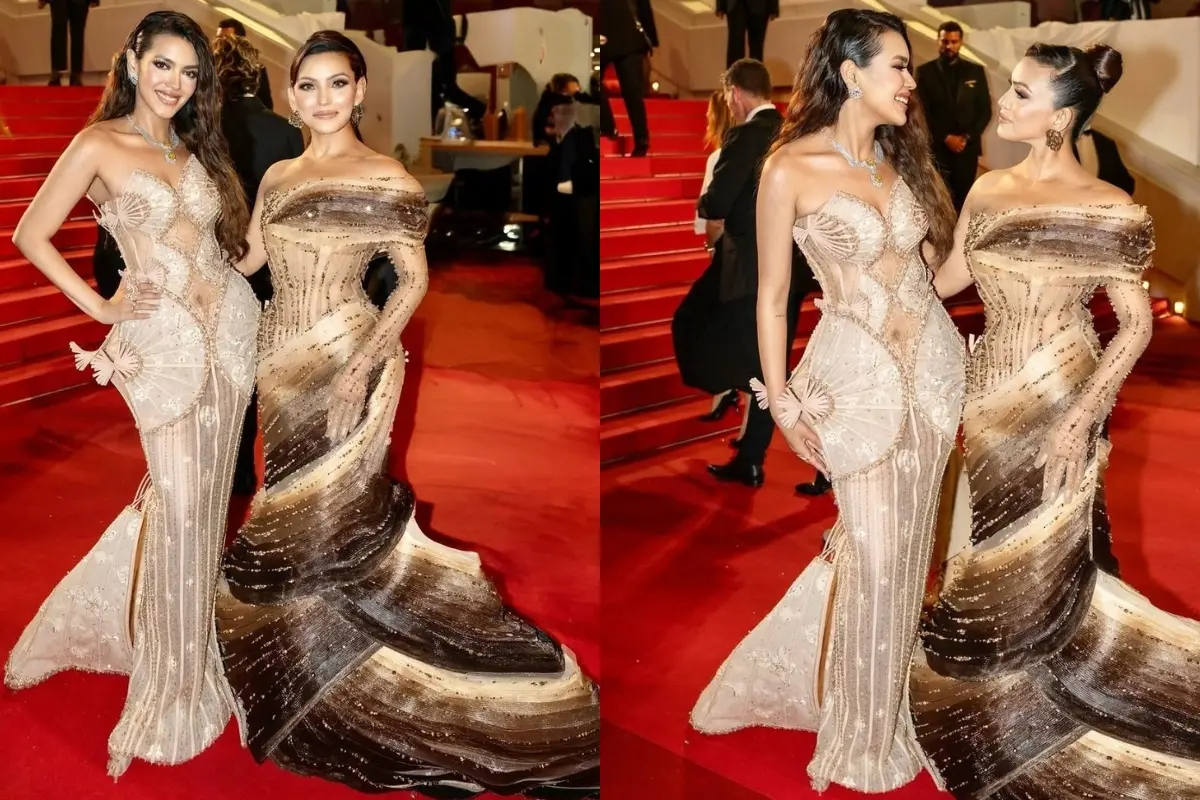
In a year where India’s cultural footprint at the Cannes Film Festival made headlines, one of the most meaningful stories unfolded not from the glitz of Bollywood, but from the lush tea estates of Assam.
Urmimala Boruah and her daughter, fashion model Snigdha Baruah, quietly carved their names into history as the first Indian mother-daughter duo to walk the red carpet at Cannes together.
Their appearance wasn’t powered by big production houses or mainstream fame. Instead, it was built on years of resilience, ambition, and the unwavering strength of a mother-daughter bond.
No glamour without grit
Hailing from Dibrugarh in upper Assam—a region better known for its tea than its ties to international cinema—Urmimala and Snigdha’s story defies expectations. Far from being a tale of overnight success, theirs is a journey marked by hardship, hard work and a refusal to give up.
“We came here not just for ourselves, but for every woman who has ever been told her dreams are too big. Cannes was never the destination. Telling our stories was,” said Urmimala, who raised Snigdha alone after losing her husband.
Their project, Journey, which blends Assamese folklore with a modern lens, was screened at an associated independent showcase at the festival. But it was their walk on the red carpet—hand in hand, dressed in deeply symbolic couture—that caught the attention of audiences around the world.
Dressed in meaning
Urmimala wore a bespoke gown inspired by the banyan tree.
“The banyan is ancient. It shelters, it survives, it supports life around it—from birds to insects. That’s the kind of mother I’ve tried to be,” she explained.
The gown’s patterns reflected the rich biodiversity of the tree, celebrating strength, protection, and endurance.
Snigdha’s look, equally thoughtful, took inspiration from the traditional Asian fan.
“We wanted it to be a love letter,” she shared.
“To Asia, to our heritage, and to the idea that beauty doesn’t always scream—it can whisper and still be heard.”
Bringing voices from the margins to the global stage
This Cannes appearance wasn’t just about Urmimala and Snigdha. They were joined by eight winners from UMB Pageants, a platform Urmimala founded to help women find confidence and visibility outside conventional modelling paths. These women, from a range of socio-economic backgrounds, stepped onto an international platform for the very first time.
“When we started UMB, it was about telling women: you don’t need anyone to hand you the mic. You already have a voice,” Urmimala said. “Now, they’re walking alongside us, telling their stories.”
From struggle to spotlight
Snigdha, who found her love for performance in school plays back in Assam, remembers how tough things were when they moved to Delhi.
“Delhi was hard when we first moved,” she recalled.
“We worked multiple jobs just to make ends meet. But even then, my mother would say—‘we’re not just surviving, we’re building.’”
Their journey is as much about representation as it is about personal triumph. Both mother and daughter are strong advocates for bringing regional voices to global platforms.
“There’s a tendency to centralise the Indian narrative around a few cities or studios,” Urmimala pointed out.
“But there are hundreds of languages, thousands of traditions, and even more stories waiting to be told.”
Walking with purpose, not privilege
While Cannes is typically known for its glamour, Urmimala and Snigdha brought something different to the red carpet—authenticity, rootedness, and purpose.
“We didn’t come from privilege. We came from persistence. That’s what got us here,” Urmimala reflected as the festival drew to a close.