From downplaying Padmaavat protests to cameo in controversial Monkey Man: The Zakir Hussain paradox
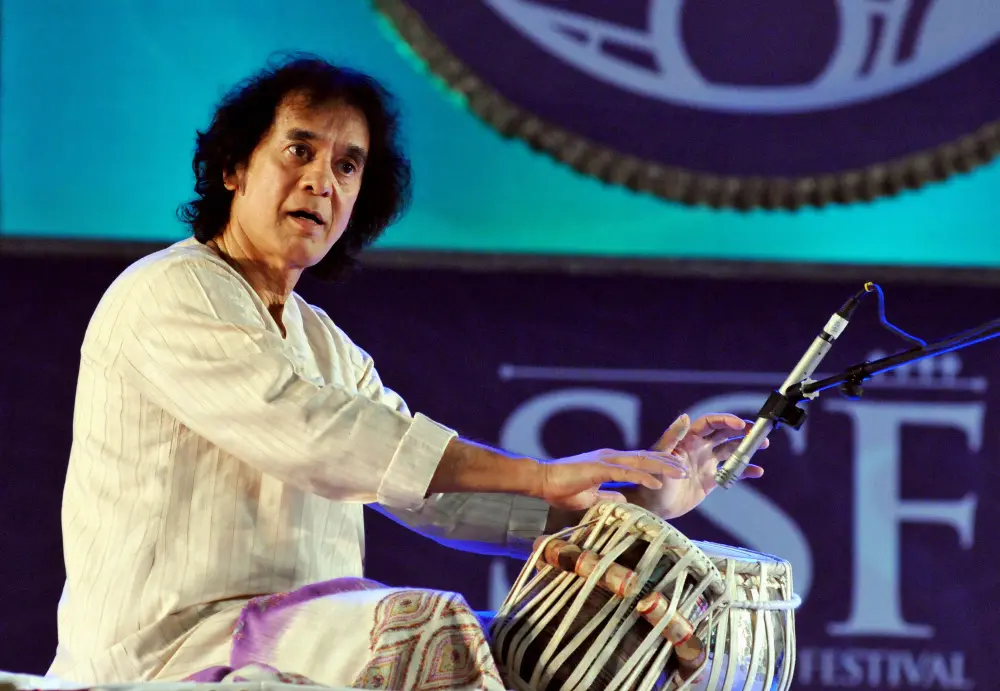
Zakir Hussain, the legendary tabla maestro, passed away on Monday, leaving behind a lasting influence on Indian classical music and cinema. Known for his versatility, Hussain’s music and film roles showcased his ability to blend artistry with a wide range of cultural expressions.
A special cameo in Monkey Man
One of Hussain’s most memorable film moments came in Monkey Man (2024), the directorial debut of British-Indian actor Dev Patel. After his passing, a clip from the movie went viral. In it, Hussain plays a tabla player who provides the rhythm as Patel’s character practices his punches. Though the film was praised internationally, it is still awaiting approval for release in India from the Central Board of Film Certification (CBFC).
The film had stirred controversy due to its political themes. Some promotional materials altered saffron banners to red to avoid controversy, and Makarand Deshpande’s portrayal of Baba Shakti, a godman with political ties, raised eyebrows. A scene showing Baba Shakti confronting a politician from a fictional saffron party was cut from the film, but not before it sparked debates about the role of religion in politics. In his dialogue, Baba Shakti says, “Faith is the most elegant weapon… That’s how empires are built.”
Several deleted sequences also addressed protests against the Citizenship Amendment Act (CAA), LGBTQ rights crackdowns, and communal tensions, adding to the film’s provocative nature.
Hussain’s take on the Padmaavat protests
In 2018, Hussain also made headlines for his comments on the Padmaavat controversy. The film, which faced protests from Rajput groups led by the Karni Sena over its portrayal of Queen Padmavati, became the centre of violent demonstrations.
At the Zee Jaipur Literature Festival, Hussain called the controversy exaggerated, stating, “The Padmaavat controversy is overemphasised for TRPs and selling newspapers. Once the film is out of theatres, it will fade away.” He urged the public to focus on more important issues like environmental conservation, hygiene, and healthcare, which he believed deserved more attention.
Padmaavat directed by Sanjay Leela Bhansali, faced protests by Rajput groups, particularly the Karni Sena. They accused the film of distorting historical facts and misrepresenting Queen Padmavati's character, with claims that it portrayed a romanticised relationship between Padmavati and Alauddin Khilji. The protests escalated into violence, with threats made against Bhansali and actress Deepika Padukone. The film was banned in several states, and several scenes were altered or cut before it was cleared for release. Despite the controversy, Padmaavat went on to become a major box-office success.