Why ‘Sandesam’ still matters? Sreenivasan's sharp wit captures the absurdity of politics
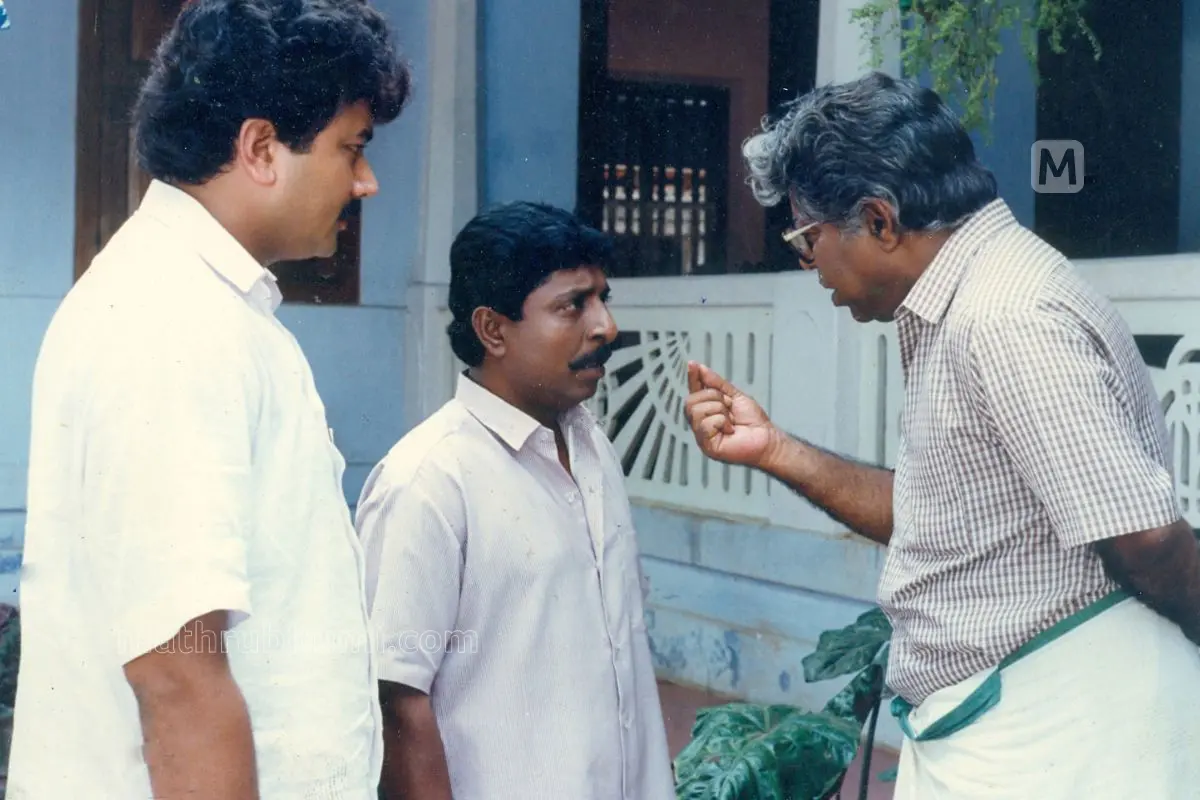
The passing of actor and writer Sreenivasan invites a fresh look at one of his most enduring works, 'Sandesam' (1991). More than just a regional comedy, the film remains a sharp political satire, exposing the cunning undercurrents behind global political ideologies while being rooted in Kerala’s politics.
Unlike most political satires, which critique a single party or system, 'Sandesam' dismantles the pretence of ideological purity across the board. Through two warring brothers, it captures the absurdity of politics disguised as socialism, equality, and intellectualism, a mask that slips repeatedly over the course of the film.
Two brothers, two ideologies
Prabhakaran (Sreenivasan) is a diehard Marxist, while Prakashan (Jayaram) belongs to the centrist ruling party, mirroring Kerala’s Left Democratic Front (LDF) and United Democratic Front (UDF). Their ideological sparring highlights the larger political rivalry in India, from Marxist principles rooted in the fight against feudal oppression to the centrist Congress party’s vision of social liberalism and civic nationalism.
The film opens with temple bells and chants, juxtaposed against Marxist atheism, and parallel railway tracks symbolising politics running counter to ordinary life. Even a schoolboy challenging a teacher hints at early political indoctrination.
Hypocrisy and delusion
Prabhakaran’s magnificent vision of himself as a lifelong revolutionary, expecting his future wife to study 'Das Kapital' and 'The Communist Manifesto', mirrors the delusions often found in ideological zealots. Meanwhile, Prakashan justifies political witch-hunts as retaliation, echoing historical and global patterns of power politics.
The satire extends into domestic absurdities. The brothers exploit their mother and sisters, expecting them to cater to party guests while indulging in lofty debates about equality and progress. The mother, Bhanu (Kaviyoor Ponnamma) and sisters, especially the quick-witted Lathika (Maathu), see through the pretensions much earlier than the men. Scenes like the fight over a dead body, “Njangalude dead body njangalkku vittu tharuga!”, and the north Indian politician Sahaiji’s visit (“nariyal ka pani”) remain comedic high points.
Apolitical virtue and reflection
Siddique’s Udhayabanu, an honest, apolitical officer, repeatedly steps in when the family is in crisis, reinforcing the film’s controversial message that disengaging from politics may be wiser than blind ideological loyalty. The ending discourages student politics, a point later critiqued by filmmakers for underestimating youth activism.
A satire that transcends time
'Sandesam' continues to resonate, even decades after its release. By painting all political parties with the same brush, it exposes the hollowness of ideology when personal ambition and posturing dominate. In revisiting the film on the occasion of Sreenivasan’s death, it is clear that his humour was more than entertainment; it was incisive social commentary, as relevant today as it was in 1991.
A critical perspective debate
Yet, simplification of its message can be misleading. 'Sandesam' is often viewed as a satire, but it also reflects a reality where personal morals and ambitions often override social ethics. Not all actions or glorifications in the film are morally right, and presenting them without critique risks normalising them. In the future, such portrayals could be misread as historical truths. For Malayalis, the narrative may not offer anything new, it largely mirrors familiar political and social behaviours.
For those reflecting on politics and governance, and for anyone who has ever rolled their eyes at family WhatsApp debates, 'Sandesam' remains a nuanced and cautionary reflection, capturing both the humour and the moral ambiguities of political life.