IFFI 2026: Mukesh Chhabra shares the secrets of casting and cracking auditions
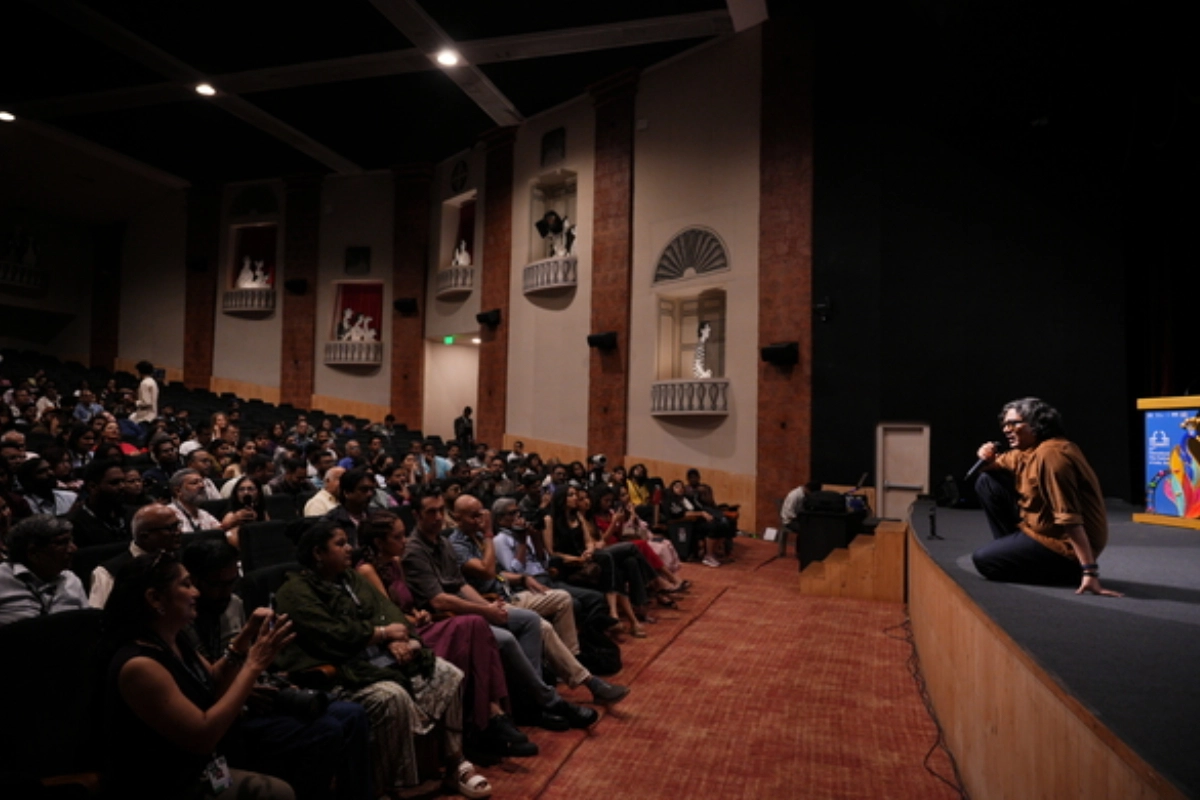
Renowned casting director Mukesh Chhabra offered aspiring actors a glimpse into the art and challenges of casting during a masterclass titled ‘The Casting Magic: Auditions Unplugged’ at the 57th International Film Festival of India (IFFI) 2026 in Goa.
The session brought together aspiring actors, mid-career professionals interested in acting, writers, emerging filmmakers and media representatives. Participants from across the country, including a sizeable Goan audience, interacted with Chhabra on subjects ranging from audition techniques and finding the right role to the qualities that make an actor stand out.
Introducing Chhabra, festival director Ashutosh Gowariker said, “What I like about Mukesh is his eye for character and he will go to any length to find the actors who fit in.”
With more than 300 films and web series to his credit, Chhabra spoke about the extensive work that goes into finding the right actor for a character. He said casting involves much more than relying on databases or approaching familiar faces, stressing the need to scout for talent across the country.
“There is so much talent in our country. Earlier, when there were no casting directors, it used to be difficult. I send my team everywhere to scout for talent. You have to go to the roots. Our country has so many cultural arts and sub-cultures where so much raw talent is displayed,” he said.
How Mukesh Chhabra approaches casting
Explaining his process, Chhabra said he is often among the first people a director approaches once a script is ready. He begins by reading it carefully and discussing the characters and the filmmaker's vision. The next step is to determine whether a role requires an established actor or a fresh face.
He also travels to the regions where stories are set to look for performers within local communities. His responsibility, he explained, is to understand the character, identify the right personality and recommend an actor who fits the director's vision.
“Directors hire me for my opinion, my ideas, not for my data,” he said, describing his role as a bridge between actors and directors.
The casting process can take years. Recalling his work on ‘Dangal’, Chhabra said the process lasted nearly two years, with around 14,000 girls auditioning for roles in the film. The casting for ‘Ramayana’, he added, extended over six years.
He also recalled casting 384 people for ‘Gangs of Wasseypur’, describing the film as a major turning point in his career. “Gangs of Wasseypur changed my life,” he said.
ALSO READ: IFFI 2026: ‘Demography is Destiny’ examines India's changing population patterns
Chhabra noted that every filmmaker has a distinct vision and that casting can sometimes influence the writing itself. Citing ‘Kai Po Che!’, he recalled how the character of Gattu was written with Rajkummar Rao in mind. He also spoke about how performers such as Nawazuddin Siddiqui and Manoj Bajpayee bring their own strengths to characters, sometimes prompting directors to rethink and reshape roles.
Reflecting on his career spanning more than two decades, Chhabra said Aamir Khan was among the first people in the industry to notice his work. His interest in discovering new talent continues, with around 100 more films lined up over the next two to three years.
‘My focus is to bring an Oscar for this country’
For Chhabra, casting is not simply a profession but a lifelong commitment. He said the requirements change with every script and that decisions, including replacing an actor at the last minute when someone else is found to be a better fit, are part of the creative process.
“Casting is not just a job for me. I do it for a living, this is life. My focus is to bring an Oscar for this country. I do my work honestly,” he said.
‘Rejection is part of the journey’
Addressing aspiring actors, Chhabra spoke about handling rejection and staying resilient. He said actors should not allow disappointment to prevent them from pursuing opportunities.
“It's a part of your life, you've got to deal with this. We only have to find the right talent for a character. If you feel rejected and sad all the time, you will miss a lot of opportunities,” he said.
He also recalled his own struggles in the industry. Chhabra began his career as an assistant director, initially working largely in casting, and spent years establishing himself. Several filmmakers had turned him down during his early days, he said, adding that some of them work with him today.
ALSO READ: IFFI 2026: ‘The Unseen Holy River – Saraswati’ explores ancient river's history and science
“Every single person has to struggle in life. I don't want to talk about my sad story, but I really had a hard time,” he said.
‘Acting has nothing to do with age’
Chhabra urged aspiring actors to remain patient and committed to their craft instead of measuring their progress against the pace of others.
“If you think you can act, do the job. Just go with it,” he said, adding that talent should matter more than age. “Acting has nothing to do with age, talent is the only thing.”
He encouraged people in their 40s, 50s and 60s to consider acting, pointing out that the industry needs performers across generations.
What makes an actor stand out?
According to Chhabra, identifying the right actor involves looking beyond talent. Personality, honesty, simplicity and the ability to take direction are also important.
“The actor should also be directable. It's important to follow directions. Honesty and following instructions are important,” he said.
“If you understand life and human emotions, you understand acting,” he added.
Mukesh Chhabra's audition tips for aspiring actors
Chhabra advised actors to understand the character and its background before appearing for an audition. Preparing for a scene and imagining how it should unfold are important, he said.
“Designing the scene in your head is important. We want to understand the actor's intellect. Please do your homework,” he said.
For self-taped auditions, he recommended using a clean, uncluttered background and avoiding unnecessary make-up so that the performance remains the focus. He also advised actors to ensure that the person reading the lines provides appropriate cues and that the camera framing captures their eyes and expressions clearly.
Chhabra cautioned aspiring actors against seeking constant validation on social media. Instead, he encouraged them to concentrate on improving their skills, building confidence and gaining experience.
He recommended theatre as an effective way to develop confidence and acting skills, urging people to join theatre groups and participate in stage productions, irrespective of their age or previous experience.
His message to aspiring performers was to remain honest, keep learning and resist the temptation to seek instant recognition.
“It is all a game of patience and positivity. If it is meant for you, it will come to you,” he said. “Be natural and simple” was another piece of advice he offered.
The masterclass highlighted the work that goes into discovering memorable screen performers, while reminding aspiring actors that understanding human emotions, respecting the craft and remaining patient are essential parts of the journey.