From ‘Lagaan’ to ‘Dil Chahta Hai’: Ashutosh Gowariker, Farhan Akhtar look back at a defining year
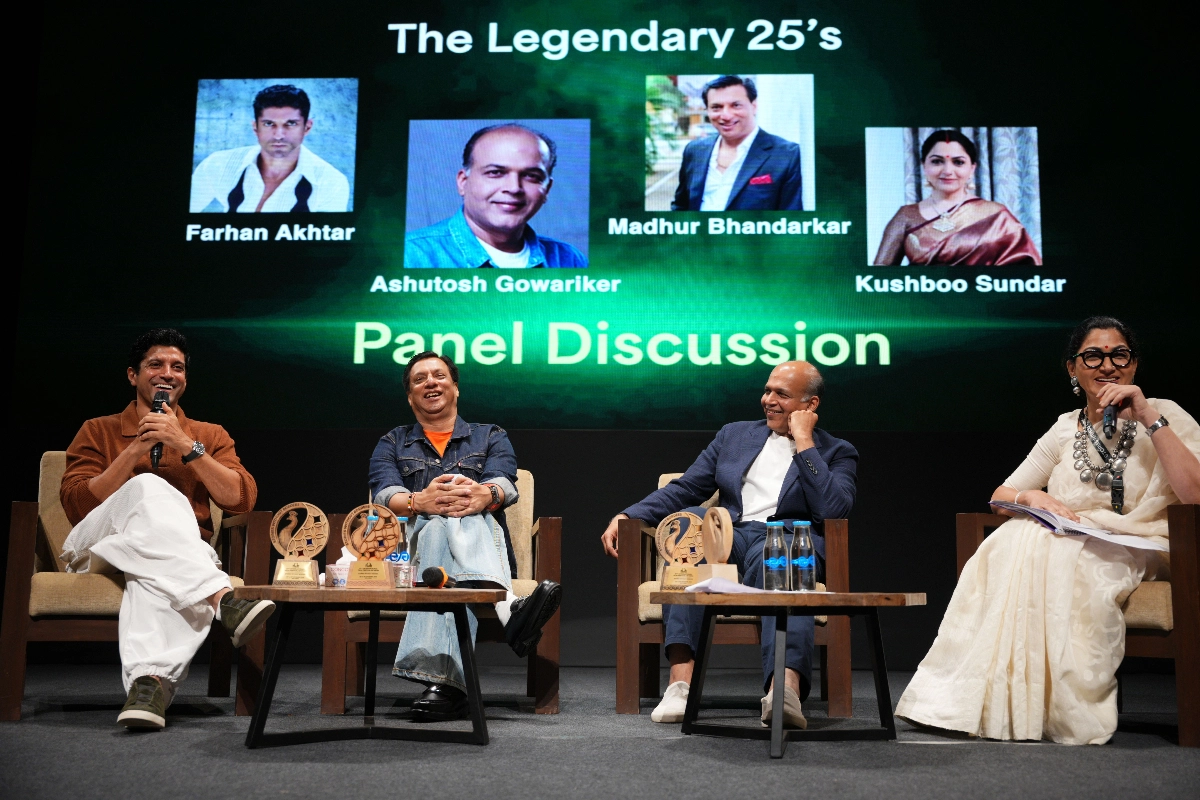
Three films. Three unconventional stories. One defining year for Hindi cinema. In 2001, ‘Lagaan’, ‘Dil Chahta Hai’ and ‘Chandni Bar’ challenged established conventions and brought fresh perspectives to Indian filmmaking. Twenty-five years later, the filmmakers behind these landmark films reunited at the 57th International Film Festival of India (IFFI) in Goa to revisit their creative journeys and discuss how cinema continues to evolve.
Ashutosh Gowariker, Farhan Akhtar and Madhur Bhandarkar came together for a session titled ‘The Legendary 25s’, moderated by actor and producer Khushboo Sundar. The conversation explored the courage to tell unconventional stories, the importance of original filmmaking, the craft of acting and the growing influence of technology on cinema.
While ‘Lagaan’ brought the spirit of rebellion to the big screen through a village's cricket match against the British, ‘Dil Chahta Hai’ captured the changing attitudes of a generation navigating friendship and relationships. ‘Chandni Bar’, meanwhile, turned its attention to the lives of women and realities often overlooked by mainstream cinema.
Madhur Bhandarkar: ‘Cinema is a mirror to society’
Speaking about his approach to filmmaking, Madhur Bhandarkar reiterated his interest in stories rooted in real life, particularly those that explore subjects people are often reluctant to discuss.
Recalling films such as ‘Chandni Bar’, ‘Corporate’ and ‘Fashion’, he spoke about his commitment to portraying women through their complexities, vulnerabilities and strengths, especially at a time when female-centric narratives faced considerable resistance.
“I have always wanted to make films about subjects that people hesitate to talk about or even explore. I am drawn to the stories behind the scenes, the realities that often remain hidden from the public eye. For me, cinema has always been a mirror to society. I would rather explore real life than create an idealised reel life,” he said.
Bhandarkar also encouraged filmmakers to remain committed to their creative instincts instead of following industry trends or trying to anticipate audience expectations.
He touched upon the growing role of artificial intelligence and visual effects in filmmaking, acknowledging that technology could expand the possibilities of visual storytelling. However, he maintained that it could never replace the emotional depth that human experiences bring to cinema.
“AI and VFX can certainly enhance the visual experience and expand the possibilities of filmmaking, but they can never replace the human touch. Technology can create images, but it cannot replicate human emotions, sensitivity and the emotional connect that breathe life into a character,” he added.
Ashutosh Gowariker: ‘Every film is a reset to zero’
Ashutosh Gowariker described every new film as an opportunity to begin again, requiring filmmakers to approach each project with a fresh perspective and an open mind.
He also reflected on the challenges faced by unconventional films, pointing out that audiences sometimes need more time to discover and appreciate stories that move away from familiar formats.
“Anything that is new, different or unconventional needs more time to find its audience. We must not judge a film only by its opening weekend,” he said.
Sharing his thoughts on acting, Gowariker highlighted the importance of listening and responding naturally during a performance. According to him, the moments between dialogues can be just as significant as the words themselves.
“For me, a true performance lies in the pauses. Listening is one of the most important qualities of an actor. How an actor listens and reacts to a cue is equally important,” he said.
He also stressed that filmmakers should trust their stories rather than make assumptions about what audiences want, allowing viewers the freedom to interpret what they watch.
Farhan Akhtar: ‘Be fearless and leave your ego behind’
Farhan Akhtar urged aspiring filmmakers to develop their own creative voice and tell stories without being constrained by conventional expectations.
Emphasising the importance of collaboration, he said that writers and directors must remain open to ideas and be willing to let go of their egos in the process of making a film.
“A director or writer must keep an open heart and mind, and leave their ego behind. Be fearless, believe in your vision and tell the story you truly want to tell,” he said.
Describing a screenplay as a “living, breathing thing”, Farhan explained how a story evolves through the contributions of writers, actors and technicians. He noted that filmmaking is a collective effort and that collaboration allows a story to develop beyond the vision of any one individual.
ALSO READ: How to submit a film for the Oscars? Academy representative explains at IFFI 2026
He also cautioned against allowing excessive promotional activity to overshadow the film itself, emphasising that meaningful storytelling and a genuine connection with audiences should remain central to cinema.
25 years later, the conversation continues
The reunion offered a glimpse into the creative convictions behind three films that took different routes but left a lasting mark on Hindi cinema. From Bhandarkar's commitment to real-life narratives to Gowariker's emphasis on the subtleties of performance and Akhtar's belief in fearless storytelling, the discussion returned to one common idea: cinema needs originality and the courage to take risks.
Twenty-five years after ‘Lagaan’, ‘Dil Chahta Hai’ and ‘Chandni Bar’ challenged conventions in their own ways, their makers reflected on an industry transformed by technology, changing audience expectations and new storytelling possibilities. Yet, as the filmmakers suggested, the human element remains at the heart of a memorable film.